
Blog written by Indu R Eswarappa, Career Coach & Education Change-Maker
Teaching yoga is very different from just practicing it. A good yoga trainer does not only know the postures. They understand body alignment, breathing techniques, safety, and how to guide people with different needs and abilities.
Today, yoga is no longer limited to traditional ashrams or small community classes. It has become a global wellness movement. Now, even AI has been integrated into Yoga to make it more people friendly. According to Newsbyets App Blog, Yoga enthusiasts should try these new AI tools to augment their Yoga journey.
Yoga trainers now work in fitness centres, wellness retreats, corporate programs, yoga studios, and even through online platforms. Many trainers also build their own personal brand through workshops, digital classes, and social media communities.
According to estimates from Swasti Yoga Center, the global yoga industry is valued at over $100 billion and continues to grow as more people turn to yoga for physical fitness, mental health, and stress management.
If you enjoy helping people improve their health, guiding others through mindful movement, and learning about traditional wellness practices, a career in yoga training could be a meaningful path for you. But like any profession, it requires the right knowledge, certification, and a clear understanding of how the field works.
In this blog, I will explain how to become a yoga trainer in India step by step. We will look at training courses, certifications, career options, income opportunities, and the skills required to grow as a professional yoga instructor. By the end, you will have a clearer idea of how to start this journey and whether this career aligns with your interests and goals.
Key Responsibilities and Work Environment of a Yoga Trainer
Many people assume that becoming a yoga trainer simply means learning a few yoga poses and teaching them to others. But from what I have observed, the role is much more structured and responsible than that. A professional yoga trainer needs to guide students safely, understand different body types, and create sessions that support both physical and mental well-being.
According to the Shoolini University Blog, if you are exploring how to become a yoga trainer in India, it is important to understand what the daily responsibilities actually involve.
Teaching yoga requires preparation, patience, and continuous learning. It is not just about demonstrating poses but helping people practice them correctly and safely.
🧘 Key Responsibilities of a Yoga Trainer
Depending on where you teach and the type of students you work with, responsibilities can vary. However, most professional yoga trainers regularly focus on the following tasks:
- Planning and structuring yoga sessions for different skill levels
- Teaching yoga postures, breathing techniques, and relaxation practices
- Demonstrating correct body alignment to prevent injuries
- Guiding students through warm-up, posture sequences, and cooldown exercises
- Understanding basic anatomy and how yoga affects the body
- Monitoring students during practice and offering corrections when needed
- Helping students improve flexibility, balance, and strength gradually
- Maintaining a calm and supportive learning environment
- Continuing personal practice and upgrading knowledge through workshops or advanced training
- Building trust and maintaining professional relationships with students
According to a recent blog published on Restless, yoga is one of the professions where you can make a meaningful difference in people’s lives as a personal trainer or yoga teacher.
In my opinion, patience and consistency are what make a good yoga trainer. Technical knowledge is important, but the ability to guide students with care and clarity makes a real difference.
Work Environment of a Yoga Trainer

A yoga trainer can work in several different environments depending on their skills, certification, and career goals. Based on what I have seen, these are the most common work settings in the field.
1️⃣ Yoga Studios and Wellness Centres
- Conducting regular group classes
- Teaching beginner, intermediate, or advanced yoga sessions
- Working with a consistent group of students
- Structured schedules and professional studio environments
2️⃣ Fitness Centres and Health Clubs
- Teaching yoga as part of fitness programs
- Integrating yoga with strength training or flexibility routines
- Working alongside fitness trainers and wellness professionals
3️⃣ Independent Yoga Instructor
- Offering private one-on-one classes
- Conducting small group sessions at homes or rented spaces
- Flexible schedules and personalised teaching methods
- Income based on number of clients or sessions
4️⃣ Online Yoga Trainer
- Conducting live classes through digital platforms
- Creating recorded yoga sessions or courses
- Building an audience through online communities and social media
Many yoga trainers today follow a combination of these paths. For example, they may teach studio classes, conduct private sessions, and offer online classes at the same time.
According to The Hans India blog, prenatal yoga is now trending among expecting mothers, and many of them seek proper guidance under a certified or experienced yoga teacher to help them sail through the pregnancy days safely and without any issues. Therefore, online prenatal yoga classes can also be undertaken if you have good experience in yoga teaching and want to earn well.
The yoga and wellness industry continues to grow as more people focus on health, mindfulness, and stress management. Once you understand the responsibilities and possible work environments clearly, your path toward becoming a yoga trainer becomes much easier to plan.
Educational Pathways and Skills Required to Become a Yoga Trainer
One thing I often tell beginners is that yoga teaching is not just about learning a few poses and starting classes. There is a learning process behind it. If you are researching how to become a yoga trainer in India, you will notice that most professional instructors follow some form of structured training.
Unlike many traditional careers, there is no single path that everyone must follow. However, proper training and certification help you understand yoga in a deeper way and teach it responsibly.
Today, many institutes and yoga schools offer certification programs that combine practical training with theory. These programs usually include subjects such as yoga postures, breathing techniques, anatomy, teaching methods, and yoga philosophy.
Below are some common pathways that people take when preparing for a career as a yoga trainer.
Typical Skills and Personal Qualities You’ll Need to Succeed as a Yoga Trainer
Let me be honest here. Becoming a yoga trainer is not just about being flexible or performing advanced yoga poses. From what I have seen, the trainers who grow consistently are the ones who approach yoga as a teaching profession and a lifelong practice.
If you are seriously exploring how to become a yoga trainer in India, it is important to develop both technical knowledge and the right mindset. Good trainers focus not only on physical practice but also on how they guide and support their students.
Core Skills Every Aspiring Yoga Trainer Should Develop
These are some essential skills that help yoga trainers teach safely and effectively:
- Strong understanding of yoga postures and proper body alignment
- Knowledge of breathing techniques and relaxation practices
- Basic understanding of human anatomy and body movement
- Ability to demonstrate poses clearly for students
- Skills to guide warm-up, posture sequences, and cooldown sessions
- Awareness of how to modify poses for beginners or people with limitations
- Clear verbal communication during classes
- Basic class planning and session structure
In my opinion, clarity in teaching is often more important than performing advanced poses. A blog published on Education Times lists out some essential courses that Yoga Teacher Aspirants can do for a secured future in Yoga teaching.
Personal Qualities That Make a Successful Yoga Trainer
Technical skills are important, but personal qualities also play a major role in this career.
Some of the qualities that help yoga trainers succeed include:
- Patience when teaching beginners
- Calm and composed behaviour during classes
- Consistency in personal practice
- Ability to observe students and correct them gently
- Empathy and understanding toward students’ physical limitations
- Discipline in maintaining a healthy lifestyle
- Willingness to continue learning and improving
Teaching yoga often involves working with people who come from different backgrounds and health conditions. Because of this, a yoga trainer needs both technical knowledge and a supportive attitude.
Over time, these skills and qualities help trainers build a strong reputation and long-term student relationships.
Return on Investment (ROI)
One of the practical questions many people ask before choosing any career path is about the investment required. Most of the investment goes into training, certification, and basic teaching resources rather than expensive equipment.
However, the good thing about becoming a yoga trainer is that the initial investment is usually much lower compared to many other professional careers.
Yoga Training and Certification
A recognised yoga teacher training course is usually the first major investment.
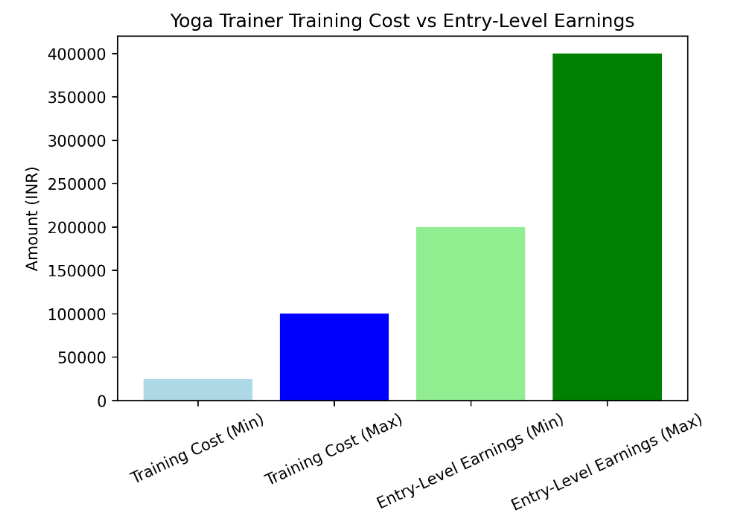
Typical course fees can range between ₹25,000 and ₹1,00,000, depending on factors such as:
In my opinion, yoga is one of those professions where you do not need heavy financial investment to get started. What matters more is consistent practice, proper training, and teaching experience.
Earning Potential
Income for yoga trainers can vary depending on factors such as experience, location, reputation, and the type of classes they conduct.
Entry-Level Yoga Trainer
₹2 lakhs to ₹4 lakhs per year
At this stage, trainers may work with yoga studios, fitness centres, or conduct small private classes. Income may come from group sessions or hourly teaching fees.
Experienced Yoga Trainer
₹5 lakhs to ₹12 lakhs per year
With experience and a growing student base, trainers may conduct multiple classes, offer private sessions, and organise workshops or specialised programs.
Yoga Trainer: Cost of Investment Vs Earning Potential
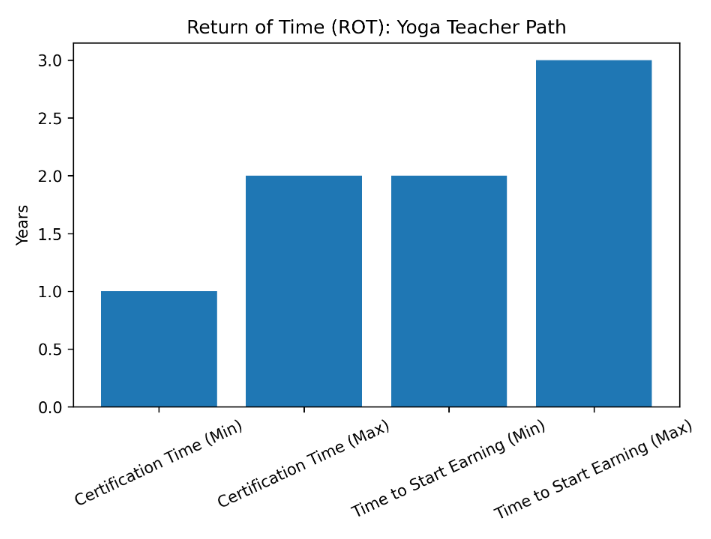
Return on Time (ROT) for Yoga Trainers
If you are exploring how to become a yoga trainer in India, it is quite common for beginners to start earning soon after completing a recognised teacher training course. Many trainers begin by assisting senior instructors, conducting small group sessions, or offering private classes.
For some people, the first teaching opportunities can begin within 6 months after certification, especially if they actively look for studio roles or build a small local student base.
Break-even Point
In many cases, yoga trainers recover their training investment within 6 months to 2 years, depending on how regularly they teach and how many classes they conduct each week.
Future Prospects: The Next 20–30 Years for Yoga Trainers in India
If you ask me where the yoga profession is heading in the next 20–30 years, I would say the field still has a lot of room to grow. Yoga has already become a global wellness practice, and the demand for qualified instructors continues to increase as more people focus on health, stress management, and mindful living.
According to The Yoga Institute Blog, a career as a yoga teacher can be both rewarding and secure. Today, there is a growing demand for yoga teachers who combine ancient wisdom with modern professionalism.
In India, yoga is gaining even more recognition due to government initiatives, wellness programs, and the growing awareness of preventive healthcare. What was once practiced mainly in traditional settings is now part of modern lifestyles across cities and communities.
Yoga is also gradually becoming connected with fields like physiotherapy, mental health support, corporate wellness, and lifestyle coaching. Because of this, the role of a yoga trainer may expand beyond traditional classes and move toward broader wellness guidance.
Conclusion
Whether you plan to work in yoga studios, conduct private sessions, offer online classes, or organise wellness programs, there are many paths available for building a career in this field.
This is where structured career guidance can help. Through career counselling for students, aspiring trainers can better understand whether a wellness-focused career truly matches their interests, personality, and long-term goals. For individuals already working in another field who are considering a transition into yoga or the wellness industry, career counselling for professionals can help evaluate the right timing, training options, and career strategy.
Some students also explore international yoga training programs or wellness studies abroad. In such cases, speaking with reliable study abroad consultants can help them understand global opportunities and certification pathways.
At NextMovez, we believe every career decision should be guided by clarity and proper information. If you are unsure whether becoming a yoga trainer is the right path for you, professional guidance can help you make a well-informed choice.