
By Preethi Durga, Career Strategist & Education Innovator
Your child has completed Class 10.
Now comes the question that makes many families feel the pressure:
Science, Commerce or Humanities?
Maybe your child already has a preference.
Maybe you have a stream in mind based on their marks, interests or future opportunities.
Or maybe both of you are looking at the same decision differently.
Your child says:
“I want Commerce.”
You think:
“But you scored so well in Science subjects.”
Or your child wants Science because their friends are choosing it, while you are wondering whether they actually understand what that choice involves.
Then come the familiar questions:
What is the best stream to choose after 10th?
Which stream has better career opportunities?
Will choosing Humanities reduce future options?
Does Commerce limit certain career paths?
Should every high-scoring student consider Science?
These questions make career choices after 10th feel much bigger than simply selecting subjects for the next two years.
The real challenge is that families often try to find the “best” stream before understanding whether that stream actually fits the student.
The OECD’s 2025 research on teenage career preparation highlights that many young people experience uncertainty while thinking about their future careers. It also points towards the importance of meaningful career preparation activities that help students connect education pathways with future possibilities.
So instead of asking:
“Which stream is the best?”
a better question is:
“What evidence suggests that this stream fits my child, and what do we still need to understand before deciding?”
A good stream decision is not about finding a perfect answer at the age of 15 or 16.
It is about making the next academic choice with enough understanding, exploration and confidence.
Why Career Choices After 10th Can Feel Like Such a Big Decision

For many families, career choices after 10th come at a stage when students are still discovering what they enjoy, how they learn and what kind of problems they like solving.
At the same time, everyone around them seems to have advice.
A relative says Science keeps all options open.
A teacher recommends Commerce because the student is comfortable with numbers.
A friend says Humanities has more opportunities than people realise.
Someone else talks about studying abroad.
Another person focuses only on salary potential.
The student hears all these opinions and is expected to make a decision that can influence their next few academic years.
The confusion usually comes from a few common assumptions.
The “Good Marks = Science” Assumption
A student who performs well in Mathematics and Science is often encouraged towards Science.
Academic performance is important, but marks alone cannot determine whether a student will enjoy the subjects, learning environment or future pathways connected to that stream.
A student may be capable of studying Physics but may not enjoy the kind of problem-solving, learning process or career directions connected to Physics-based fields.
Capability and fit are connected, but they are not the same thing.
The “Keep All Options Open” Assumption
Many parents consider Science because it appears to preserve more possibilities.
The intention behind this is understandable. Parents want to avoid closing doors too early.
However, keeping every option open only helps when the student can genuinely engage with the subjects and pathway.
When families worry about making a decision they may regret, keeping every possible option open can feel safer than choosing deliberately.
But choosing out of fear and choosing from evidence are not the same.
The useful question is not only:
“How many options does this stream keep open?”
It is:
“Which of these options is my child genuinely interested in exploring and prepared to work towards?”
The “My Friends Are Choosing It” Problem
Students naturally look at what their peers are doing.
If several friends are choosing Science, it can start feeling like the safest or most obvious option.
But a friend’s choice is based on their interests, strengths and goals.
The right stream for one student may not be the right stream for another.
A student’s decision should come from understanding themselves, not simply following the crowd.
The “Scope” Question
“Does this stream have scope?” is one of the most common questions parents ask.
It is a valid concern.
However, scope does not belong to a stream alone.
Career opportunities depend on how a student develops their knowledge, skills, interests, adaptability and understanding of future pathways.
The World Economic Forum’s Future of Jobs Report 2025 highlights the growing importance of skills such as analytical thinking, creative thinking, resilience and technological literacy across different industries.
The question is not:
“Which stream has the maximum scope?”
The better question is:
“Which stream gives my child a meaningful foundation for the directions they may want to explore?”
What Does “The Right Stream” Actually Mean?

There is no universal best stream to choose after 10th.
The right stream is one that creates a reasonable fit between:
- The student’s interests
- Their strengths
- Their learning preferences
- Their motivation
- The future directions they want to explore
- The academic requirements of those pathways
The same stream can be a great fit for one student and unsuitable for another.
A student choosing a stream should not be placed into a fixed category.
The purpose is not to label a child.
It is to understand what subjects, learning environments and future possibilities match them better.
Science May Fit Students Who:
- Enjoy understanding how things work
- Like analytical and scientific problem-solving
- Are curious about technology, engineering, healthcare, research or related areas
- Are willing to explore the realities of these pathways
- Are comfortable building understanding through sustained academic effort
Science is not only about being “good at Science subjects.”
It is about whether the student is interested in the kind of learning and problems these subjects involve.
Commerce May Fit Students Who:
- Enjoy business, economics and financial concepts
- Like understanding decisions, systems and organisations
- Are curious about finance, accounting, management, economics or entrepreneurship
- Enjoy analysing how businesses and markets work
A student choosing Commerce is not simply choosing an “easier” option.
It involves developing understanding of business concepts, analysis and decision-making.
Humanities May Fit Students Who:
- Are interested in people, society and ideas
- Enjoy reading, writing, discussion and analysis
- Are curious about psychology, law, communication, policy, social sciences or related areas
- Like exploring human behaviour and social questions
Humanities is not a limited pathway.
It can support multiple directions depending on the student’s interests, skills and future plans.
A student’s strengths and interests may overlap across streams.
For example, a student interested in technology may also enjoy design or psychology. A student interested in business may also enjoy mathematics and analysis.
Difficulty, capability, interest and long-term fit are related questions, but they are not interchangeable conclusions.
A student finding Physics challenging does not automatically mean Science is unsuitable.
Similarly, a student scoring well in Accountancy does not automatically mean Commerce is their preferred career direction.
How Indian Career Choices After 10th Work
In India, stream selection after 10th is often treated as a major turning point because students usually choose between Science, Commerce and Humanities at a relatively young age. CBSE’s Senior Secondary Curriculum and Scheme of Studies also show why families need to look beyond broad stream labels and examine the actual subject combinations available in Classes 11 and 12.
Subject selection can affect eligibility for certain higher-education pathways, so students should verify the academic requirements of careers and courses they may want to explore.
Each stream has its own subject combinations, learning styles and possible career pathways.
However, choosing a stream should not be reduced to:
“Which stream is considered more successful?”
or:
“Which stream has more salary opportunities?”
The better approach is understanding what each stream involves and whether it connects with the student’s interests, abilities and future direction.
For example:
- A student choosing Science may later explore engineering, medicine, research, technology, data-related fields and several other areas.
- A Commerce student may explore finance, business, economics, management, entrepreneurship and related careers.
- A Humanities student may explore psychology, law, communication, social sciences, design, policy and many other directions.
The stream creates an academic foundation.
The student’s skills, experiences and decisions built over time shape the career possibilities that follow.
This is why career choices after 10th should not be based only on marks, social perception or what other students are choosing.
In India, families should look beyond the broad stream label and check the actual subject combination available in the school. Some university programmes require particular Class 11–12 subjects, so future eligibility should be verified before finalising the combination. A student should therefore ask not only “Which stream?” but also “Which subjects do the pathways I may explore require?”
Three Checks Before Making Career Choices After 10th
Before finalising a stream, families can evaluate the decision through three important checks.
These checks help move the conversation from opinions to evidence.
1. Subject and Role Clarity
The first step is understanding what the student is actually choosing.
A stream is not just a collection of subjects.
It influences the type of learning experiences the student will have and the future directions they may explore.
Parents and students can ask:
- What subjects does the student genuinely enjoy learning?
- What type of problems does the student enjoy solving?
- Does the student understand what careers connected to this stream actually involve?
- Are they interested in the subjects themselves or only the image associated with the stream?
For example, a student may say:
“I want Science because I want to become an engineer.”
A useful next question is:
“What interests you about engineering?”
Is it technology?
Designing solutions?
Building things?
Problem-solving?
Understanding the actual role behind the career choice helps students make a more informed decision.
2. Reality Clarity
Interest is important, but students also need to understand the reality of the pathway.
Every career direction comes with requirements, challenges and responsibilities.
Families should explore:
- Academic requirements
- Entrance exams, if applicable
- Future courses connected to the stream
- Skills required
- Time and effort involved
- Actual work involved in related careers
For example, choosing Science because it “keeps options open” without understanding the workload, subjects and future pathways may create pressure later.
Similarly, choosing Humanities because someone says it has “fewer opportunities” may prevent a student from exploring a stream that could genuinely fit them.
Good stream selection after 10th requires understanding both possibilities and practical realities.
3. Self-Fit Evidence
The final question is:
“Does this stream fit my child?”
Self-Fit Evidence looks at patterns in the student’s:
- Interests
- Strengths
- Motivation
- Learning style
- Preferred environment
- Natural abilities
One test score or one subject mark cannot define a complete career direction.
A student who scores well in Mathematics may enjoy Engineering, but may also find strong alignment with Economics, Finance, Analytics or other areas.
A student who enjoys Biology may explore Medicine, but may also find interest in Biotechnology, Psychology, Research or Healthcare-related fields.
The aim is not to predict the student’s entire future at age 15 or 16. The aim is to understand which directions deserve deeper exploration.
Finding Your Child’s Best-Fit Career Zone™
At NextMovez, we believe a stream decision should not begin with:
“Which career is the most successful?”
It should begin with:
“What kind of learning and work environment allows this student to perform and grow?”
This understanding is what we call the Best-Fit Career Zone™.
It represents the intersection of:
- Personality
- Interests
- Motivators
- Values
- Environment
- Learning style/preferences
- Skills and abilities
For example, two students may both enjoy Mathematics.
One may enjoy solving abstract problems and working independently.
Another may enjoy using numbers to understand businesses, people and decisions.
The subject interest is similar, but the possible career fit may be different. This is why the best stream to choose after 10th cannot be decided only by marks or popularity. It needs a deeper understanding of the student.
When Science Was the “Obvious” Choice
Consider a Class 10 student who consistently performs well in Mathematics and Science.
The parent says:
“You score well. Why not Science?”
The student replies:
“I can do it. I just don’t know whether I want the careers it leads towards.”
Both perspectives are understandable. The parent sees strong marks as evidence of capability, while the student is questioning whether capability alone makes Science the right direction.
A career coach shifts the conversation:
“Then the question is not whether you are capable of Science. The question is what you are trying to build through it.”
Instead of immediately accepting or rejecting Science, the family explores the student’s interests, strengths, preferred ways of solving problems and the career clusters connected with different subject choices.
Science may still emerge as the right stream—or another direction may show stronger fit. The purpose is not to steer the student away from Science. It is to make sure the decision is based on self-fit evidence, career reality and future direction, rather than marks alone.
This is an illustrative scenario based on common stream-selection situations, not a client testimonial.
What Parents Should Do When Choosing a Stream

Parents play an important role in helping children make thoughtful decisions. However, the goal is not to choose the stream on behalf of the child. The goal is to help them think better.
Here are some ways parents can support the process:
Ask Questions Before Giving Answers
Instead of immediately saying:
“Choose Science.”
or:
“Commerce is better.”
start with questions:
- Why are you interested in this stream?
- What do you know about the subjects?
- What careers are connected to this direction?
- What challenges do you think you may face?
These conversations help students develop ownership of the decision.
Do Not Compare With Other Students
Every student has a different combination of:
- Strengths
- Interests
- Learning pace
- Personality
- Goals
A friend’s choice may be perfect for them but may not be suitable for your child.
The right career choices after 10th come from understanding the individual student, not copying another student’s pathway.
Explore Before Finalising
Before deciding, encourage your child to:
- Speak with professionals
- Attend career awareness sessions
- Explore different career paths
- Understand subject requirements
- Reflect on their own interests
The purpose is not to delay the decision forever. It is to make sure the decision is informed. Resources such as the NCERT Career Guide for School Students can also help students explore a broader range of career possibilities instead of limiting their thinking to a few familiar professions. Such exploration is useful before narrowing down the directions that deserve deeper investigation.
ROI vs ROT: Looking Beyond Marks and College Names
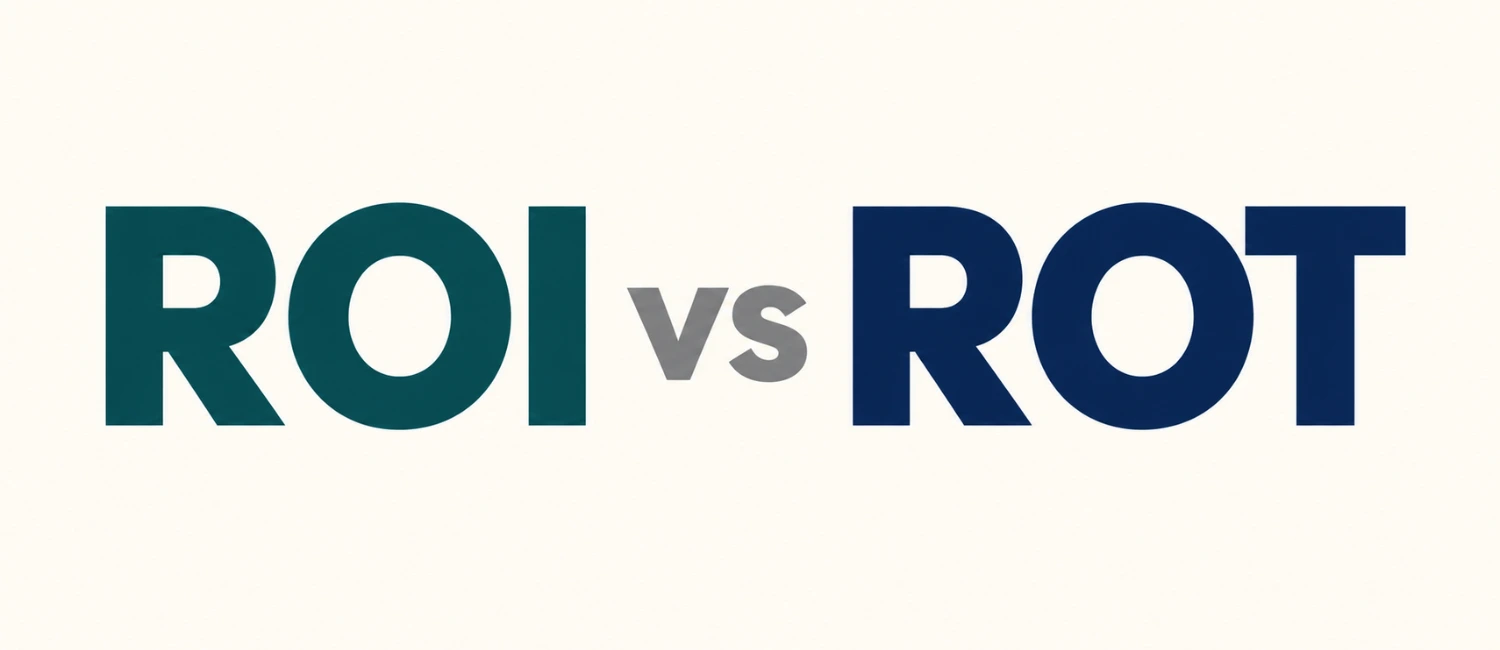
When parents think about education decisions, they often focus on ROI (Return on Investment).
Questions like:
- How much will this education cost?
- What opportunities can it create?
- What career options may come after this?
are important.
But another factor also matters:
ROT — Return on Time.
ROT asks:
“Are the years spent studying and preparing helping the student move towards a direction that genuinely fits them?”
A stream choice involves years of learning.
So families should consider not only the possible outcomes but also whether the student is likely to stay engaged through the journey.
For example:
A student may choose Science because it is considered prestigious.
But if they have no interest in the learning process, the next few years may become unnecessarily stressful.
Another student may choose Commerce or Humanities after understanding their interests and future possibilities and may build strong skills through consistent effort.
The question is not which stream gives the highest return for everyone.
The question is:
Which pathway creates the strongest fit between the student and the future they want to build?
How NextMovez Helps Students Make Better Stream Decisions

Choosing a stream after Class 10 is not just an academic decision.
It is the beginning of understanding how a student learns, what motivates them and which future directions may suit them.
At NextMovez, we do not begin by telling students:
- “Choose Science.”
- “Choose Commerce.”
- “Choose Humanities.”
Instead, we help students understand why a particular direction may or may not fit them.
Through our C3S Career Success Strategy System, students and parents go through a structured process that connects:
- Student interests
- Strengths
- Motivation patterns
- Learning preferences
- Career possibilities
- Real-world expectations
The purpose is not to predict the exact career a student must choose.
The purpose is to help them make a more informed decision about their next step.
How C3S Supports Stream Selection After 10th
C3S is a structured three-session decision architecture process. Students first build deeper self-understanding through evidence around their strengths, interests, motivations, learning preferences and working patterns.
In Session 2, this evidence is used to build the student’s Best-Fit Career Zone™ and identify relevant career clusters as exploration zones. Rather than jumping immediately to individual career titles, students explore broader possibilities that align with how they naturally learn, think and work.
Between exploration and final direction, the Career Cluster Reflection Journal helps students examine those clusters against realistic scenarios. This gives them an opportunity to reflect on what different careers may actually feel like in practice—not simply whether the career sounds interesting.
In Session 3, this evidence is reviewed to move from broader career clusters towards validated career directions. Specific directions are narrowed through self-fit evidence, reality clarity and direction validation before a practical roadmap is developed.
This is what makes C3S different from an online career quiz or a single counselling conversation. It does not simply generate career suggestions. It creates a structured process for understanding the student, testing possibilities against career reality and narrowing the direction using evidence.
Career Counselling for School Students: Building Clarity Before Choosing
Families often consider Career Counselling for School Students when a child is uncertain about streams, subject combinations or future possibilities.
Career guidance should not provide a ready-made answer. It should help students connect self-understanding with career reality so they can evaluate why a particular academic direction deserves consideration.
For parents, this creates a structured way to support the decision without taking ownership away from the student. The goal is not simply to choose Science, Commerce or Humanities—it is to help the student develop stronger reasoning for future career decisions as well.
A Simple Parent–Student Stream Decision Activity
Before finalising a stream, parents and students can spend 15 minutes discussing the following questions.
Choose one stream currently being considered.
Student Reflection:
- Why am I interested in this stream?
Write down:
- Subjects I enjoy
- Activities I like
- Problems I enjoy solving
- Careers I want to explore
- What do I know about this stream?
Think about:
- Subjects involved
- Skills required
- Future possibilities
- Challenges
- What am I still unsure about?
Identify questions that need more exploration.
Parent Reflection:
- What concerns me about this stream?
Is it related to:
- Career opportunities?
- Financial investment?
- Academic pressure?
- Long-term stability?
- What evidence supports my concern?
Is the concern based on:
- Actual information?
- Personal experience?
- Something heard from others?
- What can we explore together before deciding?
This could include:
- Speaking with professionals
- Researching career pathways
- Understanding subject requirements
- Attending a structured career guidance session
The goal is not to finish the entire career decision in one conversation.
The goal is to identify what information is still needed.
Frequently Asked Questions About Career Choices After 10th
1. What are the most important factors to consider while choosing a stream after Class 10?
Students should consider their interests, strengths, learning style, motivation and future career possibilities.
Marks are one factor, but they should not be the only factor in making career choices after 10th.
2. How do I know the best stream to choose after 10th for my child?
There is no single answer that works for every student.
The best stream to choose after 10th depends on how well the stream matches the student’s interests, abilities, learning preferences and future goals.
A good decision comes from understanding the student, not just comparing streams.
3. Should every high-scoring student choose Science?
Not necessarily.
A student’s marks show academic performance, but they do not fully explain their interests, motivation or preferred career environment.
A high-scoring student should explore whether Science genuinely matches their interests and long-term direction.
4. Can students change their career direction after choosing a stream?
Yes, career paths are not always completely fixed after Class 10.
However, making a thoughtful stream choice can create a stronger foundation and reduce unnecessary confusion later.
Exploration and skill development continue throughout a student’s journey.
5. When should parents consider career counselling?
Parents can consider career guidance when:
- The student is unsure about stream choices
- The family has different opinions about the decision
- The student is choosing mainly because of pressure
- The student wants to understand future possibilities better
Structured Career Counselling for School Students can help families approach the decision with more clarity.
Conclusion: The Right Stream Is About Fit, Not Just Reputation
Choosing a stream after Class 10 is an important decision.
But it does not need to become a decision based on pressure, comparison or fear.
The right approach is to understand:
- What your child enjoys
- How they learn best
- What strengths they naturally demonstrate
- What kind of future directions interest them
- What each stream realistically involves
The question is not:
“Which stream is the best for everyone?”
The better question is:
“Which stream creates the right foundation for my child’s growth?”
When students understand themselves and parents understand the decision process, stream selection becomes more meaningful.
Because the goal is not just choosing subjects for the next two years.
It is helping students build the confidence and clarity needed for future career choices after 10th.
Need Help Understanding Your Child’s Right Direction?
If your family is still unsure about stream selection after 10th, the next step is not collecting more opinions.
It is understanding your child’s strengths, interests and future possibilities through a structured process.
At NextMovez, our C3S Career Success Strategy System helps students explore career directions, understand their Best-Fit Career Zone™ and make more informed decisions about their academic pathway.
With the right guidance, students can move forward with greater clarity instead of choosing a stream only because it is popular, familiar or expected.
Book your Career Discovery Call
Resources & References
- OECD — The State of Global Teenage Career Preparation (2025)
https://www.oecd.org/en/publications/the-state-of-global-teenage-career-preparation_d5f8e3f2-en.html
- World Economic Forum — Future of Jobs Report 2025
https://www.weforum.org/publications/the-future-of-jobs-report-20
- CBSE — Senior Secondary Curriculum / Scheme of Studies
https://cbseacademic.nic.in/curriculum_2026.html - NCERT — Exploring Career Paths: A Career Guide for School Students
https://ncert.nic.in/CareerGuide.php