

— Blog written by Preethi Durga, Career Strategist and Education Innovator
Why This Topic Matters Now
A Class 10 or Class 12 student today isn’t simply choosing between Science, Commerce, or Arts.
They’re choosing between traditional degrees, interdisciplinary programmes, online certifications, international universities, entrance exams, skill-based courses, emerging careers, and professions that barely existed a decade ago.
For parents, this abundance of choices is both exciting and overwhelming.
Every conversation seems to raise new questions.
“Should my child choose a traditional degree or an emerging one?”
“Is AI replacing jobs?”
“Does marks-based success still guarantee career success?”
“Will today’s popular course still be relevant ten years from now?”
The biggest challenge facing families today is not the lack of opportunities.
It’s the difficulty of knowing which opportunity is actually the right one.
The education system in modern India has become more flexible than ever before. Students can now combine subjects, pursue multidisciplinary degrees, learn through online platforms, build portfolios, earn industry certifications, and explore careers across technology, healthcare, design, finance, sustainability, psychology, and many other fields.
But flexibility without clarity often creates even greater confusion.
Parents naturally want security. Students want purpose. Yet both are surrounded by endless opinions—from relatives, social media, coaching institutes, ranking websites, influencers, and friends. The result is information overload rather than confident decision-making.
“More options do not create clarity. Better filters do.”
One of the biggest misconceptions I see during career counselling sessions is that choosing the “right” course automatically leads to the right career.
It doesn’t.
A safe career is only safe if it genuinely fits the student.
A high-paying profession is rewarding only when it aligns with the student’s strengths, motivation, learning style, personality, and long-term aspirations.
Marks can open doors, but they cannot decide life direction alone.
Over the years, in our career guidance sessions at NextMovez, I’ve also met students with average marks who built extraordinary careers simply because they understood themselves before making important academic decisions.
That’s why today’s conversation needs to move beyond questions like:
“Which course has the highest salary?”
or
“Which stream has the most scope?”
Instead, families need to ask:
- Which path matches my child’s natural strengths?
- What kind of work environment helps them perform their best?
- Does this career suit their personality and motivation?
- What will daily life actually look like in this profession?
- Will this path remain meaningful over the next 10–15 years?
These questions matter because the education system in modern India is no longer designed around one fixed route to success. It now offers multiple pathways—but choosing wisely requires structured thinking, not guesswork.
In this guide, I’ll help you understand how education in modern India is changing, why traditional career advice is no longer enough, and how parents can make evidence-based decisions that give their children clarity rather than confusion.
After all, choosing a stream, degree, or career isn’t simply an academic decision.
It’s one of the most important life decisions a family will make.
How Has the Education System in Modern India Changed?
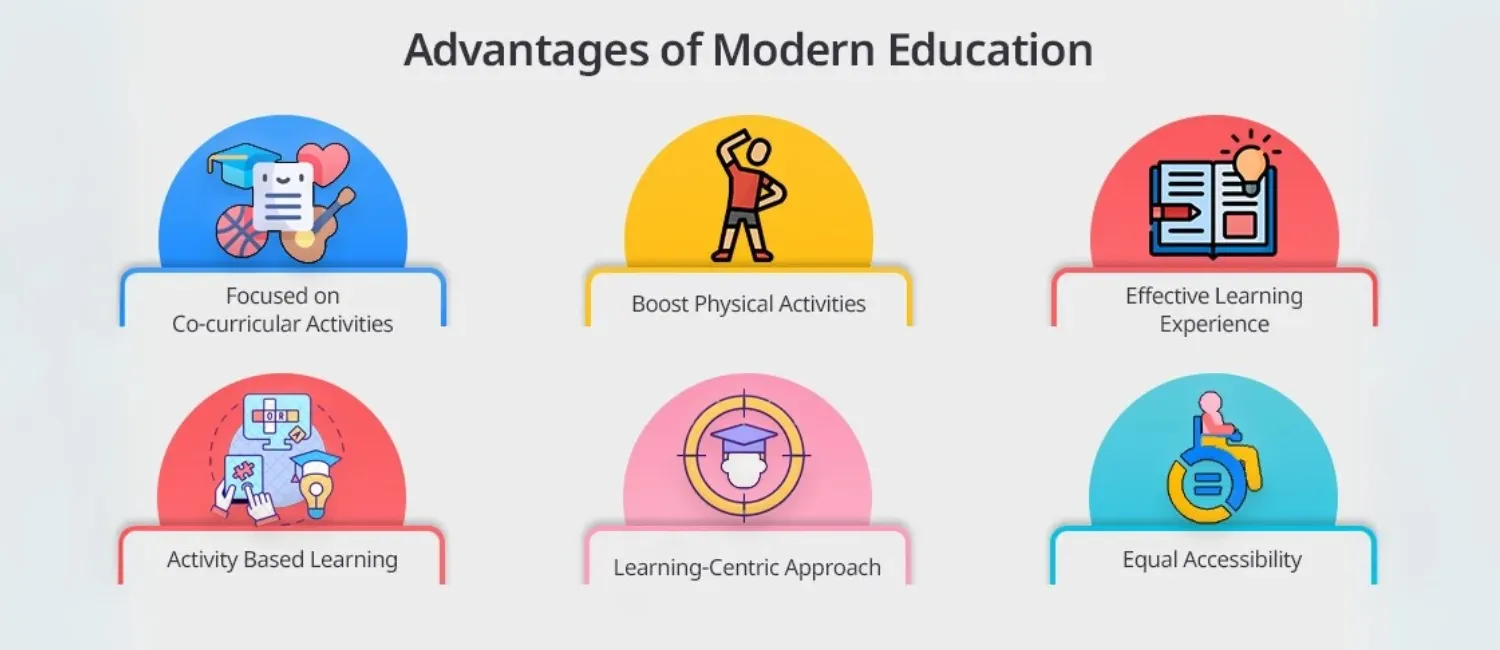
Over the past decade, the education system in modern India has undergone one of its biggest transformations. The focus is gradually shifting from memorising information to developing practical skills, critical thinking, creativity, and lifelong learning.
Much of this change has been encouraged by the National Education Policy (NEP) 2020, which aims to make education more flexible, multidisciplinary, and aligned with future workforce needs. Rather than encouraging students to follow rigid academic pathways, the policy promotes greater freedom to explore different subjects, vocational learning, internships, and skill development alongside formal education.
This doesn’t mean the transition is complete. Many schools and colleges continue to rely heavily on traditional teaching methods and examination systems. However, the direction of change is becoming increasingly clear.
Some of the most significant shifts include:
Greater Flexibility in Learning
Students are no longer confined to rigid combinations of subjects. Many institutions now encourage multidisciplinary learning, allowing learners to combine interests across science, commerce, humanities, technology, and the arts.
Greater Emphasis on Skill-Based Education
Academic knowledge remains important, but employers increasingly value practical abilities such as communication, collaboration, critical thinking, problem-solving, digital literacy, and adaptability.
This growing emphasis on skill-based education reflects the changing nature of work, where continuous learning is becoming just as important as formal qualifications.
Digital Learning Has Expanded Access
Online learning platforms, virtual classrooms, micro-certifications, and industry-led programmes have made quality education more accessible than ever before.
Students can now explore new subjects, build practical skills, and gain exposure to emerging industries long before choosing a college degree.
However, certifications should support clarity—not replace it.
“Certifications should support clarity, not replace it.”
Career Options Have Expanded Dramatically
Earlier, career conversations revolved around a handful of traditional professions such as medicine, engineering, law, chartered accountancy, and government services.
Today, students can build careers in areas such as:
- Artificial Intelligence
- Data Science
- Psychology
- Biotechnology
- Sustainability
- Digital Marketing
- UI/UX Design
- Cybersecurity
- Sports Science
- Healthcare Technology
- Product Management
- Behavioural Science
This wider landscape creates exciting opportunities—but also demands better decision-making.
Practical Exposure Is Becoming More Valuable
Projects, internships, portfolios, competitions, hackathons, research opportunities, and industry collaborations are gradually becoming important indicators of student readiness.
Many employers now look beyond academic scores to evaluate how students apply their knowledge in real-world situations.
According to the World Economic Forum’s Future of Jobs Report, analytical thinking, resilience, curiosity, technology literacy, and lifelong learning are among the most important skills expected to remain in high demand over the coming years.
Similarly, the UGC’s Curriculum and Credit Framework encourages experiential learning, internships, multidisciplinary education, and greater flexibility in higher education.
These developments are positive.
But they also introduce a new challenge.
India’s education system is opening more doors, but families still need a decision framework to know which door is right for the child.
Without that framework, more choices can easily become more confusion.
Traditional vs Modern Education: What Has Actually Changed?
The education system in modern India has evolved significantly over the last decade. Earlier, success often followed a linear path—score well, choose a stream, earn a degree, and secure a job. Today, that pathway has become far more flexible.
Students can combine disciplines, build industry skills through online platforms, pursue internships while studying, and explore careers that didn’t exist a decade ago. While these opportunities are exciting, they also make career planning more complex.
The biggest shift isn’t simply in education—it’s in decision-making.
| Traditional Education Approach | Modern Education System in India |
| Marks-driven success | Skill-driven growth alongside academics |
| Fixed Science, Commerce, Arts streams | Flexible and multidisciplinary learning pathways |
| Rote memorisation | Critical thinking, problem-solving and application |
| Limited awareness of careers | Hundreds of emerging career pathways |
| One degree → One career | Multiple careers, specialisations and lifelong learning |
| Entrance exam focused | Portfolios, internships, projects and practical exposure matter too |
| Decisions influenced mainly by parents or peers | Greater emphasis on self-awareness, aptitude and informed career choices |
This transformation reflects the vision of NEP 2020, which encourages multidisciplinary education, vocational exposure, flexibility in subject selection, and holistic development rather than rote learning alone. It also aligns with the UGC’s Curriculum and Credit Framework, which gives students greater flexibility in designing their academic journeys.
“Marks can open doors, but they cannot decide life direction alone.”
Earlier generations had fewer career choices but simpler decisions. Today’s students enjoy far more opportunities—but also face far more uncertainty.
More choices do not automatically create better decisions.
A student may now choose between artificial intelligence, biotechnology, psychology, design, liberal arts, entrepreneurship, sustainability, data science, healthcare, finance, or dozens of interdisciplinary programmes. Without understanding how these careers align with their natural strengths and motivations, greater flexibility can actually increase confusion.
The modern education system gives students more freedom, but freedom without self-understanding often creates more uncertainty.
This is where career planning for students becomes essential. Before selecting a stream, course, or college, families need a structured way to evaluate whether a path genuinely fits the student’s interests, abilities, personality, work style, and long-term aspirations.
After all, a safe career is only safe when it fits the child.
The Hidden Problem: More Options Are Creating More Confusion

Parents today have access to more information than ever before.
A simple Google search can produce thousands of articles about the best career options after school. Social media is filled with influencers discussing high-paying careers. Coaching institutes promote different entrance exams. Friends, relatives, teachers, and seniors all have their own opinions.
Ironically, this abundance of information often makes decision-making harder.
Many families assume that if they gather enough information, clarity will naturally follow.
Unfortunately, information and clarity are not the same thing.
Students are often pulled in different directions:
- A friend recommends engineering because it offers stability.
- A relative suggests medicine because it is respected.
- Social media glorifies careers in AI, design, or digital marketing.
- Salary rankings make finance and technology appear like the only “successful” options.
- New-age courses seem exciting without students fully understanding what professionals actually do every day.
Meanwhile, parents are trying to balance financial security, employability, and their child’s happiness—often without a clear framework for evaluating these choices.
“More options do not create clarity. Better filters do.”
The real challenge in the education system in modern India is no longer the lack of opportunities.
The challenge is knowing which opportunity truly fits the student.
Before making an important academic decision, pause and ask:
- Is my child choosing this subject because they genuinely enjoy it—or simply because they scored well in it?
- Is this course aligned with my child’s strengths, or is it helping reduce parental anxiety?
- Has my child understood what professionals in this field actually do every day?
- Are we choosing based on evidence, or based on trends, marks, and opinions?
- Are we preparing for a career—or simply preparing for the next entrance exam?
These are difficult questions because they require reflection rather than information.
This is exactly why career guidance for students has become more important than ever. In today’s education landscape, families don’t need more career lists—they need a structured process to eliminate unsuitable options and identify the pathways where a student is most likely to thrive.
What Parents Must Understand Before Securing Their Child’s Future
In today’s rapidly evolving world of work, choosing the right courses to do after 12th is no longer just about selecting a college or degree. Parents play one of the biggest roles in shaping these decisions, often with the best intentions. However, the careers that thrive in the future will be built not only on academic qualifications but also on adaptability, practical skills, and self-awareness. Before making decisions, here are six principles every parent should keep in mind.
Don’t Choose Only Based on Marks
Marks indicate academic performance, but they do not reveal a student’s creativity, problem-solving ability, motivation, communication style, or long-term career potential. Many successful professionals did not choose careers solely based on their highest-scoring subject. Instead of asking, “What course matches these marks?” ask, “What kind of work will help my child thrive over the next decade?”
Identify Strengths, Interests & Work Style
Every student learns and performs differently. Some enjoy analytical problem-solving, while others excel in communication, creativity, design, or leadership. Understanding how a student naturally thinks, learns, and works helps narrow down the right career pathways. Choosing a course that aligns with these strengths creates greater motivation, better performance, and long-term career satisfaction.
Explore New-Age Courses, But Don’t Chase Trends
Artificial Intelligence, Digital Marketing, UI/UX Design, Cybersecurity, and Data Analytics are creating exciting opportunities. However, a growing industry does not automatically make it the right fit for every student. Evaluate whether the student genuinely enjoys the type of work these careers involve instead of choosing them simply because they are popular or promise high salaries.
Use Online Learning for Exposure, Not Random Certifications
Online courses after 12th are excellent for exploring interests, building practical skills, and gaining industry exposure. However, collecting multiple certificates without a clear career direction rarely creates an advantage. Encourage students to use online learning to validate their interests, build portfolios, and complement their degree rather than accumulating credentials without purpose.
Encourage Internships, Projects & Shadowing
Career decisions become much easier when students experience real work environments. Short internships, volunteering, project-based learning, job shadowing, and conversations with professionals help students understand what different careers actually involve. Practical exposure often provides more clarity than months of online research or comparison.
Stay Updated with NEP 2020, But Interpret It Correctly
The National Education Policy (NEP) 2020 encourages multidisciplinary learning, flexibility, skill development, internships, and experiential education. It does not suggest replacing degrees with short-term certifications. Instead, it promotes combining strong academic foundations with practical skills so students can build adaptable careers in a rapidly changing economy.
The NextMovez 4C Framework for Making Better Education and Career Decisions
One question parents frequently ask me is:
“There are so many career options today—but how do we know which one is actually right for our child?”
The answer isn’t found in another career list or entrance exam guide.
It comes from following a structured decision-making process.
At NextMovez, we’ve observed that most career mistakes don’t happen because students lack ability. They happen because important decisions are made without validating whether the chosen path truly fits the student.
That’s why we encourage families to think through what we call the NextMovez 4C Framework—a practical approach that helps students move from confusion to clarity before selecting a stream, course, or career.
1. Clarity
Everything starts with understanding the student—not the course.
Before asking “Which career has the best scope?”, ask:
- What kind of work naturally excites my child?
- Which subjects or activities keep them engaged without constant motivation?
- What kind of challenges energise them?
- What situations consistently drain their energy?
- Are they choosing based on genuine interest or external expectations?
Many students know what subjects they score well in but haven’t explored how they think, learn, and solve problems.
That self-awareness becomes the foundation of better career decisions.
“Before choosing a course, understand the child.”
2. Compatibility
A career should fit the student—not the other way around.
Compatibility means understanding whether a course aligns with the student’s:
- Personality
- Interests
- Motivators
- Values
- Learning style
- Preferred work environment
- Natural strengths
For example, two students may both score 95% in Science.
One may genuinely enjoy analytical research and complex problem-solving.
The other may prefer creativity, communication, or working directly with people.
On paper, both appear equally suited for engineering.
In reality, they may thrive in completely different careers.
A student’s academic performance is only one piece of the puzzle.
Real career fit comes from understanding the whole individual.
3. Career Reality
Many students fall in love with the idea of a profession without understanding the reality of the work.
Before choosing any career, ask:
- What does this professional actually do every day?
- What technical and interpersonal skills are required?
- What kind of work pressure comes with the role?
- What education and training are involved?
- What are the long-term growth opportunities?
- Is this work aligned with my child’s strengths and temperament?
For example:
- A lawyer spends far more time researching, drafting, and preparing than arguing dramatically in court.
- A psychologist does much more than simply “give advice.”
- A software engineer spends significant time debugging, testing, collaborating, and continuously learning—not just writing code.
- A doctor handles years of rigorous study, emotionally demanding situations, and lifelong learning beyond the respect associated with the profession.
Understanding career reality helps students choose with confidence rather than assumptions.
4. Continuity
Choosing a career isn’t just about getting the first job.
It’s about choosing a direction your child can continue building for the next 10–15 years.
Ask yourself:
- Can my child continue learning in this field over the long term?
- Will this career evolve with future industry changes?
- Does this path offer opportunities for continuous growth?
- Is the student genuinely motivated enough to keep improving?
This is also where families should think beyond immediate costs and consider ROI and ROT.
ROI – Return on Investment
Every course requires an investment of time, money, and effort.
Parents naturally evaluate tuition fees and future earning potential.
But financial return alone shouldn’t determine a decision.
A high-cost course only becomes worthwhile if it aligns with the student’s strengths, employability, and long-term career direction.
ROT – Return on Time
Time is just as valuable as money.
A course that appears affordable can still become expensive if it leads a student into years of dissatisfaction, repeated career changes, or additional qualifications simply to find the right fit.
Similarly, a longer or more expensive programme may provide excellent long-term value if it matches the student’s abilities and creates sustained career growth.
The goal isn’t to find the cheapest course or the highest-paying profession.
The goal is to choose a path where both ROI and ROT make sense for the individual student.
“Career decisions should be designed, validated, and owned—not rushed or borrowed from someone else’s journey.”
Reflection Pause: If you struggled to answer most of these questions about your child, you are not alone. Many parents realise they know their child’s marks far better than their child’s working style, motivators, or long-term career fit.
A Gentle Pause Before Moving Forward
If you’re still asking, “Which course should my child choose?”, consider asking a different question first:
“Have we understood our child well enough to make that decision?”
The right answer often becomes much clearer when families evaluate career choices through the lenses of Clarity, Compatibility, Career Reality, and Continuity instead of marks, trends, or social pressure alone.
From Framework to Real Life: How Career Clarity Looks in Practice

Frameworks are useful, but their real value lies in how they help families make better decisions in real situations.
Over the years, I’ve worked with many students who weren’t lacking intelligence or ambition—they were simply overwhelmed by choices. Once we shifted the conversation from “Which course is best?” to “Which path truly fits this student?”, the answers became much clearer.
The following examples illustrate how structured reflection, evidence-based assessments, and career reality testing helped students move beyond assumptions and discover academic pathways that matched their strengths, interests, and long-term goals.
While the names and identifying details have been changed to protect privacy, the situations reflect challenges that many students and parents face today.
Career clarity rarely comes from finding more options—it comes from understanding which options genuinely fit.
Case Story 1: When a Student Likes Technology but Is Unsure About Engineering
Rohan, a Class 12 PCM student, had always been told that engineering was the obvious next step. He had good marks in Mathematics, was preparing for entrance exams, and everyone around him assumed engineering was the natural choice.
But during our career counselling conversations, something interesting emerged.
Whenever Rohan spoke about technology, he rarely talked about machines or traditional engineering branches. Instead, he became animated while discussing coding challenges, artificial intelligence, automation, and building small software applications.
The family had been asking one question:
“Should he pursue engineering?”
The better question turned out to be:
“Which technology pathway matches the way he naturally thinks and solves problems?”
Through structured assessments, guided reflection, and career exploration, we discovered that Rohan’s strengths aligned more closely with analytical problem-solving, logical reasoning, and computational thinking than with several traditional engineering disciplines.
Instead of limiting the discussion to one degree, we explored multiple academic pathways, including:
- B.Sc. Data Science
- BCA with AI specialisation
- Computer Science programmes
- Applied Technology and Software Development courses
The clarity did not come from a single assessment. It came from connecting several evidence points:
- His behavioural patterns
- Learning preferences
- Interests beyond academics
- Motivators
- Career realities
- Long-term opportunities
His family realised that the goal was never “engineering” itself. The goal was finding the right technology career that matched his strengths.
Parent Takeaway: Sometimes a child is not confused about their interests. The real confusion lies in translating those interests into the most suitable academic pathway.
Case Story 2: When a Student Wants Both Commerce and Creativity
Priya was a Class 11 Commerce student who genuinely enjoyed subjects like Accountancy and Business Studies. At the same time, she spent hours redesigning presentations, experimenting with website layouts, and learning graphic design through online tutorials.
Her parents viewed this as a dilemma.
“Should she focus on Commerce or shift towards Design?”
Like many families, they believed choosing one meant giving up the other.
During career exploration, however, we looked beyond subject labels.
We explored where Priya’s strengths naturally overlapped. She enjoyed analysing business problems, understanding consumer behaviour, and expressing ideas visually. Rather than treating commerce and creativity as separate worlds, we identified careers where both skills were equally valuable.
Some of the pathways she explored included:
- UI/UX Design for FinTech products
- Product Design
- Marketing Analytics
- Brand Strategy
- Digital Commerce
- E-commerce Product Management
Instead of randomly combining interests, Priya learned how her business thinking and creative problem-solving could work together in a meaningful career.
The outcome wasn’t simply choosing a course—it was understanding why a particular direction suited her.
Parent Takeaway: Interdisciplinary careers are not signs of confusion. They simply require a structured process to connect different strengths into one clear career direction.
How to Validate Career Choices in the Modern Education System
One of the biggest misconceptions I see is that career decisions happen in a single moment—after a counselling session, an aptitude test, or exam results.
In reality, good career decisions are validated, not guessed.
Choosing a stream, course, or college is a significant investment of time, money, and effort. Before making that commitment, students and parents should test whether a career direction truly fits the student—not just academically, but personally and professionally.
Here’s a practical six-step framework I recommend.
Step 1: Start with Self-Understanding
Every career decision should begin with understanding the student before understanding the career.
Ask questions like:
- What activities does my child naturally enjoy?
- Which tasks give them energy rather than drain them?
- What kind of problems do they enjoy solving?
- Which learning environments help them perform their best?
- What situations reduce their confidence?
Many students choose careers before answering these questions. That often leads to dissatisfaction later.
Before choosing a course, understand the child.
Step 2: Check Whether the Interest Is Real or Borrowed
Not every interest is genuinely the student’s own.
Sometimes students unknowingly absorb career preferences from people around them.
For example:
- Choosing Engineering because all close friends are taking PCM.
- Choosing Medicine because the family values doctors.
- Choosing Design because it looks exciting on social media.
- Choosing Business because it appears flexible and prestigious.
Ask yourself:
“Would my child still choose this career if nobody else expected it?”
That simple question often reveals whether the interest is authentic or borrowed.
Step 3: Understand the Daily Reality of the Career
Many students fall in love with a career title without understanding what professionals actually do every day.
For example:
- A lawyer spends far more time researching, drafting, and negotiating than arguing in court.
- A psychologist spends years building assessment, counselling, and therapeutic skills—not simply giving advice.
- A data scientist cleans data, analyses patterns, and communicates findings—not just builds AI models.
- A doctor’s career involves years of continuous study, long working hours, responsibility, and emotional resilience.
- A designer balances creativity with client feedback, revisions, deadlines, and business goals.
Understanding the reality of a profession helps students decide whether they genuinely enjoy the work—not just the idea of it.
Step 4: Test the Interest Through Real Exposure
Interest becomes meaningful only after experience.
Encourage your child to explore careers through:
- Short online courses
- Practical projects
- Job shadowing
- Internships
- Webinars and workshops
- Conversations with professionals
- Building small portfolios
- Reflection journals after every experience
For example, a student interested in psychology could volunteer with a mental health organisation. A student considering Computer Science could build a simple app. Someone interested in law could attend a court hearing or interact with legal professionals.
Real exposure often confirms—or challenges—initial assumptions in the best possible way.
Certifications should support clarity, not replace it.
Step 5: Use Assessments as Evidence—Not Final Answers
Parents often ask whether psychometric tests or other assessments can tell them exactly what career their child should choose.
The answer is no.
Assessments can be extremely valuable when interpreted responsibly.
Psychometric assessments, aptitude tests, DMIT inputs, student reflections, parent observations, and coaching conversations each provide one piece of the overall picture. None of them should be treated as the final verdict.
At NextMovez, we view assessments as evidence points rather than answers. Career decisions are validated by combining multiple perspectives, including the student’s interests, behavioural patterns, motivators, personality, learning preferences, strengths, and real-world career realities.
This multi-layered approach helps families make more confident, evidence-based decisions.
Step 6: Discuss Career Decisions as a Family—Without Pressure
Career conversations should feel collaborative, not confrontational.
Instead of telling your child what they should become, try asking questions that encourage reflection.
For example:
- What excites you most about this career?
- What part of this journey feels challenging?
- What do you understand about the day-to-day work?
- What support would help you move forward confidently?
- Looking back ten years from now, what kind of decision would you regret making today?
These conversations build trust and help parents understand not only what their child wants, but also why they want it.
The goal isn’t simply to reach a decision quickly.
The goal is to reach a decision that the student understands, believes in, and is prepared to commit to over the long term.
Career decisions should be designed, validated, and owned—not rushed under pressure.
Questions Parents Cannot Answer With Google Alone
The internet is an excellent place to learn about courses, colleges, entrance exams, and career trends. A quick search can tell you the eligibility criteria for becoming a psychologist, the salary of a data scientist, or the admission process for engineering.
But when it comes to choosing the right path for your child, information has its limits.
Some of the most important career questions are deeply personal. They require structured reflection, observation, real-world context, and meaningful conversations—not just search results.
Here are a few questions that families often struggle to answer:
- Does my child genuinely enjoy the subject, or are they attracted to the image of the career?
- Is this interest consistent over time, or is it influenced by recent trends, social media, or peer pressure?
- Is my child choosing from confidence, curiosity, or fear of missing out?
- Can my child realistically handle the academic demands and work environment of this profession?
- Does this career align with my child’s personality, strengths, values, and preferred way of working?
- Which career options should we eliminate before deciding on the right one?
- Are we making this decision based on marks, salary trends, parental expectations, or genuine career fit?
- What could be the long-term cost of choosing the wrong course or career direction?
- How can we validate our decision before investing years of study and significant financial resources?
None of these questions has a universal answer.
Two students with similar academic scores may thrive in completely different careers because their motivations, learning styles, personalities, and aspirations are different.
This is why families often find themselves overwhelmed despite reading countless articles or watching career videos.
“Career clarity comes not from knowing every option, but from knowing which options truly fit the individual.”
At this stage, what students need is not more information—they need a structured process that helps them connect self-awareness with real-world career opportunities.
These are not questions that can be answered simply by reading more articles. They require guided reflection, evidence-based assessments, behavioural observations, career reality testing, and meaningful parent-student discussions.
That’s exactly where professional career counselling for school students can make a lasting difference.
How Can NextMovez Help?
At NextMovez, we believe that choosing a career is not about finding the “best” profession—it’s about discovering the best-fit career for each student. Through this process we identify the student’s Best-Fit Career Zone™—the intersection where strengths, interests, motivators, learning preferences and career realities align.
That’s why we don’t simply recommend courses or suggest careers based on marks. Instead, we help students and parents build career decision clarity through our C3S Career Success Strategy System—a structured, evidence-based approach that validates career choices before important academic decisions are made.
Here’s how the process works:
Step 1: Understand the Student Beyond Academics
Every student has a unique way of thinking, learning, responding to challenges, and making decisions.
Our first step focuses on understanding the student as an individual—not just as a set of grades or exam scores.
We explore questions such as:
- What motivates the student?
- How do they solve problems?
- Which environments help them perform at their best?
- What kind of work energises them?
- What naturally drains them?
This creates the foundation for meaningful career exploration.
Step 2: Build a Multi-Layered Understanding Through Assessments and Reflection
Career decisions should never depend on a single test.
At NextMovez, we combine multiple evidence points to develop a well-rounded understanding of the student. Depending on the student’s needs, this may include psychometric assessments, aptitude evaluations, DMIT inputs, parent observations, guided self-reflection, and one-on-one coaching conversations.
Rather than treating any assessment as a final answer, we use them to identify patterns that support informed decision-making.
Step 3: Identify the Student’s Best-Fit Career Zone™
Using these insights, we help students discover their Best-Fit Career Zone™ by evaluating several important dimensions together:
- Personality
- Interests
- Motivators
- Values
- Learning style
- Preferred work environment
- Strengths and transferable skills
This helps students understand not only which careers are suitable, but also why those careers align with who they are.
Step 4: Explore Career Clusters Through Career Reality Testing
Instead of asking students to choose one career immediately, we help them explore a cluster of suitable options.
Together, we examine:
- What professionals actually do each day
- Required qualifications and skills
- Work environments
- Growth opportunities
- Industry trends
- Long-term employability
This process helps students separate assumptions from reality and make informed choices based on genuine career fit.
Step 5: Create a Clear Academic and Career Roadmap
Once the most suitable career directions have been identified, we work with students and parents to build a practical action plan.
This roadmap may include:
- Subject and stream selection
- College and course planning
- Skill development priorities
- Internship and project recommendations
- Certification pathways
- Long-term career milestones
The objective is simple—to help families move forward with confidence instead of uncertainty.
We don’t tell students what to become. We help them understand what truly fits, what should be avoided, and how to move forward with clarity.
Final Thoughts
The education system in modern India is creating more opportunities than ever before. Students can now choose from interdisciplinary degrees, skill-based programmes, global learning pathways, and careers that didn’t exist a decade ago.
But more choices do not automatically lead to better decisions.
The students who thrive are not necessarily those with the highest marks. They are the ones who understand themselves, explore careers thoughtfully, and validate their choices before making major academic commitments.
“Marks can open doors, but they cannot decide life direction alone.”
Career planning is no longer about selecting the safest option. It is about finding the path where a student’s strengths, interests, values, and future opportunities come together.
That kind of clarity doesn’t happen by chance. It happens through structured exploration, informed conversations, and evidence-based decision-making.
Conclusion: Before Choosing a Career, Choose Clarity
Before your child selects a stream, course, college, or career direction, take a moment to validate the decision—not just academically, but personally and professionally.
If your family is feeling overwhelmed by traditional career options, emerging fields, changing education policies, or conflicting advice, start with clarity instead of assumptions.
At NextMovez, we help students and parents move beyond confusion through our C3S Career Success Strategy System, enabling them to make informed, confident, and future-ready career decisions.
Book a Career Clarity Call with NextMovez today and discover whether the real challenge is too many options, external pressure, limited exposure, or simply finding the career path that truly fits your child.
Clarity today can prevent regret tomorrow.
Frequently Asked Questions (FAQs)
1. What is the education system in modern India?
The education system in modern India is evolving to become more flexible, multidisciplinary, and skill-oriented. Guided by NEP 2020, it encourages critical thinking, experiential learning, vocational exposure, digital education, and multiple academic pathways. Alongside traditional degree programmes, students today have access to interdisciplinary courses, online learning, internships, and project-based education.
2. How has NEP 2020 changed education in India?
NEP 2020 has introduced several important reforms, including multidisciplinary education, flexible subject choices, multiple entry and exit options in higher education, vocational learning, and greater emphasis on critical thinking and holistic development. The policy aims to prepare students with both academic knowledge and practical skills needed for future careers.
3. Why is career guidance important in the modern education system?
With hundreds of courses, colleges, and career pathways available today, students need more than information—they need structured decision-making. Career guidance for students helps them understand their strengths, interests, learning styles, and long-term goals so they can choose academic pathways that genuinely fit them rather than simply following trends or external expectations.
4. How can parents help children choose the right stream or course?
Parents can support better decisions by looking beyond marks and encouraging self-discovery. Understanding a child’s interests, strengths, personality, preferred learning style, and work preferences—along with providing real-world exposure through projects, internships, and career conversations—helps create stronger career decisions. Professional career counselling for school students can further validate these choices through structured assessments and guided reflection.
5. Are online courses enough for career success?
Online courses are valuable for exploring interests, learning new skills, and gaining practical exposure. However, they should complement a well-planned career direction rather than replace it. Completing multiple certifications without understanding how they connect to long-term career goals often creates more confusion than clarity.
Certifications should support clarity, not replace it.
6. How does NextMovez help students make career decisions?
At NextMovez, we help students and parents move from confusion to confidence through our C3S Career Success Strategy System. Our approach combines psychometric assessments, guided reflection, parent inputs, career reality testing, and personalised coaching to identify each student’s Best-Fit Career Zone™. Rather than recommending careers based only on marks, we help families validate academic and career decisions with a structured, evidence-based process.
References
- Ministry of Education, Government of India. National Education Policy (NEP) 2020
https://www.education.gov.in/sites/upload_files/mhrd/files/NEP_Final_English_0.pdf - Press Information Bureau (PIB). Highlights of National Education Policy 2020
https://pib.gov.in/PressReleasePage.aspx?PRID=1642049 - University Grants Commission (UGC). Curriculum and Credit Framework for Undergraduate Programmes (CCFUGP)
https://www.ugc.gov.in/pdfnews/2486636_Curriculum-and-Credit-Framework-for-UG-Programme.pdf - All India Survey on Higher Education (AISHE), Ministry of Education
https://aishe.gov.in - World Economic Forum. Future of Jobs Report 2025
https://www.weforum.org/publications/the-future-of-jobs-report-2025/ - India Skills Report 2025 – Wheebox, AICTE, CII & Partners
https://wheebox.com/india-skills-report - National Skill Development Corporation (NSDC)
https://nsdcindia.org - NASSCOM – FutureSkills Prime
https://futureskillsprime.in - National Career Service (Ministry of Labour & Employment)
https://www.ncs.gov.in - NCERT – National Council of Educational Research and Training
https://ncert.nic.in