Blog written by Indu R Eswarappa, Career Coach & Education Change-Maker
Introduction: Could Your Child Be India’s Next Diplomat?
When a student once watched a televised interview of a young diplomat walking through the halls of the Ministry of External Affairs (MEA), they were captivated by the polished handshake, the flag-lined corridor, and the idea of representing India abroad. What seemed glamorous in that moment changed when the story revealed long negotiations, layered cultural sensitivity, intense international postings, and the quiet power of shaping a nation’s image. That shift sparked something — a curiosity to explore what really goes on behind those embassy walls.
A parent later shared that they always thought diplomacy was all about protocol dinners and awards — until their child’s excitement for cross-cultural problem-solving revealed how diplomatic careers actually blend intellect, service and global impact.
| Parent Lens:
That’s where NextMovez steps in — helping students and parents see beyond the surface, bridging ambition with purpose through guided career clarity. |
FAQ: What Exam Do You Need to Crack for the IFS?
Before diving into the daily life of a diplomat, it helps to answer the question every parent asks first: to become IFS, which exam is required? The answer is the UPSC Civil Services Examination (CSE) — one of the most prestigious and comprehensive competitive exams in India, and the single gateway into the Indian Foreign Service.
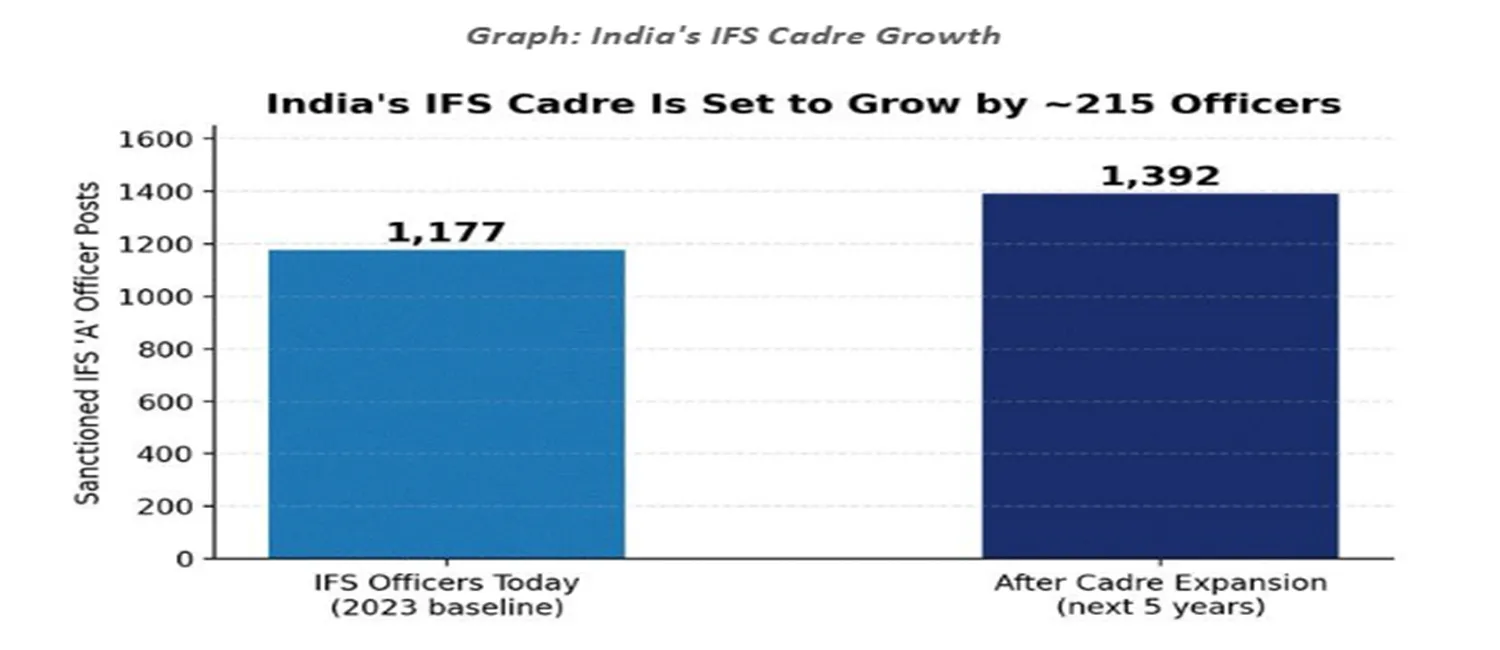
According to the Tribune, India currently has just about 1,177 IFS officers in service — a small, highly selective cadre with an outsized role in shaping how the world sees India.
If you’re passionate about global affairs, enjoy solving complex, high-stakes problems, and want to represent your country on the world stage, learning how a career in the IFS actually works could be your child’s best next step.
Still weighing career options after graduation? Platforms like NextMovez offer personalized guidance to help map out the right path — from UPSC to corporate and creative careers. Explore our Career Guidance After Graduation resource to see where you fit.
Career Outlook: Where Is Indian Diplomacy Headed?
Diplomacy is not static — it’s shaped by global shifts and emerging trends. Here’s what’s changing, and why it matters for the next generation of Indian diplomats.
India’s Diplomatic Network Is Expanding
According to the Economic Times’ October 2023 report, India has approved a major restructuring of the IFS — adding about 215 officers over the next five years.
- What it signals: More opportunities, more missions, more global positions opening up.
- What this means for your child: A growing diplomatic presence means more entry points — and a chance to think globally from the outset.
Graph: India’s IFS Cadre Growth
Rising Global Power Dynamics
The Outlook India report notes that India currently has around 6,277 personnel (including local staff) deployed across 218 missions abroad.
- What it signals: India’s global footprint is expanding — diplomatic work is increasingly varied and strategic.
- What this means for your child: This career offers real-world impact, multi-country exposure, and the chance to navigate important global challenges.
Graph: India’s Diplomatic Workforce
Multi-Domain Skills Are in High Demand
Today’s diplomacy doesn’t just use language skills — it uses data, cultural fluency, digital communication, and soft power strategy. The ideal candidate blends analytical, cultural and narrative skills, so encourage early development of global awareness, communication and digital literacy.
| Parent Insight:
A career in diplomacy isn’t just about representing India at an embassy — it’s about shaping its narrative, influence, and relationships worldwide. |
How Technology Is Reshaping the Job
When parents hear “foreign service,” they may picture suit-clad envoys at summit tables. But the modern diplomat also uses AI, digital tools and data-driven communication strategy:
- Digital Diplomacy: Physical delegations are now paired with digital forums, remote strategy and online cultural outreach.
- Data & Narrative Strategy: Diplomats increasingly use analytics to gauge public sentiment, craft global campaigns, and measure soft power — though human judgement and storytelling remain indispensable.
- Global Crises & Soft Power: Diplomacy has moved beyond bilateral talks to cover climate change, global health, cybersecurity, trade and migration.
| Parent Takeaway:
The role of an IFS officer is evolving — but students who combine tech comfort, cultural awareness and strategic communication will be future-ready. |
What Does an IFS Officer Actually Do?

An officer in the Indian Foreign Service (IFS) is akin to a skilled negotiator and global bridge-builder — advancing India’s interests, navigating sensitivity across cultures, and managing complex international relationships. Here’s the surprising truth: in the evolving world of diplomacy, soft skills like narrative framing and relationship building may matter as much as protocol mastery.
Because today’s diplomacy isn’t just about treaties and visas — it’s about projecting influence, shaping perceptions, and building global partnerships. The upcoming generation of IFS officers won’t just represent India; they’ll help shape India’s role in a multipolar world.
It’s prestigious, globally respected, and offers unmatched exposure. It’s also demanding, intellectually broad, and deeply impactful.
Core Responsibilities
- Represent India in embassies, high commissions and missions across the world
- Advise on trade, cultural and political issues
- Protect Indian interests abroad
- Shape how India is perceived internationally
This description reflects the role as outlined by the Ministry of External Affairs — IFS officers function as national ambassadors in the truest sense.
Life on the Job: Where IFS Officers Serve
IFS officers work across a genuinely global stage — from embassies and high commissions to multilateral missions, and eventually the Ministry itself in New Delhi.
- Diplomatic missions: Embassies, high commissions and consulates across 218 missions worldwide
- Multilateral postings: UN bodies and other international organisations
- Home postings: Policy and country-desk roles within the Ministry of External Affairs
Global Mission Environment
Many international missions face staff shortages and deployment challenges, per ThePrint’s reporting on the Ministry’s workforce gaps.
- Why it matters: The demand for skilled diplomats and global exposure is strong — there’s real significance to the role.
| Parent Insight:
Encourage your child to explore international relations, global issues and cross-cultural communication early on. |
How to Become an IFS Officer: Eligibility, Exam & Path
Here’s a step-by-step look at the eligibility criteria and the exam pathway into the IFS.
| Stage | Component | Details |
| Eligibility | Educational Qualification | Bachelor’s degree in any discipline from a recognized university |
| Eligibility | Age Limit | 21–32 years (general category), with relaxations for reserved categories |
| Eligibility | Nationality | Must be a citizen of India |
| Exam – Stage 1 | Preliminary Exam | UPSC CSE Prelims — two objective-type papers (General Studies + CSAT) |
| Exam – Stage 2 | Main Exam | UPSC CSE Mains — nine descriptive papers, including an optional subject |
| Exam – Stage 3 | Interview | Personality Test conducted by the UPSC Board |
| Post-Selection | Foundation Training | Joint foundation course at LBSNAA, followed by specialized training at the Foreign Service Institute |
Essential Qualification of IFS Officer
The basic qualification of IFS officer candidates is a bachelor’s degree from a recognized university in any discipline. While the academic background can vary — from Engineering and Medicine to Humanities — the UPSC looks for candidates with a deep understanding of Indian polity, history, and international current affairs.
A common question from parents: is diplomacy too competitive to be realistic, or is it still worth pursuing? The answer is that it’s competitive, yes — but also deeply rewarding.
- Clinical exam route: Prelims → Mains → Interview, all under the UPSC CSE
- Preparation ideal: Strong general studies foundation, current affairs awareness, and an optional subject played to your strengths
- Limited seats: Only around 30–35 candidates are selected into the IFS each year, out of the full CSE batch
At NextMovez, you can explore detailed guidance on UPSC exam stages, preparation strategy, and the latest updates on IFS eligibility — making the journey smoother and more informed.
Skills That Set Future Diplomats Apart

Modern hiring emphasises not only academic credentials but communication, adaptability, leadership, and language skills. For example, a student can land a junior diplomatic posting after leading a UN-model club — not just due to grades, but due to initiative and communication.
| Parent Insight:
Encourage activities that build global perspective, empathy and storytelling ability — not just marks. |
Key Skills for a Successful IFS Career
- Analytical & Problem-Solving Skills: Evaluating global issues, forecasting implications and advising solutions
- Communication & Storytelling: Translating policies into persuasive language, speeches and media outreach
- Cross-Cultural Empathy: Navigating different traditions, languages and political systems with sensitivity
- Adaptability & Resilience: Frequent relocations, diverse assignments and high-pressure negotiations
- Digital Literacy & Global Awareness: Understanding data, media, global trends and public diplomacy
- Emotional Intelligence (EQ): Building trust, leading teams across countries and staying calm under diplomatic pressure
| Try This Today (7-Day Plan):
Reflective prompt — “Which of these skills do you feel most confident in, and which one will you start developing this month?” |
Climbing the Ranks: Career Growth in the IFS
One of the most compelling aspects of a career in diplomacy is the clear progression from entry-level postings to leadership roles and global influence.
- Probation / Junior Officer: Assist in consular, policy or mission tasks; learn diplomatic protocol and global issues
- Mid-Career Diplomat: Lead sections, negotiate agreements, manage country desks or bilateral programs
- Senior Diplomat / Ambassador: Represent India as head of mission, shape regional strategy, guide entire mission teams
- Mission Leader / Policy Head / International Role: Drive global initiatives, influence policy at the highest level
| Parent Insight:
Encourage your child to view this not as a job but as a path of global service and leadership — every role is a step toward impact, not just a title. |
Is It Worth It? Selectivity, Prestige & Impact
Wondering if the effort pays off? Here’s the honest picture.
Limited Intake, High Impact
According to the Ministry of External Affairs, IFS intake has averaged around 30–35 officers annually — out of thousands of UPSC CSE aspirants.
- Why it matters: The selectivity means preparation must start early and be focused.
- The upside: A cadre of just ~1,177 officers manages a diplomatic footprint covering 218 missions and thousands of personnel worldwide — meaning outsized influence and responsibility per officer.
- The trajectory: With ~215 more posts sanctioned over five years, competition remains intense, but so does the long-term relevance of the role.
| Parent Insight:
Help your child build academic breadth, global awareness and character — not just marks. Selectivity is real, but so is the payoff in prestige, exposure and impact. |
ROI and ROT: Is the Investment Worth It?
Every big decision really comes down to two questions: what do you put in, and what do you get back? For a career like the IFS, that splits into two separate calculations — Return on Investment (ROI), which is about money, and Return on Time (ROT), which is about years. Most families weigh the prestige and skip the math. Here’s the math.
The Money You Put In
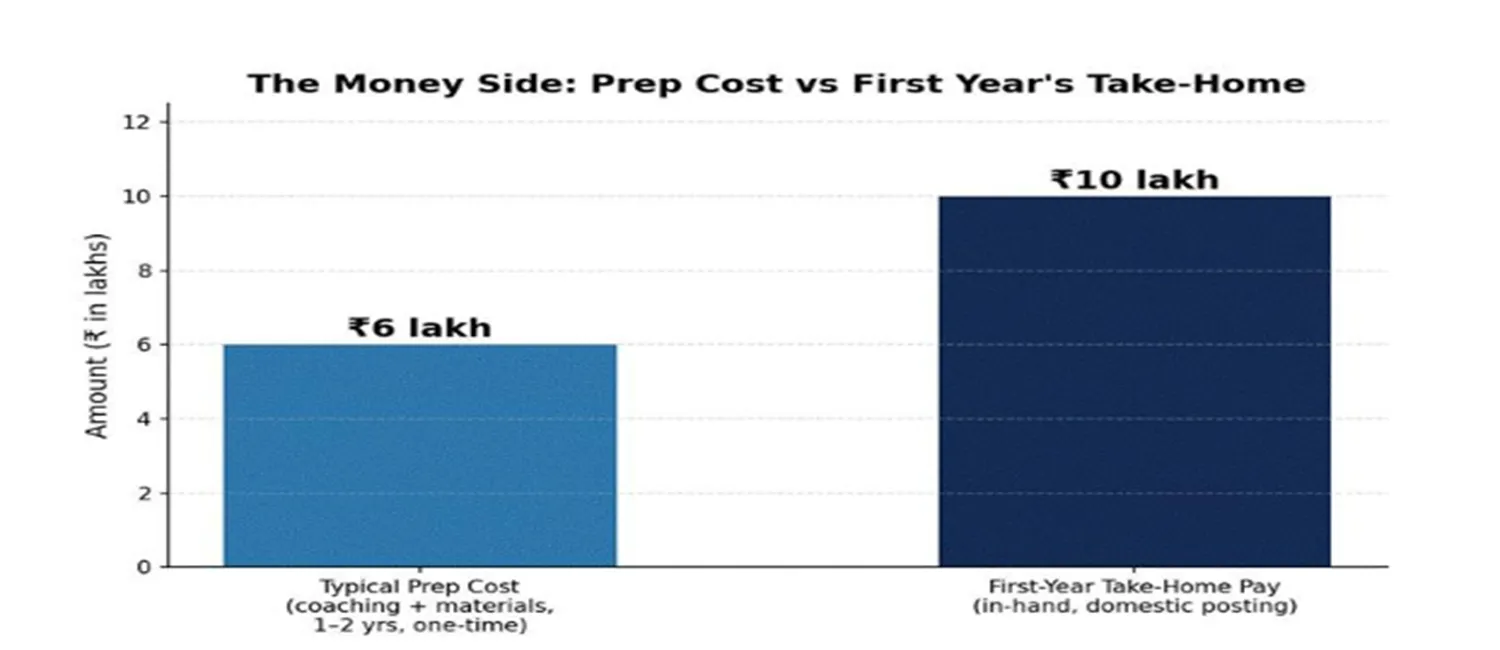
A serious UPSC attempt isn’t free. A full year of classroom coaching for General Studies plus an optional subject in Delhi typically runs somewhere between ₹1 lakh and ₹3 lakh a year, depending on the institute and course format. Add books, test series, and a second attempt — which is the norm rather than the exception — and the honest figure for a full two-year preparation cycle lands closer to ₹5–6 lakh once you also count the income a graduate gives up by studying instead of working during that stretch.
What Comes Back
Basic pay for a fresh IFS officer starts at ₹56,100 a month and climbs to roughly ₹2.25 lakh a month by the apex level under the current pay matrix — but that’s only the base figure. Once allowances, housing and transport are folded in, in-hand pay for an entry-level domestic posting usually works out to ₹75,000–90,000 a month — and that’s before a single foreign posting even begins. Send the same officer abroad, and the Special Foreign Allowance alone can push monthly take-home well past ₹2 lakh, depending on the country of posting.
Graph: The Money Side — Prep Cost vs First Year’s Take-Home
| Parent Insight:
Add up one full year of in-hand salary, and it already outweighs the total money spent preparing. The coaching fee isn’t really a sunk cost — it’s closer to a one-time entry ticket to a government salary that keeps compounding for the next three decades. |
The Time You Put In
Time is the harder cost to measure, because it never shows up on a receipt. Most serious aspirants spend a year or two in focused preparation before their first attempt, and General category candidates get six attempts spread across an eleven-year window, from age 21 to 32 to use them. The average age of a candidate who actually clears it sits close to 27. None of that is a small ask, especially set against an IFS intake that stays around 30–35 seats a year.
But time spent chasing the IFS behaves differently from time spent job-hopping in the private sector. Once selected, an officer steps onto a fixed ladder for the next 30-plus years — regular promotions, a pension waiting at the end, and postings that keep growing in scope instead of resetting to zero with every new employer.
| Parent Insight:
The ROT math isn’t really about beating the odds in one attempt — it’s about whether two or three focused years are worth trading for three decades of a stable, upward-moving career. For most families, that’s the real question, not the exam itself. |
So — is it worth it? On the money side, yes: the payback on preparation costs happens fast once a posting actually begins. On the time side, it depends on how your family defines “worth it” — a few years of uncertain preparation set against a career that, once it starts, rarely resets to zero. Both numbers matter. Now you have both in front of you, instead of just the glamour of a flag-lined corridor.
The Next Decade: The Future of Indian Diplomacy
Curious if the role of an IFS officer will hold relevance a decade from now? The answer is absolutely — because diplomacy will always matter, even as the tools evolve.
- From Static Postings → To Dynamic Global Engagements: Diplomats will increasingly work virtually, across regions, and in hybrid roles
- From Bilateral Talks → To Multi-Issue Diplomacy: Climate, cybersecurity, migration and global health will dominate
- From Protocol → To People Relations: Soft power, storytelling and network building will become even more critical
- From National Missions → To Global Leadership: India’s rising global role means more opportunities, more missions and richer exposure
| Parent Insight:
Help your child develop a global mindset, curiosity for world affairs and comfort in diverse environments — these traits make them future-ready, regardless of specific titles. |
Final Word: Building Global Leaders, Not Just Diplomats
A career in the Indian Foreign Service isn’t just about representing the nation — it’s about influence, strategic counsel, and global partnerships. For students, it offers intellectual challenge, international exposure and personal growth. For parents, it’s a path that blends service, leadership and global opportunity.
At NextMovez, we help families move past myths of “embassy lunches and flag hoisting” to understand the real skills and mindset behind effective diplomacy.
Still wondering if the IFS is right for your child? Our expert coaches use the Best-Fit Career Zone™ to map interests, strengths and values to global service pathways — helping you make an informed, confident choice.
Because success isn’t about choosing the easiest path — it’s about choosing the right one. Let’s help your child make that choice with clarity.
Need guidance on the UPSC path or how to become an IFS officer? Reach out to NextMovez for personalized career counselling.
Resources & References
- Ministry of External Affairs: About the Indian Foreign Service
- Ministry of External Affairs: About MEA (intake data)
- Economic Times: India approves major foreign service restructuring, adding ~215 IFS officers
- Outlook India: India’s Foreign Service Crisis — Big Dreams, Thin Cast
- ThePrint: Understaffed MEA slowing down India’s diplomatic sprint
- The Tribune: India currently has 1,177 IFS officers in service
- Vajirao Institute: IFS pay scale, from entry to apex level
- KPR IAS Academy: IFS in-hand salary breakdown
- IAS Coaching Delhi: UPSC coaching fee structure
- Sleepy Classes: Average age and success rate of UPSC candidates
- Anantam IAS: UPSC attempts and age-limit rules, category-wise