Blog written by Indu R Eswarappa, Career Coach & Education Change-Maker
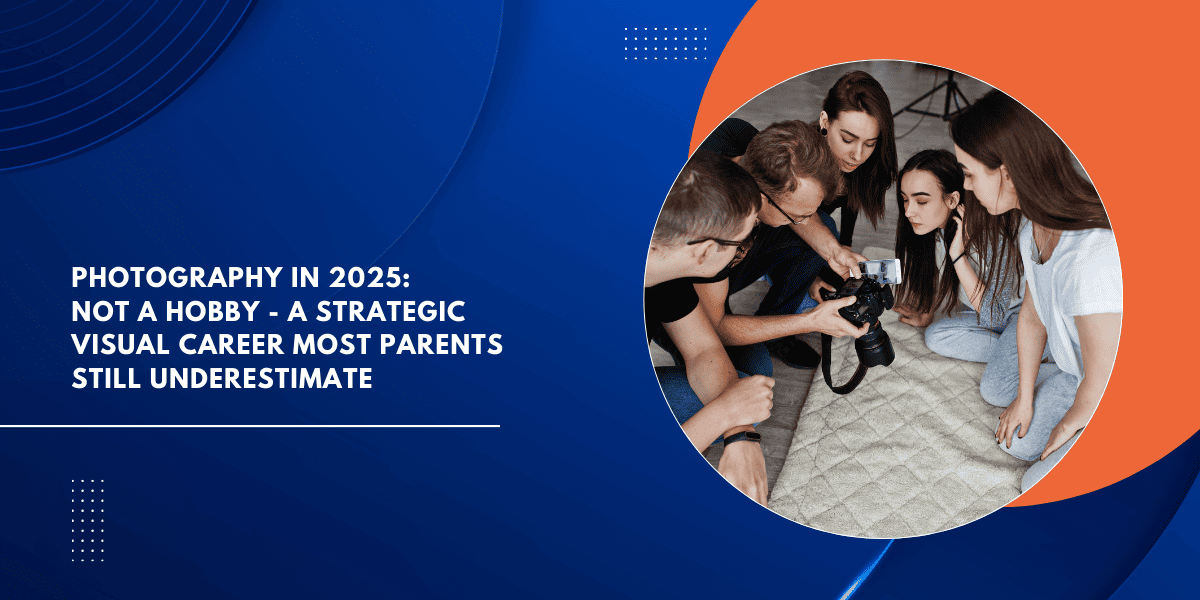
If you’ve ever wondered, “How do I become a photographer?” or “What skills do I need to start a career in photography?” then you’re in the right place.
In my opinion, photography allows you to combine technical skills with creativity to make an impact.
Whether you want to be a freelance photographer or work in a studio, this career offers countless opportunities to explore different genres, like portrait, landscape, fashion, or event photography.
In this blog, I’ll guide you through the essential skills you’ll need, the best courses to take, the typical career path, and income opportunities in the photography industry.
By the end of this guide, you’ll have a clear understanding of what it takes to become a photographer and how to start your career.
Key Responsibilities and Work Environment of a Photographer
When you become a photographer, no two days are ever the same. Whether you’re on location for a wedding shoot, capturing portraits in a studio, or shooting landscapes, the work is varied, creative, and fulfilling.
In my opinion, being a photographer is one of the most dynamic and exciting careers. It’s not just about taking pictures, it’s about understanding light, composition, and the technical side of photography, all while being able to connect with your subject and convey a story.
Let me break down the key responsibilities and work environments you can expect as a photographer:
Key Responsibilities

Shooting and Capturing Moments
The core responsibility of a photographer is to shoot and capture high-quality images. Whether it’s at an event, a photoshoot, or for an assignment, your primary job will be to capture moments that reflect the subject’s essence and the message you’re trying to convey.
Editing and Post-Processing
After the shoot, photographers often spend significant time editing their images. Using software like Adobe Lightroom or Photoshop, photographers enhance their shots, adjust lighting, and crop images to achieve the desired effect. This is a crucial step that turns raw images into polished, professional works.
Client Communication
For many photographers, working directly with clients is an essential part of the job. This could involve discussing concepts, understanding what the client wants, and setting expectations. Being able to communicate clearly with clients is key to creating a successful shoot and maintaining good relationships.
Work Environment
In a career in photography, you could find yourself working in a variety of settings. Some photographers work in studios, others are on location for events or shoots, and some are even travel photographers capturing scenes from around the world.
You’ll likely spend time both indoors and outdoors, adjusting to different lighting conditions and environments. As a freelance photographer, you’ll also work from home to edit your photos, manage bookings, and handle the business side of things.
Whether you’re working alone, in a studio, or on a team for larger projects, the work environment for a photographer can be both independent and collaborative, depending on your chosen niche.
Necessary Soft Skills and Technical Abilities for a Photographer

Whether you’re capturing portraits, shooting weddings, or taking commercial photographs, both soft skills and technical abilities are essential to success in photography. Let’s break down the soft skills and technical abilities you’ll need to thrive.
Soft Skills
Creativity and Vision
In my experience, creativity is the heart of photography. You need to have an artistic eye to capture moments in a unique way. Every photograph should tell a story or evoke emotion, so the ability to envision your shots before you take them is crucial.
Communication and Client Management
Photographers often work with clients, so good communication skills are key. Whether you’re collaborating with a team or engaging with a client, being able to understand their vision and translate it into images is vital. Your ability to manage relationships and set clear expectations will also play a big role in securing repeat business.
Attention to Detail
A successful photographer needs to pay close attention to every detail — from lighting to composition, camera settings, and the subject in front of the lens. Minor adjustments can have a huge impact on the final image, so being detail-oriented is crucial.
Technical Abilities
Camera Operation and Settings
Understanding your camera is essential. Whether it’s a DSLR or mirrorless camera, knowing how to use manual settings like shutter speed, aperture, and ISO is key to getting the perfect shot.
Editing and Software Proficiency
You’ll need to be skilled in post-processing software like Adobe Lightroom and Photoshop. The technical ability to enhance images, adjust colors, and correct lighting flaws can make or break a photo shoot.
Lighting Knowledge
Mastering both natural and artificial lighting is one of the most important technical abilities you’ll need. Photographers often need to use reflectors, flashes, and softboxes to create the ideal lighting conditions for their subjects.
Educational Pathways and Required Qualifications

While photography is a creative field, having the right educational background can definitely help you succeed.
Whether you’re learning the basics or diving into advanced techniques, here’s an overview of the typical educational pathways:
While formal education can provide you with structured learning, many successful photographers are self-taught and learn on the go. However, a degree or diploma can help if you want to gain in-depth knowledge and get hired in a studio or agency.
Typical Career Path for a Photographer
A career in photography offers incredible opportunities for creativity, skill development, and specialization. Whether you’re just starting as a beginner or aiming to become a leading photographer in a specific field, the career path in photography has many stages and possibilities. Here’s an overview of the typical career progression, from entry-level roles to senior positions.
Entry-Level Roles: (0-3 years)
Positions: Junior Photographer, Assistant Photographer, Photography Intern, Freelance Photographer
Focus: As a new photographer, you’ll start your career in an entry-level role. These positions often involve assisting senior photographers, setting up lighting, organizing equipment, and gaining experience in different types of photography. You might also be involved in post-processing and photo editing, and building your portfolio by taking on small projects or freelance gigs.
Growth Tip: The key to advancing early in your career is to master the basics of photography, become proficient with your camera equipment, and build a strong portfolio. The more varied your portfolio, the better your chances of landing bigger projects. Networking with clients and other photographers will also set you up for promotions and better opportunities.
Mid-Level Roles: (3-7 years)
Positions: Photographer, Senior Photographer, Photography Specialist, Studio Photographer
Focus: After a few years of experience, you’ll be handling your own shoots and working more independently. You may specialize in areas like portrait, event, or commercial photography. At this stage, you could be working on larger projects, managing your own clients, and possibly even overseeing a small team or assistant photographers. You might also focus on building a personal brand and working on building up your client base.
Growth Tip: Specializing in a niche, such as wedding photography, fashion photography, or product photography, can open up additional career opportunities. Building a reputation for high-quality work and having a professional online presence can accelerate your career progression.
Senior Roles: (7-15 years)
Positions: Senior Photographer, Photography Director, Lead Photographer, Head of Photography Studio
Focus: By this stage, you’ll have extensive experience and may lead your own photography studio or team. You’ll manage high-profile clients, work on large-scale shoots, and make key decisions on creative direction.
You could also be in charge of overseeing the business side of photography, including marketing, client relations, and contracts. This is also the time when you may begin mentoring junior photographers or taking on leadership roles in photography organizations.
Growth Tip: Continuing your education in photography, whether through workshops or formal classes, will help keep you on top of new techniques and technologies. This could include learning advanced editing software, new shooting techniques, or even mastering drones for aerial photography. At this stage, leadership, a strong portfolio, and a solid client base are crucial for further growth.
Return on Investment (ROI) for a Photographer

A career in photography can be both financially rewarding and creatively fulfilling. While the initial investment in equipment, education, and building a portfolio may seem significant, the return on investment (ROI) in terms of income potential, job satisfaction, and long-term career growth can be substantial.
Here’s a breakdown of the costs involved and the ROI for a photographer.
Education and Earning Potential
- Basic Photography Courses: ₹10,000 to ₹30,000 for online or in-person courses covering the basics of photography, including camera settings, composition, and editing.
- Advanced Photography Courses: ₹50,000 to ₹1 lakh for professional programs or degree courses in photography, depending on the institution and specialization.
While these costs may seem significant initially, they are long-term investments that will pay off as you build a strong portfolio and grow your business. High-quality equipment and professional development are essential for producing top-tier work, and these investments are crucial for standing out in a competitive field.
Earnings Potential
- Entry-Level Photographer (0-3 years): ₹20,000 to ₹40,000 per month (freelance or assistant roles). Many photographers start by assisting senior photographers or taking on smaller freelance jobs to build their portfolio and reputation.
- Mid-Level Photographer (3-7 years): ₹50,000 to ₹1 lakh per month. With experience and a solid portfolio, you’ll likely secure your own clients and work on larger projects, such as weddings, corporate shoots, or events.
- Experienced Photographer (7-15 years): ₹1 lakh to ₹2.5 lakh per month. As you become more established, you may specialize in high-demand niches like commercial or fashion photography and work with larger brands, allowing for higher-paying gigs.
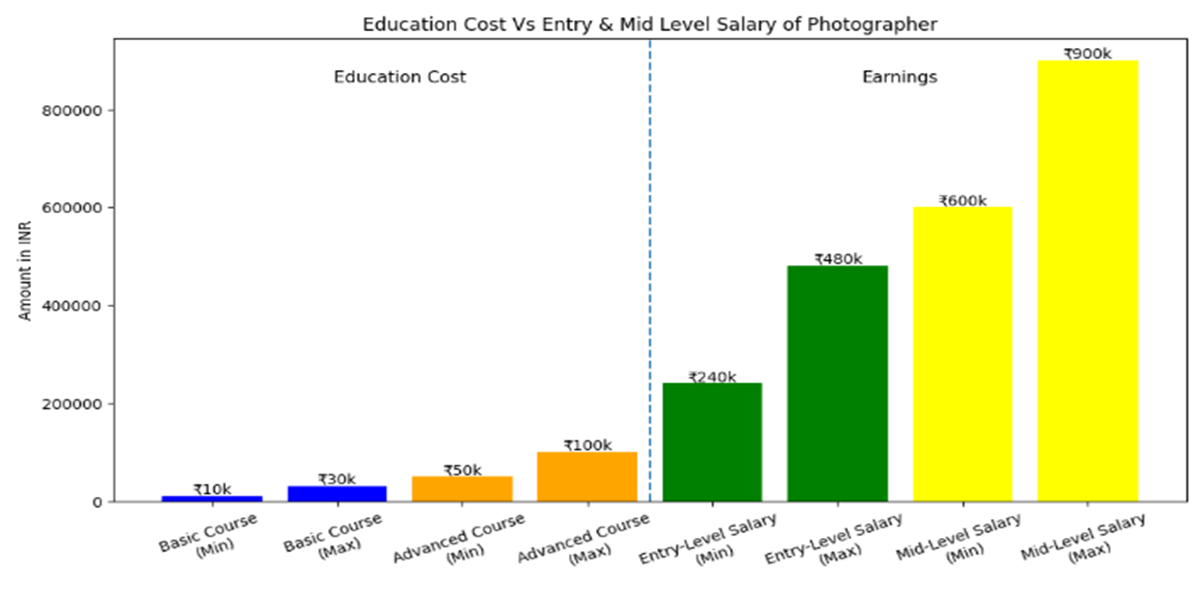
As you specialize and become more recognized in your niche, the earning potential increases significantly. A successful photographer who has established their brand and built a loyal client base can enjoy a substantial income with flexibility and autonomy.
Return on Time (ROT) for Photographers

The time it takes to start earning as a photographer is relatively short compared to other careers. Many photographers begin earning as soon as they start working on small projects, freelance gigs, or assisting senior photographers.
Break-even Point:
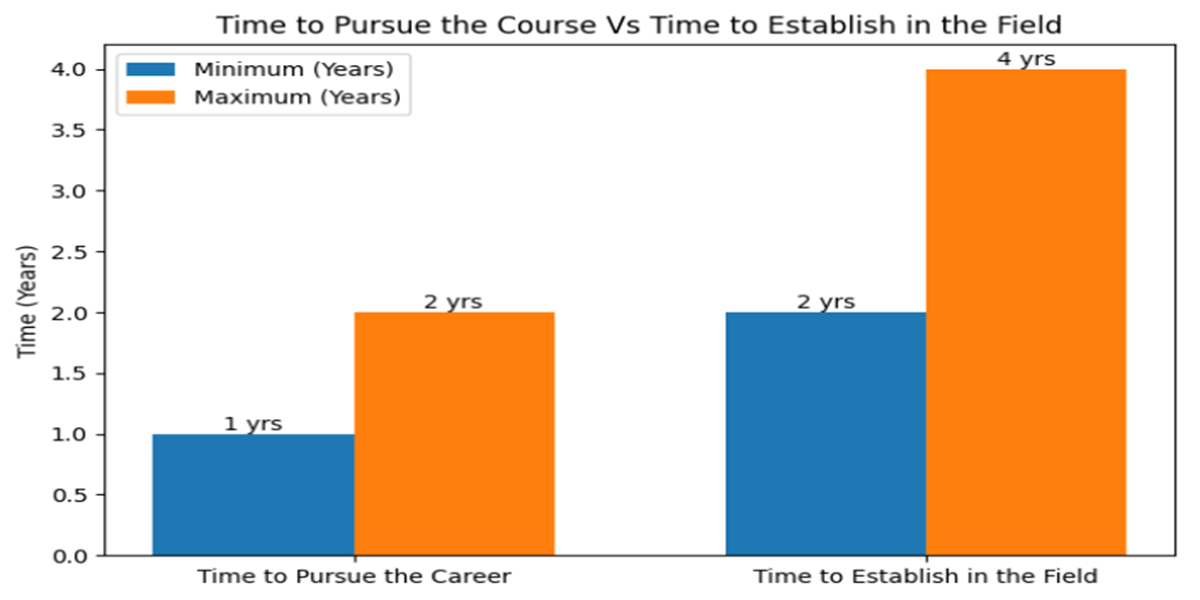
In my experience, most photographers begin seeing a return on their investment within the first 1-2 years. While the initial costs of equipment and education may take time to recoup, the ability to book paid shoots and establish a client base allows you to start making money relatively quickly. Once you begin getting consistent work, the ROI starts to show through.
Fast-Track Opportunities
Specializing in high-demand photography niches can help fast-track your career and increase your earnings. For instance, focusing on areas like fashion photography, commercial advertising, or wedding photography can offer higher pay and more job security. As the demand for professional photographers grows, establishing a niche will help you stand out.
Additionally, leveraging digital platforms like Instagram, YouTube, or personal websites to showcase your work can accelerate your exposure and client acquisition. Many photographers who market themselves effectively online experience rapid growth in their careers, attracting a broader audience and higher-paying clients.
Future Prospects: The Next 20–30 Years in Photography

The photography industry is continuously evolving with technological advancements. The next 20–30 years will see new developments in camera technology, photo editing software, and digital platforms. Artificial Intelligence (AI) and automation are likely to play a larger role in both the creative and technical aspects of photography. For example, AI-powered cameras might automatically adjust settings for the best possible shot, and software may be able to help with more advanced edits in a fraction of the time it currently takes.
In addition, as virtual reality (VR) and augmented reality (AR) gain popularity, photographers may be required to capture immersive images for these platforms. The rise of social media and the increasing demand for digital content will also open new opportunities for photographers in influencer marketing, social media content creation, and virtual events.
The future of photography will offer exciting opportunities for those willing to adapt to new tools and platforms. Specializing in fields like commercial photography, aerial drone shots, or 360-degree photography could set you up for success in the years to come.
Conclusion
Becoming a photographer isn’t just about taking great pictures — it’s about understanding light, mastering your tools, and telling powerful stories through your lens. The journey to becoming a professional photographer involves learning technical skills, developing your artistic eye, and building a strong portfolio.
Whether you want to pursue a career in photography as a freelancer, in a studio, or with a major media outlet, the field offers numerous opportunities for growth and specialization.
Navigating this path can be challenging, and that’s where NextMovez can help. Our career counselling for professionals, or career coaching, can support you at every step. A career coach can guide you in choosing the right specialization, help you build a portfolio, and share practical guidance on growing your business as a photographer.
I hope this guide has helped you understand how to become a photographer and what steps to take to build a fulfilling career. If you’re unsure about which niche to pursue or need help with building your portfolio, feel free to reach out. I’m happy to help you on your photography journey!
Resources and References
Career in photography
https://www.sac.ac.in/blogdetail/career-in-photography/
32 Careers in photography
https://www.indeed.com/career-advice/finding-a-job/list-of-careers-in-photography
Creativity is the heart of photography
https://www.pearlacademy.com/blog/film/why-choose-photography-as-a-career
Age is just a number in photography
Professional Programs in Photography
https://www.adorama.com/alc/going-pro-in-2025-heres-what-matters/
Starting a Photography Career
https://www.diyphotography.net/why-volunteering-is-the-best-way-to-start-a-photography-career/
Photography Course in India