Blog written by Indu R Eswarappa, Career Coach & Education Change-Maker
Becoming a police officer in India is more than just a career — it’s a path dedicated to serving the public, ensuring justice, and upholding the law. If you’ve been thinking about joining the force and wondering, “How to become a police officer in India in 2026?” then you’re definitely in the right place.
In my opinion, becoming a police officer is one of the most noble callings. It’s about making a difference in your community. It’s a career where you’re actively involved in protecting citizens, solving crimes, and ensuring the safety of your neighborhood.
But before you start picturing yourself as part of the force, there’s a lot you need to know — from the qualifications you need to the exams you’ll have to crack, and the training that will prepare you for the challenges of the job.
In this blog, I’ll walk you through the step-by-step guide on how to become a police officer in India in 2026.
By the end of this guide, you’ll have a clear understanding of the pathway to becoming a police officer in India, along with career guidance for students on what to expect while pursuing this noble profession.
Key Responsibilities and Work Environment of a Police Officer
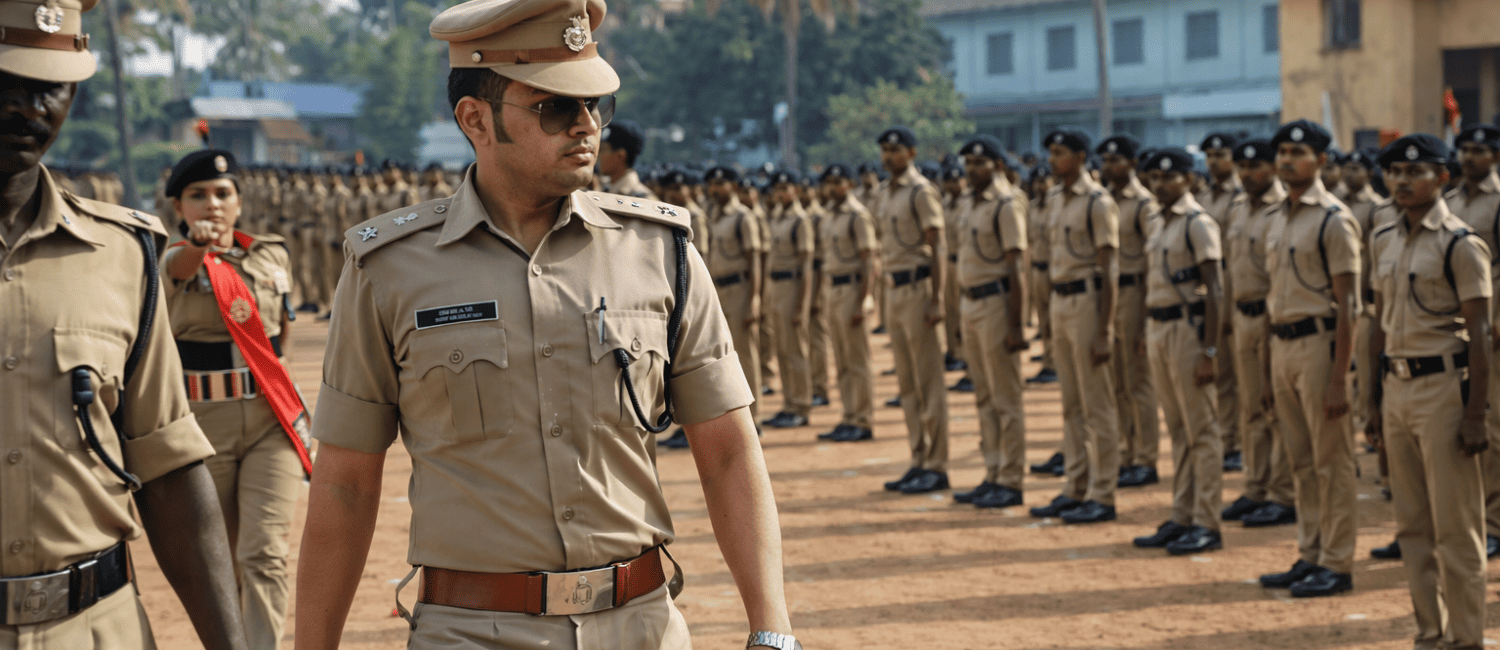
When you become a police officer in India, no two days are ever the same. Whether you’re on patrol, investigating crimes, or responding to emergencies, the work is varied, challenging, and impactful.
In my opinion, working as a police officer is one of the most fulfilling careers. It’s not just about enforcing the law, but about ensuring the safety of the community and upholding justice in the face of adversity.
Let me walk you through the key responsibilities of a police officer and the kind of work environment you can expect to find in this role.
Key Responsibilities
Patrolling and Ensuring Public Safety
At the heart of a police officer’s job is patrolling assigned areas and ensuring public safety. Whether you’re walking the beat in a crowded marketplace or driving through a quiet neighborhood, your presence is there to deter crime and provide reassurance to the public. This role requires a sharp eye, quick thinking, and the ability to handle high-pressure situations with calmness.
Investigating Crimes
Another major responsibility is investigating crimes. This could involve everything from gathering evidence at crime scenes, interviewing witnesses and suspects, to working with forensic teams to crack cases. As a police officer, you’ll need strong problem-solving skills and a keen attention to detail to solve cases effectively.
Maintaining Law and Order
Whether it’s during festivals, protests, or any public gathering, maintaining law and order is a constant part of the job. As a police officer, you’ll play an essential role in ensuring that the public follows the law while managing crowd control during big events.
Assisting in Emergency Responses
Police officers are often the first responders during emergencies, be it accidents, fires, or natural disasters. The job requires quick decision-making and the ability to stay composed during chaotic situations. You may be required to provide first aid, direct traffic, or help evacuate people during a crisis — it’s a job that keeps you on your toes.
Work Environment
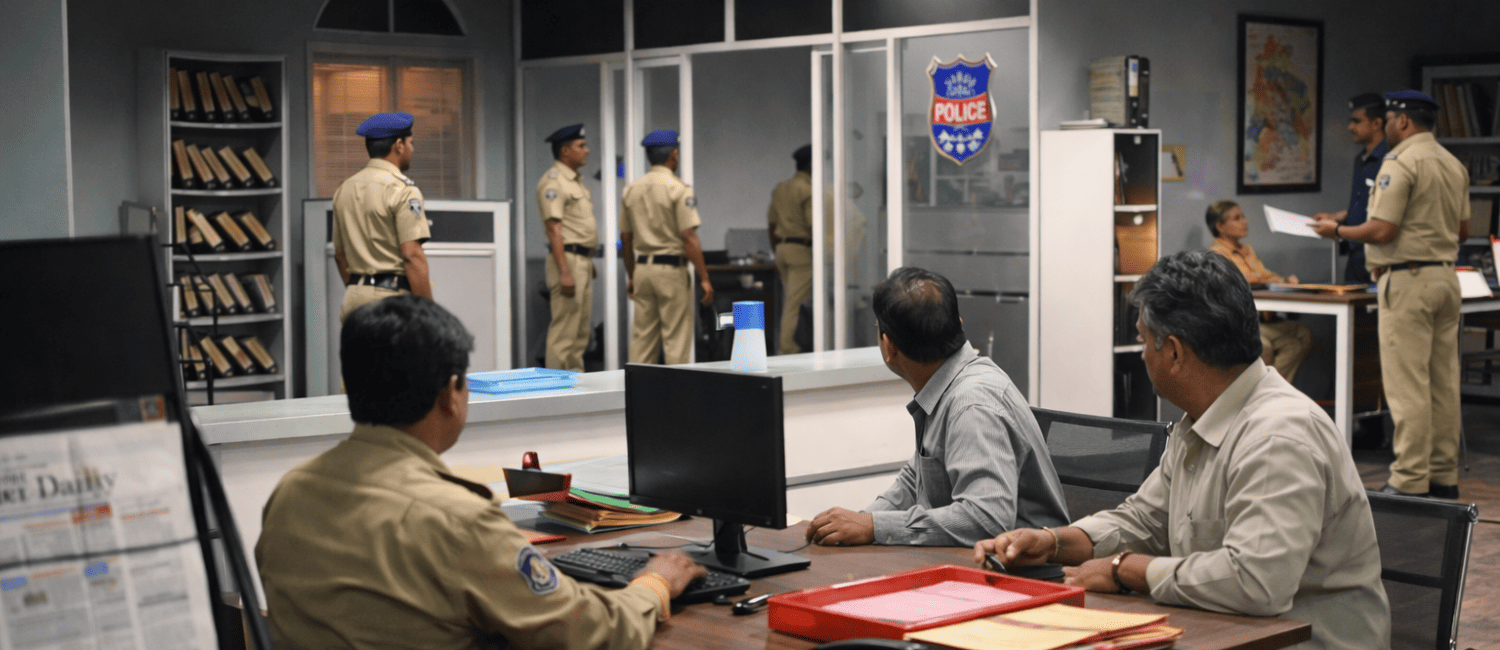
In my experience, the work environment for a police officer is as dynamic as the job itself. Whether you’re stationed at a police station, patrolling the streets, or in the field during an emergency, there’s always something happening. Let me break down where you might work and what to expect.
Police Stations
The most common work environment for a police officer is the police station. Here, you’ll handle administrative duties like filing reports, coordinating with other departments, and maintaining records. This environment is often fast-paced, with officers constantly working on cases, taking calls, and preparing for the next shift.
Patrolling and Responding to Calls
A large portion of a police officer’s day is spent on the field, patrolling neighborhoods, responding to emergency calls, and being present during incidents. This part of the job is where you’ll encounter the most diverse situations, ranging from handling traffic violations to managing public disputes and criminal investigations. It’s hands-on, action-packed, and often unpredictable.
Investigation Units and Crime Labs
If you’re part of a specialized unit like the Crime Branch or CID (Criminal Investigation Department), you may spend time working in investigation units or even crime labs. Here, you’ll dig deep into cases, collect evidence, and collaborate with forensic experts to solve complex crimes. This environment is more investigative and analytical, where you’ll apply critical thinking to crack cases.
Courtrooms and Legal Proceedings
Police officers are also involved in legal proceedings. You may have to testify in court, present evidence, or assist legal teams with case details. It’s a crucial part of the role as the evidence you gather in the field can play a key part in the outcome of a trial.
Training Camps and Police Academies
The police academy is where you’ll undergo rigorous training to prepare you for real-world scenarios. These environments are high-intensity, focusing on building physical strength, learning self-defense techniques, and mastering police protocols.
Educational Pathways and Required Qualifications
Becoming a police officer in India depends on having the right educational qualifications and preparing yourself for the demands of the job.
Whether you’re wondering, “How to become a police officer?” or “What qualifications do I need to become a police officer in India?”, the journey starts with education and preparation, followed by physical and written exams.
In my opinion, pursuing a career in law enforcement is about combining academic knowledge, physical fitness, and a sense of duty to serve and protect. Your educational journey will involve a mix of formal qualifications, clearing competitive exams, and, of course, staying physically fit.
Let’s break down the education and entrance exams you’ll need to go through to become a police officer in India.
Education and Entrance Exams
Necessary Soft Skills and Technical Abilities
Whether you’re dealing with an emergency or working with your team to investigate a crime, how well you communicate and problem-solve can make all the difference.
Let’s break down the essential soft skills and technical abilities you’ll need to thrive as a police officer in India.
Soft Skills
Communication Skills
In my opinion, communication is one of the most important skills for any police officer. Whether you’re talking to witnesses, suspects, or colleagues, you need to be able to express yourself clearly and listen actively. Good communication helps you gather information, build trust with the community, and make sure that instructions are understood and followed, especially during tense situations.
Teamwork and Collaboration
As a police officer, you won’t be working alone all the time. Whether you’re patrolling with a partner, collaborating with other law enforcement agencies, or coordinating with medical and emergency response teams, teamwork is crucial. You’ll need to be able to trust your colleagues, delegate tasks, and work together to solve problems efficiently. A cohesive team makes everything from investigations to emergency responses run smoothly.
Problem-Solving
Police officers face unpredictable situations daily, and they need to think quickly and creatively to resolve issues. Whether it’s defusing a tense situation, finding the best course of action during a crime scene investigation, or solving a case, being a problem-solver is a key skill. The ability to make decisions under pressure, sometimes with limited information, is essential in this line of work.
Attention to Detail
When investigating crimes or patrolling an area, attention to detail is critical. A small clue or overlooked piece of evidence could make all the difference in solving a case. You need to be meticulous — whether it’s documenting evidence, reviewing reports, or noticing changes in a neighborhood. Accuracy is key in this role.
Physical Requirements Guide for Police Officers (Men and Women)
While mental acuity is key, physical fitness is also a significant factor in becoming a police officer. Police work can be physically demanding, so there are certain physical standards you must meet to qualify.
For Men:
- Age: The age limit for most police recruitment exams is typically between 18 and 25 years. However, age relaxations are provided for certain categories such as SC/ST candidates.
- Height: The minimum height requirement is usually around 165 cm (5’5”).
- Weight: The weight is generally calculated in proportion to height and should fall within the BMI range of 18.5 to 24.9. There’s a specific weight range that must be maintained based on your height.
- Chest: The chest measurement should be at least 81 cm (32 inches) with an expansion of 5 cm (2 inches).
- Vision: Candidates must have normal vision, with the requirement typically being 6/6 vision in both eyes (no glasses). For candidates who wear glasses, the vision should still be good, but it may be more lenient depending on the recruitment board.
For Women:
- Age: Like men, the age range for women is generally between 18 and 25 years, with possible relaxations for some categories.
- Height: The minimum height requirement for women is usually around 150 cm (4’11”).
- Weight: Similar to men, women must meet specific weight criteria based on their height, and their BMI must fall within the healthy range.
- Chest: Women’s chest measurements are typically not required for recruitment, but some police forces may have a specific guideline.
- Vision: Women must also have 6/6 vision in both eyes, though there are sometimes allowances for candidates who wear glasses, provided their vision is still good.
Physical Tests:
- Running: A standard physical test includes running 1.6 kilometers (for men) or 800 meters (for women) within a specified time frame.
- Push-ups and Sit-ups: Some exams also include push-ups and sit-ups to test upper body and core strength.
- Long Jump and High Jump: These are additional physical requirements to test agility and overall fitness.
Regular physical training and staying in good shape will help you in the long run, both during your training period and throughout your career.
Technical Abilities for Police Officers
Whether you’re working with crime scene evidence, handling modern policing equipment, or using technology for investigations, these technical skills are essential for performing your duties with precision and efficiency.
Let’s dive into the key technical abilities you’ll need to thrive as a police officer.
Crime Scene Investigation and Forensic Skills
One of the core responsibilities of a police officer, especially those involved in criminal investigations, is gathering and analyzing evidence from crime scenes. This requires proficiency in basic forensic techniques, such as collecting fingerprints, securing DNA samples, and photographing the scene.
Technology and Cybersecurity Awareness
In today’s modern world, technology plays a big role in law enforcement. As a police officer, you’ll be expected to use computers, mobile devices, and other technology to perform tasks like checking criminal databases, tracking suspects, or analyzing surveillance footage. Understanding how to use these tools efficiently is key to staying on top of your work.
Knowledge of Legal Software and Databases
Police officers frequently use specialized software to track cases, manage evidence, and keep records. Familiarity with these legal tools is important, as it allows you to quickly input data, search for criminal records, or pull up relevant case files during investigations. This is also where attention to detail comes in — accurate data entry and retrieval are essential for maintaining case integrity and staying on top of your workload.
Weapon Proficiency and Handling
Another technical ability essential for police officers is proficiency in handling firearms and other law enforcement tools. Whether it’s a pistol, a baton, or non-lethal equipment like a taser, knowing how to safely and effectively use weapons is crucial.
Traffic and Vehicle Control Skills
Police officers often play a role in managing traffic and responding to accidents. Understanding how to direct traffic efficiently and safely can be a lifesaver, especially in emergencies. Additionally, knowing how to handle and operate police vehicles during high-speed chases or in crowded situations requires both practical experience and technical skill.
Typical Career Path for a Police Officer in India
A career in law enforcement offers a range of opportunities for growth and advancement. Whether you’re just starting out as a constable or aiming to become a top-ranking officer, there are various career stages you’ll go through.
Here’s an overview of the typical career progression for police officers in India, from entry-level roles to specialist and leadership positions.
Entry-Level Roles: (0-3 years)
Positions: Police Constable, Sub-Inspector, Assistant Sub-Inspector (ASI)
Focus: As a new recruit, you’ll likely start your career in a basic law enforcement role. The most common entry-level positions are police constables or sub-inspectors. In these roles, you’ll be responsible for maintaining law and order, patrolling assigned areas, handling emergencies, and assisting in criminal investigations.
Growth Tip: The key to moving forward is gaining hands-on experience in various areas, whether it’s traffic management, criminal investigations, or public safety.
Mid-Level Roles: (3-7 years)
Positions: Inspector, Detective, Police Sergeant, Crime Branch Officer
Focus: After a few years, you may be promoted to mid-level roles like Inspector or Detective. In these positions, you’ll have more responsibility, managing investigations, overseeing a team of junior officers, and making critical decisions during operations. You might also get involved in specialized areas such as cybercrime, counter-terrorism, or narcotics control.
Growth Tip: Specializing in a specific field, like forensic science or cybercrime investigation, will provide additional career opportunities. The more specialized your skill set, the more likely you are to rise quickly within the department.
Senior Roles: (7-15 years)
Positions: Deputy Superintendent of Police (DSP), Assistant Commissioner of Police (ACP), Deputy Commissioner of Police (DCP)
Focus: By this stage in your career, you’ll likely be in a leadership role. As a DSP or ACP, you will be managing entire police divisions, overseeing multiple teams, and coordinating law enforcement efforts on a larger scale. Your responsibilities will include policy development, training new officers, and representing the police force in official functions.
Growth Tip: To further progress, many officers opt for higher education such as a Master’s in Criminology or Police Administration. Continuing to perform well and showcase leadership will make you eligible for top-tier roles within the force.
Top-Level Roles: (15+ years)
Positions: Superintendent of Police (SP), Commissioner of Police (CP), Director General of Police (DGP)
Focus: These are the highest-ranking positions in the police force. As a top officer, you will oversee the entire functioning of the police department in a large city or region. You’ll be responsible for major law enforcement decisions, strategic planning, and managing high-profile criminal cases or operations. Officers at this level also play a crucial role in shaping police policies and improving the overall efficiency of the force.
Growth Tip: To reach the highest ranks, having a blend of excellent field experience, strong leadership qualities, and advanced academic qualifications is key. Continuous professional development and staying updated with law enforcement trends will also help in securing these prestigious roles.
Salary Expectations and ROI for Police Officers in India
One of the most common questions aspiring police officers ask is, “What’s the salary like, and will this career provide financial stability and growth?” The short answer is yes — a career in law enforcement not only offers a stable income but also provides a variety of growth opportunities at different ranks.
Return on Investment (ROI)
The police force in India is a well-respected profession, and while it may not offer the same earning potential as some corporate roles, it provides other non-financial benefits, such as job security, benefits, and a sense of duty and purpose.
As a police officer, especially in higher ranks, you can expect a reasonable salary with opportunities for growth and additional benefits over time.
The costs to become a police officer in India, such as education and training, are relatively low compared to other professions, and the return on investment (ROI) in terms of salary and career satisfaction is worth it.
Education Costs (approximate)
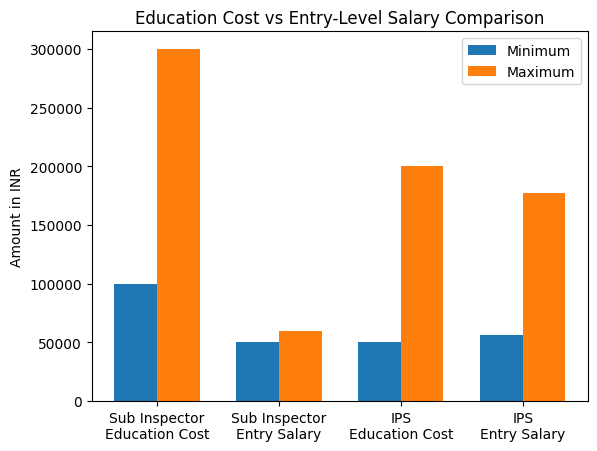
- Sub-Inspector (UG): Around ₹1 lakh to ₹3 lakh for coaching and exam preparation, with most candidates attending coaching centers for competitive exams.
- Police Officer (IPS): Education costs depend on your degree — but a typical undergraduate course costs ₹50,000 to ₹2 lakh per year, and preparation for the UPSC exams can add additional costs.
Earnings Potential
- Entry-Level Salary (Sub Inspector – UG): ₹50,000 to ₹60,000 per month
- Entry-Level Salary (IPS Officer): ₹56,100 to ₹1,77,500 (level 10 of the pay matrix as per the 7th Pay Commission)
As you progress in your career and move into senior roles, the salary can significantly increase. Senior officers in the IPS, such as the Director-General of Police (DGP), can earn well over ₹2 lakh per month, with additional allowances, benefits, and perks.
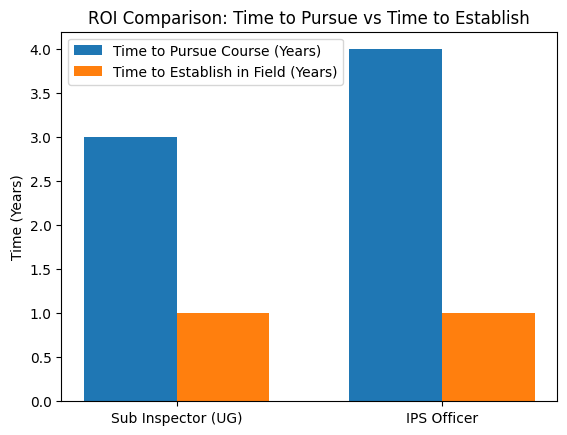
Return on Time (ROT) for Police Officers
The time it takes to start earning after completing your education and training is relatively short.
Many candidates who pass the police exams start receiving their salaries soon after they complete their training, which is typically around 6 to 12 months.
Break-even Point
In my experience, most police officers, including IPS personnel, begin earning even during their training. Likewise, they start receiving salaries right after joining the service.
Fast-Track Options
Specializing in areas such as cybercrime, counter-terrorism, or intelligence can fast-track your career, helping you get promoted to higher ranks more quickly.
Future Prospects: The Next 20–30 Years in Policing in India
The future of policing in India is set to undergo significant changes over the next 20–30 years, driven by technological advancements, evolving societal needs, and the growing complexity of crime. As cities grow and technology evolves, the role of a police officer will continue to adapt, requiring new skills, modern tools, and updated strategies to address emerging challenges.
Over the next few decades, technology will play a huge role in shaping policing in India. From artificial intelligence (AI) and big data analytics to drone surveillance and facial recognition, law enforcement agencies are increasingly relying on tech to improve efficiency, reduce crime, and make the work of police officers more precise.
As the country becomes more digitally connected, cybersecurity will become an increasingly important aspect of police work. Policing will not just be about physical patrolling and solving crimes in the field; it will also involve combating cybercrime, data theft, and online fraud.
Conclusion
Becoming a police officer in India isn’t just about enforcing the law or making arrests — it’s about serving and protecting the community, maintaining peace, and upholding justice. Police officers play a vital role in safeguarding citizens, resolving conflicts, and ensuring the safety of our neighborhoods. Whether you’re responding to emergencies, investigating crimes, or leading important law enforcement initiatives, your work as a police officer has a profound impact on society.
Whether you’re interested in a career in law enforcement at the ground level or aim to reach top ranks like the IPS, the police force offers many opportunities for growth, specialization, and leadership. At Next Movez, our Career counselling for professionals can help you navigate these options.
I hope this guide has helped you understand the steps, qualifications, and career paths involved in becoming a police officer in India. If you’re unsure about which role or career path within the police force is best for you, or if you need guidance on your preparation, feel free to reach out. I’d be happy to help you navigate this rewarding and impactful career journey.