Blog written by Preethi Durga, a career strategist and education innovator.
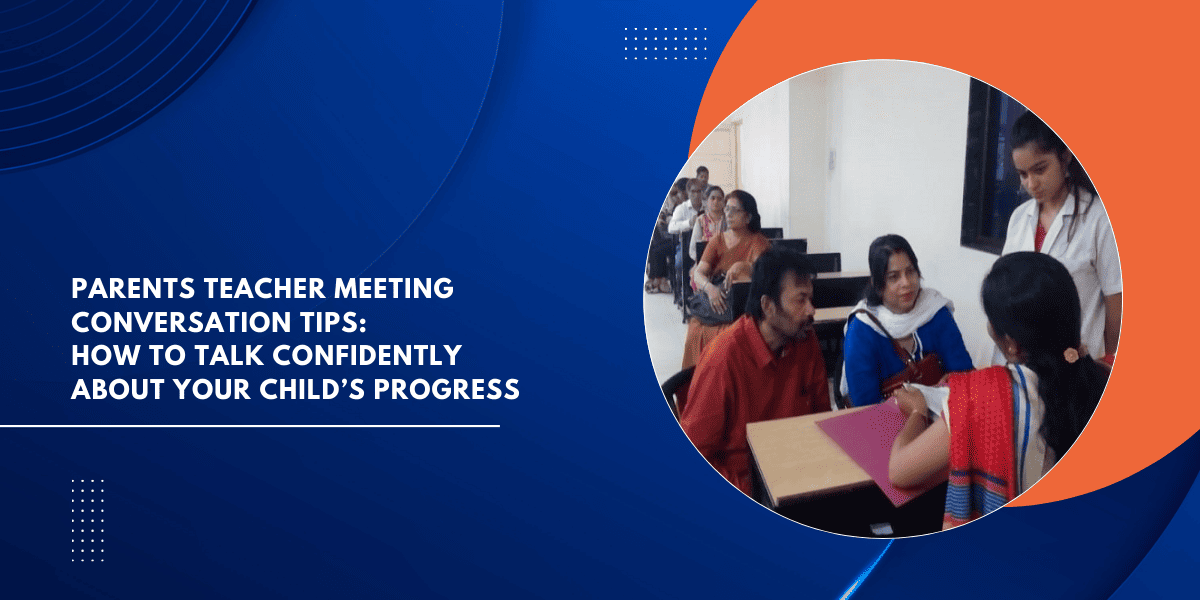
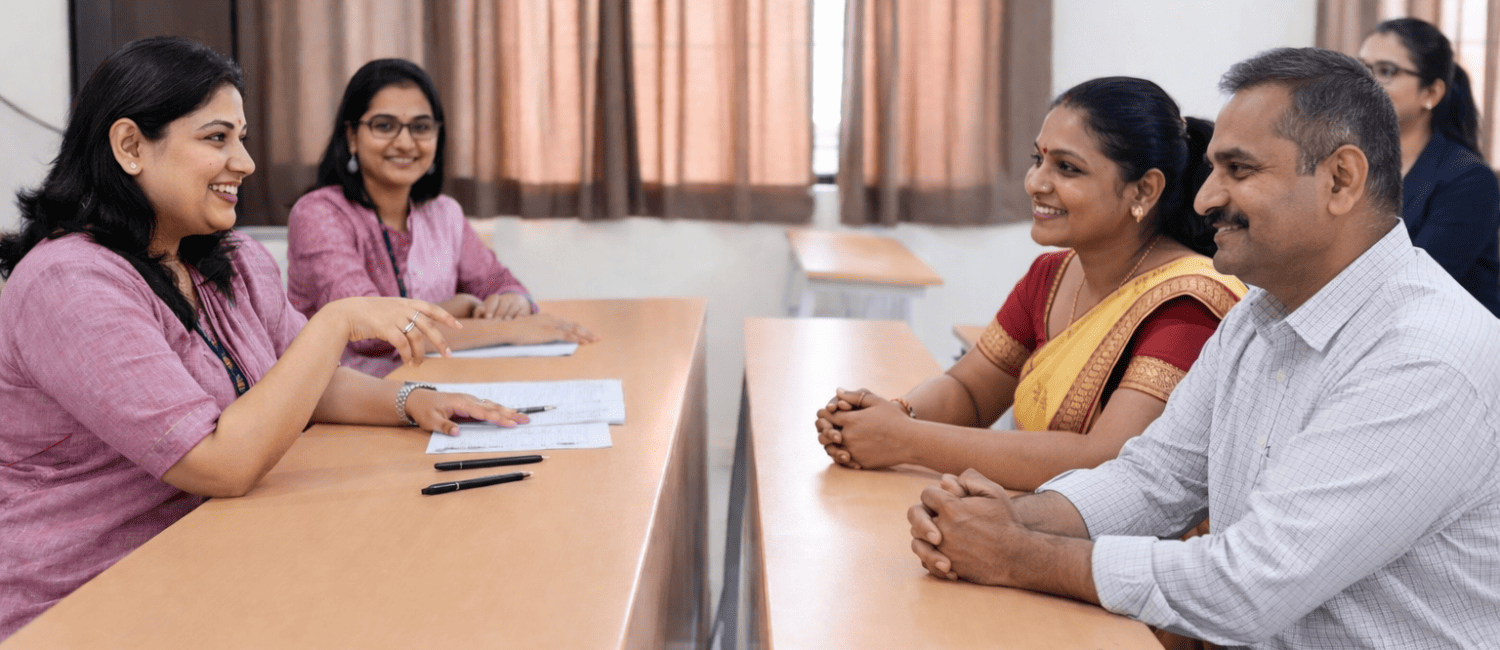
A Parent-Teacher Meeting (PTM) is more than just a routine check-up on a child’s academic performance. It’s an opportunity to strengthen the bond between parents and educators.
However, for many parents, the idea of a “parents teacher meeting conversation” can be overwhelming, often leading to anxiety or uncertainty. Whether it’s the first PTM or a regular one, knowing how to talk confidently about your child’s progress can make all the difference.
Amit and Priya walked into their son Arjun’s Class 8 parent–teacher meeting feeling unprepared. Arjun was doing “fine” academically, yet something didn’t sit right. They wanted to understand more than just marks. Was he confident in class? Did he participate? Was he curious, disengaged, or simply quiet? But when the conversation began, they defaulted to the safest question: “How is Arjun doing?”
The answer came quickly. His teacher spoke about grades, test performance, and syllabus coverage. The meeting moved on. But Amit and Priya walked out feeling more confused than before. From a CCC perspective, this was a familiar moment. A critical career clarity opportunity hidden inside a routine school interaction. The discussion had focused on outcomes, not on how Arjun was learning or what that said about his future direction.
Guided by CCC-inspired parent reflection frameworks, Amit and Priya began rethinking how they approached such conversations. Instead of asking broad academic questions, they learned to explore behavioural patterns, learning styles, and engagement cues. In the next interaction, they asked different questions. When does Arjun participate most? Does he enjoy problem-solving or expression? How does he respond to challenges?
This shift changed everything. The teacher’s responses painted a clearer picture. Arjun was analytical, attentive during structured problem-solving, but disengaged during rote-heavy activities. Using CCC career observation and mapping tools, Amit and Priya connected these classroom behaviours to potential career strengths rather than dismissing them as “just school habits.”
For the first time, a parent–teacher meeting felt meaningful. Not because Arjun’s marks had changed, but because his learning patterns now made sense. Through a CCC lens, PTMs became more than academic check-ins. They became early career clarity conversations. And for Amit and Priya, that clarity transformed anxiety into confidence, helping them support Arjun’s journey with intention rather than guesswork.
According to The Hindu report, (2025), to help parents understand the importance of it, the government of Karnataka recently organized a mega parent-teacher meeting on Children’s Day.
In today’s world, where students are faced with numerous career opportunities and an ever-increasing deluge of information online, proper counseling, along with guidance from teachers and parents is crucial.
In this article, we’ll break down how parents can have more meaningful, confident conversations in a parents teacher meeting.
We’ll explore what to discuss, the right questions to ask, and how career guidance can help students in their academic journey moving forward.
Effective Communication Strategy for Parent-Teacher Meetings: Ensuring Constructive Dialogue
PTMs are an opportunity for teachers to provide updates to guardians. But for parents, it helps them understand the full picture of their child’s development.
The key to a successful parents teacher meeting conversation lies in structuring the discussion in a way that is forward-focused.
Here are a few practical frameworks to make your PTM conversations more productive and meaningful.
The “Preparation → Discussion → Action” Loop – Enhancing PTM Conversations
What it is:
A simple way to break down the structure of a parent teacher meeting conversation: Preparation → Discussion → Action.
If any part of this loop is ignored, the conversation can become unproductive.
Example:
Imagine a parent who walks into a PTM without specific questions, relying solely on the teacher’s report. The teacher gives a generic summary, but the lack of targeted questions from the parent means there’s no real follow-up.
Why it matters:
The aim of any parent–teacher meeting conversation should be to understand where the child excels. It should also highlight the areas where the child needs support. Just as importantly, it should clarify how parents can actively contribute to their child’s progress.
The Times of India Report (2025) lists seven things parents should never do while meeting teachers. Whether it’s dominating the conversation, criticizing or shouting at their children in front of the teacher, or not paying attention to the teacher’s feedback, these behaviors are a strict no-no.
Parents must avoid such actions. A certain level of decorum is expected from parents by the teacher, the children, and the institution as well.
The “Understanding vs. Feedback” Lens – Fostering a Two-Way Dialogue
What it is:
A simple way to assess the quality of communication between parents and teachers.
Understanding: Parents listen to teacher feedback
Feedback: Teachers listen to parental concerns or suggestions
Example:
In a recent PTM, a parent asked, “What can I do at home to support my child’s studies?” The teacher provided a list of activities, but the parent also shared concerns about their child’s lack of interest in school. The conversation became a two-way exchange of ideas, rather than just receiving information.
Why it matters:
Effective PTM conversation tips for parents emphasize the importance of asking for feedback. Whether it’s about how the child interacts in class, or their overall development. This reciprocal exchange helps foster a deeper understanding between parents and teachers.
The “Focus on Strengths and Areas of Growth” – Balanced Conversations
What it is:
A framework to guide conversations so that they highlight both accomplishments and areas for improvement.
Example:
Rather than just discussing academic scores, parents can ask, “What are some areas my child is excelling in? Where do you see opportunities for growth?” This opens up a balanced conversation where strengths are acknowledged and areas for improvement are addressed without sounding critical.
Why it matters:
Focusing solely on weaknesses can make the PTM conversation feel discouraging. Recognizing a child’s strengths motivates both the student and their parents, while also helping identify areas for improvement with a solution-oriented approach.
According to a Hindustan Times report (2025), the Punjab government’s school education department recently held its fourth statewide mega parent-teacher meeting (PTM), with over 2.33 million parents from government schools in attendance.
This reflects the growing concern over students’ futures in India, with state governments now taking such types of initiatives.
These meetings help create meaningful dialogue between parents and teachers, ensuring the well-being of children.
The “Personal Growth and Career Guidance” Question – Shaping Future Pathways
What it is:
A question many parents may not think to ask but is incredibly helpful: “How can we align my child’s academic journey with their future career goals?”
Example:
In one PTM, the teacher highlighted the child’s interest in art, but the parents hadn’t considered how that might influence career choices. The teacher suggested exploring related fields like graphic design or animation, which sparked a conversation about career guidance.
Why it matters:
A key parents teacher meeting question to ask is how the child’s academic progress can tie into their future aspirations. This can guide the child towards more targeted career paths and make learning more relevant.
It helps parents structure their PTM conversation in a way that makes the most of the time with the teacher, leading to actionable insights.
In the next section, we’ll dive into the importance of discussing career counseling and guidance during PTMs, and how these discussions can help shape a student’s future.
Bringing it all together
When you step back and look at the parent teacher meeting conversation through frameworks like Preparation → Discussion → Action, the Understanding vs. Feedback lens, and the Focus on Strengths, a clearer picture of a productive PTM begins to emerge.
The challenges in parent-teacher communication aren’t random or incidental. They’re often predictable and deeply tied to how the conversation is structured, how both parents and teachers prepare, and how feedback is delivered.
The goal of a successful parents teacher meeting conversation isn’t just to point fingers only. But to identify where the breakdowns are happening and why.
It’s about understanding how systemic issues can create barriers to meaningful dialogue. A lack of parent-teacher interaction isn’t necessarily a sign of apathy; it’s often a symptom of an overloaded system.
There’s no one-size-fits-all approach to PTMs. Each conversation is unique, shaped by the child’s needs, the parents’ concerns, and the teacher’s observations.
But having clear frameworks to guide the conversation makes the process much more productive and focused. That clarity alone can make all the difference in ensuring that everyone involved is on the same page.
Much like any growth journey, improvement in parent-teacher communication works best when roles are clear:
- The Teacher (guide) who structures the conversation meaningfully
- The Parent (support system) who actively listens, asks the right questions, and contributes insights
- The Child (learner) whose progress is the focus of the discussion
When these three align, parent-teacher meetings stop feeling like mere formalities and become powerful opportunities to collaborate.
Communication shifts from a one-way conversation to an interactive exchange of ideas and feedback. It makes the entire process more useful for the child’s development.
This is also where career guidance becomes essential. When parents and teachers understand how to discuss career paths during PTMs, they help students see the relevance of their education to their future.
The career guidance for students helps students connect what they’re learning to potential career opportunities, turning abstract subjects into real-world skills. This added purpose increases motivation and can be the missing link in reducing disengagement, helping students move forward with more clarity about their future.
Reflection Questions: Engaging with Parent-Teacher Conversations
Which parent teacher meeting conversation challenge do you notice most often: misalignment in expectations, or insufficient follow-up?
If parent-teacher conversations were clearly aligned with long-term career guidance, how differently do you think students and parents would approach these meetings?
These questions don’t provide all the answers immediately, but they’re a great starting point for building more meaningful and forward-thinking conversations at PTMs.
Key Challenges in Parent-Teacher Meetings
Limited time for discussion: One of the major challenges in a parent teacher meeting conversation is the limited time available. Teachers often have many students to meet with, which can lead to rushed conversations. This leaves little room for a detailed, personalized discussion about a child’s progress, resulting in superficial feedback.
Lack of preparation: Many parents walk into PTMs without a clear idea of what they want to discuss. It can lead to missed opportunities for addressing important aspects of a child’s development, such as behavior, emotional well-being, and learning style. Having a list of parent teacher meeting questions can help keep the conversation focused and productive.
Limited focus on holistic development: In many parents-teacher meeting conversations, the discussion is heavily focused on grades, leaving little room for talking about a child’s personal growth, interests, or extracurricular activities. This narrow focus misses the chance to see the full picture of a child’s development, which is equally important for long-term success.
Lack of collaboration between parents and teachers: PTMs can sometimes feel like one-way conversations, where parents listen to teacher feedback but don’t contribute much of their own observations or concerns. Building a two-way dialogue is essential for creating a more comprehensive understanding of the child’s progress.
Misaligned expectations: Parents and teachers may have different expectations about what should be prioritized in the conversation. For example, while parents may want to focus on their child’s social skills or future career interests, the teacher may focus more on academic performance. Clear communication helps to align expectations and ensure that both parties are on the same page.
The emotional aspect: For many parents, discussing their child’s challenges in a PTM can be emotionally charged. Parents may feel defensive or anxious if their child is struggling, which can make it harder to have an open, constructive conversation. Teachers can play a role in making parents feel supported, rather than judged.
Lack of follow-up: After the PTM, there’s often little follow-up, especially if the conversation didn’t reach any concrete action points. Without clear next steps, it’s easy for discussions to be forgotten, and progress can stall. Establishing a follow-up plan after the meeting ensures that both parents and teachers can track the child’s progress and work together to support their growth.
Minimal career guidance: In many cases, what to discuss in PTM revolves around immediate academic performance, but long-term goals like career guidance are often overlooked. Without career counseling, students may not fully understand the connection between their studies and future career paths. This can lead to a lack of motivation and unclear direction.
According to VegOut Blog (2025), parents sometimes focus too much on grades rather than understanding their child’s learning process, which can hinder a deeper discussion about the child’s growth and development. This approach may negatively impact the student’s career development and overall progress.
Understanding and addressing these challenges can transform a standard parents teacher meeting conversation into a more meaningful and productive experience. It fosters a better partnership between parents and educators.
In the next section, we’ll discuss how career counseling and guidance can play a key role in these meetings, helping students navigate their academic and career paths with confidence.
Case Study 1: Rina — A Parent Who Struggled to Engage in PTM Conversations
Myth:
“Parents don’t care enough about their child’s education.”
Challenge:
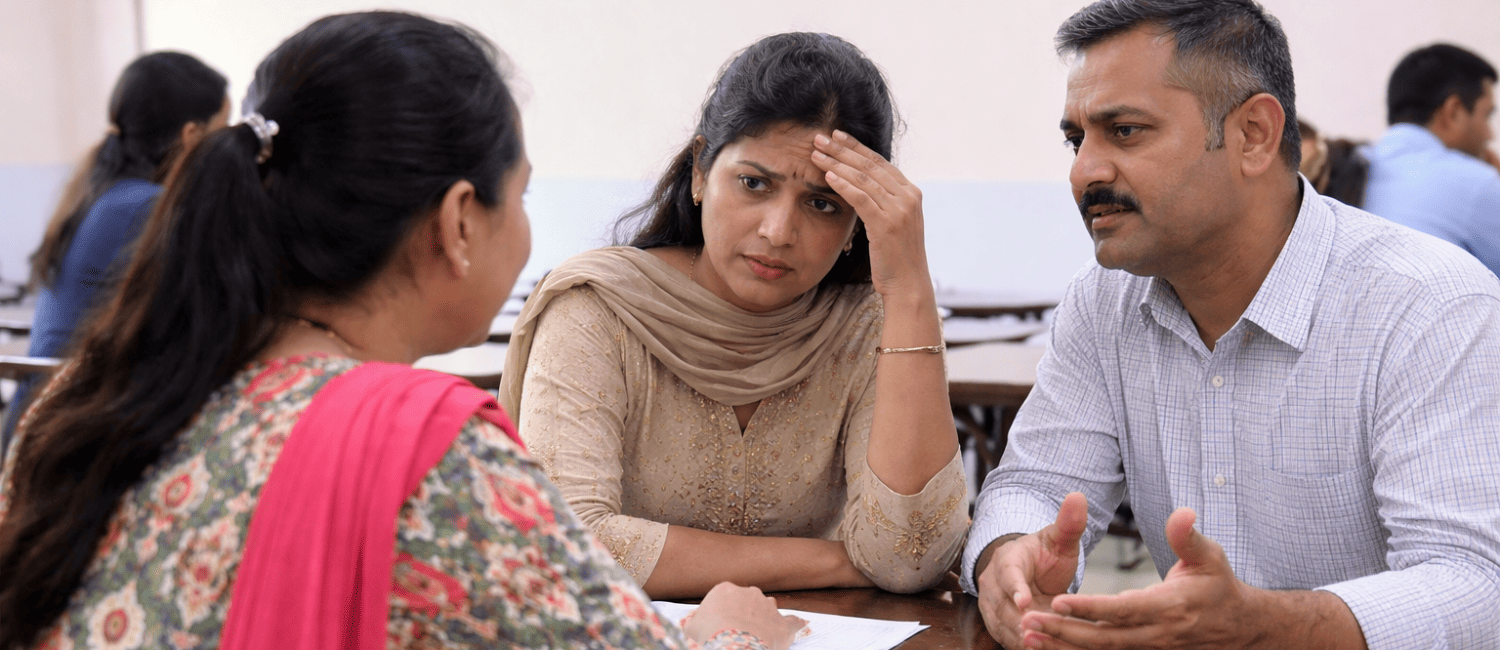
Rina walked into her daughter’s Class 7 parent–teacher meeting with a simple expectation—to understand how her child was doing in school. The conversation began with a quick review of grades. The teacher spoke efficiently, moving from subject to subject, but said little about classroom participation, confidence, or social interaction. Rina listened carefully, waiting for insights that never came.
As the meeting wrapped up, she felt unsettled. Her daughter’s marks were acceptable, yet Rina couldn’t tell how she was actually learning. Was she engaged or withdrawn? Comfortable speaking up or hesitant? From a CCC perspective, this moment reflected a common gap—when PTMs focus only on performance metrics, they miss the behavioural signals that shape long-term career readiness.
Through CCC-inspired parent awareness and reflection frameworks, Rina began to see PTMs differently. She learned that understanding classroom behaviour—how a child collaborates, communicates, and responds to challenges—offers far more insight into future direction than grades alone. In her next conversation, she shifted her approach, asking targeted questions around participation, peer interaction, and learning preferences.
This change transformed the discussion. The teacher shared that Rina’s daughter was observant, thoughtful, and deeply engaged during group activities, though less vocal in large-class discussions. Using CCC observation-to-career mapping tools, Rina connected these traits to potential strengths in analytical thinking, creative problem-solving, and collaborative roles.
For Rina, the PTM no longer felt impersonal. It became a moment of clarity. Through a CCC lens, she realised that career awareness doesn’t begin with choices or job titles—it begins with understanding how a child shows up in everyday learning environments. One intentional shift in conversation turned uncertainty into direction.
According to Vidyanchal School’s blog published in 2025 on making the most of parent teacher meetings, many Indian parents report feeling uncertain about how to engage during PTMs, often unsure of what questions to ask or how to make the most of the limited time.
While these meetings are intended to build a stronger partnership between parents and teachers, preparation is key to ensuring that they are both insightful and productive.
Solution:
Instead of leaving the meeting feeling unsatisfied, Rina decided to be proactive for the next PTM. She prepared by writing down specific questions about her daughter’s classroom experience beyond just grades—focusing on social skills, classroom behavior, and areas where improvement was needed. This time, the conversation became a collaborative exchange.
Result:
Rina walked away from the next meeting feeling more informed and involved. By focusing the conversation on the whole child, the teacher was able to provide insights into both academic progress and social dynamics in the classroom.
Parent Takeaway:
Many parent teacher meeting conversations fail to go deep because parents don’t ask the right questions. Engaging proactively can help unlock more meaningful discussions.
Why it matters:
Rina’s experience is a great example of how a lack of preparation and unclear communication can make PTMs feel unproductive. As reported in a blog by EdTech India in 2025, creating clear frameworks for PTMs where parents come prepared with specific questions can lead to more effective conversations that benefit the child’s holistic growth.
Case Study 2: Mr. Kapoor — A Teacher Struggling to Address Parent Concerns
Myth:
“If teachers are passionate, parent engagement will naturally improve.”
Challenge:
Mr. Kapoor, a high-school English teacher, cared deeply about his students’ growth. During parent–teacher meetings, he made it a point to offer thoughtful feedback—not just on grades, but on effort, expression, confidence, and classroom behaviour. Yet, meeting after meeting, he felt a growing disconnect. Parents often focused on marks and rankings, while his deeper observations about a child’s development remained unheard.
From a CCC perspective, this wasn’t a communication failure—it was a misaligned conversation framework. With limited time and a grade-centric mindset dominating PTMs, crucial insights about communication skills, critical thinking, and self-expression—core career competencies—were getting lost.
By adopting a CCC-style PTM reframing approach, Mr. Kapoor shifted how he structured his conversations. Instead of leading with academic performance, he highlighted career-relevant behaviours first—how students articulated ideas, participated in discussions, handled feedback, and collaborated with peers. These observations created a natural bridge between classroom behaviour and long-term career readiness.
Using CCC narrative feedback tools, Mr. Kapoor presented insights through short, role-based examples rather than abstract comments. Parents began to see English not just as a subject, but as a foundation for careers that rely on communication, leadership, and clarity of thought. Even within tight time slots, conversations became more meaningful and focused.
Over time, PTMs transformed from rushed grade reviews into purposeful discussions about student development. Through a CCC lens, Mr. Kapoor didn’t add more to his workload—he changed the frame. And that shift allowed parents to engage with what truly mattered: not just how their child was performing today, but how they were growing for the future.
Solution:
To address this, Mr. Kapoor started a more structured approach for PTMs:
- He shared detailed observations on both academic progress and class participation.
- He encouraged parents to ask about specific challenges their children were facing, such as motivation or peer relationships.
- He began framing his feedback with a focus on long-term development and skill-building, not just grades.
These small adjustments allowed the conversations to move beyond test scores and explore the child’s broader development.
Result:
Parents left PTMs feeling more empowered to support their children’s learning outside the classroom. The conversations were richer, touching on behavior, motivation, and future goals.
Parent Takeaway:
Teachers play a key role in fostering meaningful parents teacher meeting conversations. Offering insights into non-academic areas of development can help parents better support their children.
Why it matters:
This case highlights the importance of broadening the scope of PTMs. As per the Teach Connect Insight of 2025, effective meetings are not just about reporting grades. They are about building a partnership between parents and teachers to co-create pathways for student growth.
By starting conversations with strengths, balancing concerns with solutions, and fostering two-way dialogues, PTMs can become transformative moments for both students and their families.
Case Study 3: A Career-Focused Shift That Changed the Parent-Teacher Meeting Dynamic
Myth:
“Career discussions can wait until high school or college.”
Challenge:
A group of parents with children in senior secondary grades noticed that their children were struggling to see the purpose in their studies.
During PTMs, many parents voiced concerns that their children were not motivated and found it hard to connect classroom learning to their future goals. The focus on grades during meetings left little room for career discussions.
Solution:
To address this, the school introduced sessions that incorporated career guidance into PTMs:
- Teachers shared how various subjects tied into real-world career opportunities.
- Parents were encouraged to ask about their child’s long-term goals and how academic work could support those aspirations.
- Teachers also provided resources for further career exploration, helping students see the direct value of their current education in shaping their future careers.
Result:
PTMs became more purpose-driven. Parents and teachers worked together to help students see the practical application of what they were learning, increasing motivation and engagement.
Why it matters:
This case underscores how integrating career-focused discussions into PTMs can enhance student engagement by connecting classroom learning to future career opportunities.
According to a 2025 article by Shri Ram Centennial School Dehradun, career counseling plays a critical role in helping students choose the right career path by aligning their strengths and interests with their future goals. It not only reduces stress and anxiety but also motivates students to perform better academically by connecting their education to real-world opportunities.
Practical Tips for Parent-Teacher Meetings: How to Talk Confidently About Your Child’s Progress
To make your parent teacher meeting conversation productive and confident, here are a few simple tips:
- Come prepared: Write down specific questions or concerns you want to address—be it academic progress, behavior, or social development.
- Focus on the whole child: Don’t just focus on grades. Ask about your child’s participation in class, relationships with peers, and emotional well-being.
- Be open to feedback: Listen to the teacher’s insights, and ask for examples of areas your child may need help in.
- Discuss long-term goals: Ask how classroom learning ties into future careers or aspirations, and what steps can be taken to support those goals.
- Take notes: This will help you remember key points from the meeting and ensure you have a clear follow-up plan.
- Build a partnership: View the meeting as a collaborative discussion between you, the teacher, and your child’s overall development.
While these tips can help guide the conversation, it’s also important to acknowledge the natural tension these meetings can create.
According to the ED Times Blog (2025), PTMs often come with the pressure of expectations. Teachers may feel burdened to explain everything to parents, while parents fear that their child’s shortcomings will be highlighted.
By following these simple tips, you can walk away from the meeting feeling more informed, confident, and ready to support your child’s academic and personal growth.
Conclusion
Fixing what’s broken in parent teacher meetings isn’t about blaming parents, teachers, or the system—it’s about clarity, preparation, and collaborative support. The challenges in parent teacher meeting conversations don’t arise suddenly. They build up when the discussion feels superficial, when key issues go unaddressed, and when parents aren’t sure how to steer the conversation toward their child’s overall development.
Throughout this article, we’ve explored how common issues in PTMs—like lack of parent engagement and unclear communication—often stem from a lack of structure, preparation, and a focus on holistic growth. When these meetings are reduced to a review of grades alone, they miss the chance to address broader aspects of the child’s academic and personal progress. But when parents and teachers work together to focus on the “why” behind the learning, the conversation becomes more meaningful, and engagement improves naturally.
This is where career guidance and counseling come in. When parents and teachers help students see how their learning connects to future career paths, classroom discussions gain a clear purpose. Subjects aren’t just something to memorize—they become relevant, and students start to see their education as a path to real-world opportunities. Career coaching gives students direction, helping them move beyond immediate classroom challenges toward long-term goals.
At NextMovez, we’re focused on bridging that gap—helping parents, teachers, and students connect the dots between today’s education and tomorrow’s career paths. With structured career counseling, future-focused guidance, and a collaborative approach, we help students gain a clearer understanding of how their academic journey fits into the bigger picture. Furthermore, we also offer career counselling for professionals.
Ready to turn PTM insights into a strong career foundation for your child? Book a free career counseling consultation with NextMovez today