Blog written by Preethi Durga, a career strategist and education innovator.
If your child is curious about technology but unsure whether to pursue a career in robotics, let me share something. I’ve learned from years of career coaching that Robotics engineering isn’t just a field. It’s a career that’s rapidly expanding. It offers high-paying opportunities and is shaping the future of multiple industries. On estimate, robotics engineers (freshers) receive around 4.7 to 5.2 lakh per annum in India. (Source: Ambition Box, updated 2026).
When parents ask me about job security, salary potential, and future demand in the tech world, I often steer them toward robotics engineering.
Because here’s the thing: Robotics engineers aren’t just building robots. They’re creating the future of automation. (Source: Medium, 2025)
Whether it’s in healthcare, manufacturing, logistics, or even space exploration, robotics engineers are revolutionizing the way we live and work.
And the best part?
You don’t need to be a genius in coding or robotics to get started. What your child truly needs is a passion for problem-solving, a knack for innovation, and a natural curiosity about how things work. These are the qualities we help identify through our Best-Fit Career Zone™ assessment.
So, is robotics engineering worth it in 2026? Absolutely. Let’s dive deeper into the roles, salary ROI, and future demand for robotics engineers.
Global Trends Shaping Robotics Engineering Careers in 2026
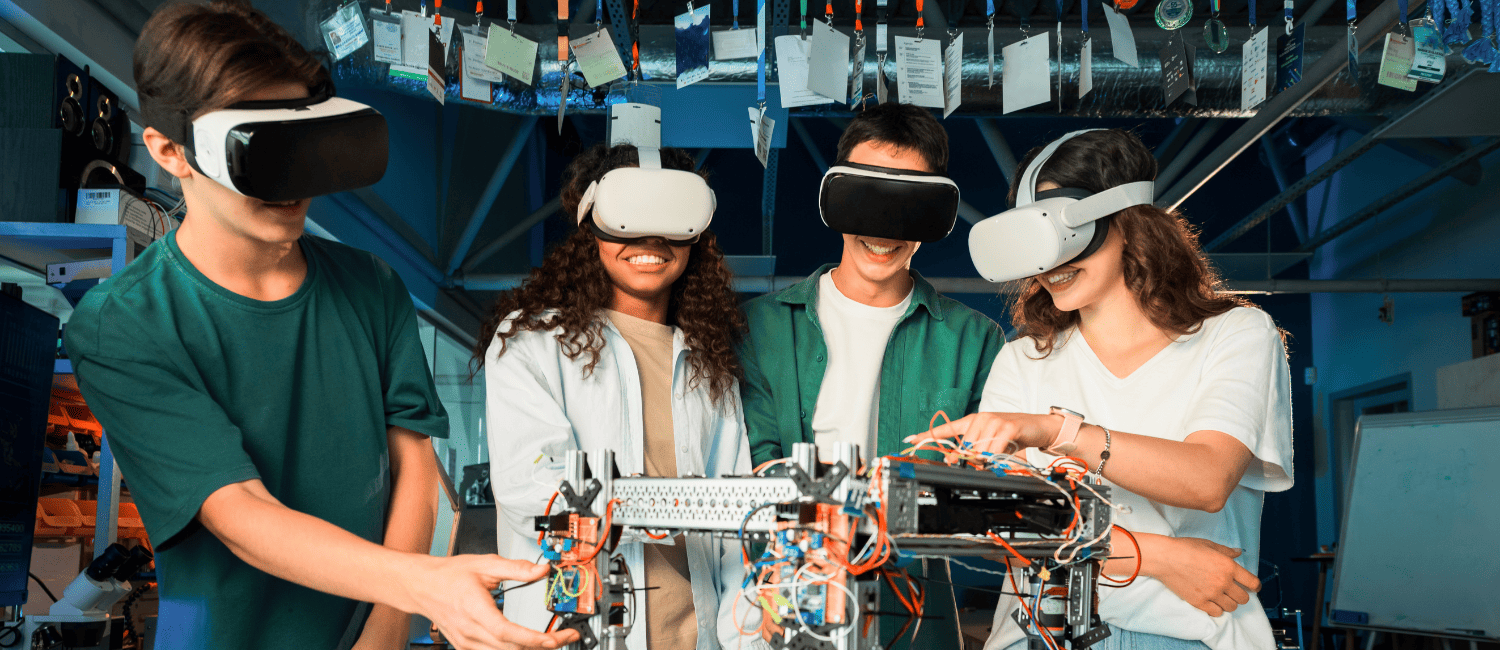
Whenever I guide students interested in robotics, I tell them this: Robotics engineering isn’t just about building robots. It’s about being part of a global movement that’s driven by groundbreaking trends in technology.
Here are the forces shaping the future of robotics engineering today.
Automation and Smart Manufacturing Are Exploding
The rise of AI, IoT, and Industry 4.0 is transforming manufacturing, and robotics is at the heart of it.
From smart factories to automated assembly lines, robotics engineers are making systems more efficient and safe.
According to the Education Times Report (2025), robotics engineering, AI development, and human-AI cooperation are expected to be in high demand over the next decade, offering long-term career growth and job security for those pursuing careers in these fields.
Parent Insight
If your child is passionate about tech and innovation, robotics engineering offers the chance to make an impact on industries worldwide, from manufacturing to logistics.
Healthcare Robotics Is Booming
Surgical robots, exoskeletons, rehabilitation robots — these innovations are revolutionizing healthcare.
According to a blog published on Research (2025), robotics engineers posted abroad can easily earn around $60,000 annually. The demand for them is particularly high in sectors like manufacturing, with the healthcare sector being the primary driver.
This means robotics engineers will play a pivotal role in developing cutting-edge medical technologies.
Parent Insight
If your child wants to help save lives and improve healthcare, robotics engineering offers a direct path to doing just that, combining tech with meaningful impact.
Autonomous Vehicles Are Changing Transportation
From self-driving cars to drones, robotics engineers are creating the next generation of transportation.
According to an insight released by Statista, the global autonomous vehicle market is expected to reach a size of over 2.3 trillion U.S. dollars by 2030.
It’s not just cars — drones, shipping robots, and even autonomous ships are areas where robotics engineers are in high demand.
Parent Insight
Your child could be part of a movement that completely redefines how we move — and get paid well for it.
Robotics in Space Exploration
Space missions, from Mars rovers to satellite maintenance, all rely on robotics engineers to develop the systems that make these missions possible.
NASA’s 2026 mission to send astronauts back to the Moon is just one example. It highlights how robotics engineering plays a crucial role in expanding humanity’s reach beyond Earth. (Source: Times of India Report 2026)
The global space economy is growing rapidly, with robotics engineers playing a key role in the future of space exploration.
Parent Insight
For students who dream of exploring the stars or working on cutting-edge technologies, robotics engineering offers the opportunity to push the boundaries of what’s possible.
AI and Robotics Are Converging
AI, machine learning, and robotics are merging to create autonomous systems that can think, learn, and adapt.
Gartner’s forecast that 33% of enterprise software applications will include agentic AI by 2028 directly correlates with the growing need for AI-driven robotics systems in industries like healthcare, logistics, and autonomous vehicles. (Source: Gartner Insight, 2025).
This trend means robotics engineers will need to blend their understanding of robotics with AI and machine learning expertise, making it one of the most exciting and future-proof career paths.
Parent Insight
If your child is passionate about both robotics and AI, this is the right time to explore a career that combines these fields. You may connect with us for career guidance for students, and we will be happy to help.
Industries Hiring Robotics Engineers in 2026 (Far Beyond Traditional Tech)

Parents are often surprised when I show them just how diverse the industries are where robotics engineers are in high demand. Robotics isn’t just about building industrial robots or working in factories anymore — it’s everywhere.
According to AOL Blog (2026), Robotics engineers typically work in Robotics R&D labs, high-tech manufacturing facilities (for industrial robots), or testing workshops, where they prototype, build, and test new robotic systems. These settings offer opportunities for hands-on experience and experimentation.
Robotics engineers are now working in fields they might never have imagined.
Here’s where they’re getting hired more and more:
Healthcare & Medical Devices
From surgical robots to rehabilitation technology, healthcare is one of the fastest-growing sectors for robotics engineers.
Companies like Intuitive Surgical, Johnson & Johnson, and Medtronic are at the forefront, designing systems that enhance patient care and improve surgical outcomes. The demand for medical robots is growing rapidly, and robotics engineers are right in the middle of it.
Automotive & Autonomous Vehicles
Robotics engineers are making huge strides in self-driving cars, drones, and advanced manufacturing.
Companies like Tesla, Waymo, Ford, and Uber are continuously looking for robotics talent to improve the capabilities of autonomous vehicles.
This sector is booming, with robotics engineers developing systems that make transportation safer, more efficient, and smarter.
Manufacturing & Industrial Automation
While robotics has long been a staple in manufacturing, the rise of Industry 4.0 is taking things to the next level.
Companies like ABB, KUKA, Fanuc, and Siemens are leading the way in automation.
Robotics engineers are in high demand to help streamline production, optimize processes, and reduce costs through automation in various industries, from electronics to automotive manufacturing.
Aerospace & Defense
The aerospace and defense sector is investing heavily in robotics to explore new frontiers and improve safety and efficiency.
Robotics engineers at companies like Lockheed Martin, Northrop Grumman, and Boeing are developing robots for space exploration, military applications, and even satellite maintenance.
This is a high-tech, high-stakes field that continues to attract top robotics talent.
Logistics & Supply Chain Automation
As e-commerce and global trade continue to boom, robotics is playing a key role in improving logistics and supply chain operations.
Companies like Amazon, FedEx, and DHL are hiring robotics engineers to design autonomous robots for warehouses, delivery drones, and logistics optimization.
This sector’s demand for robotics engineers is only set to grow as automation continues to reshape how goods are transported.
Agriculture & Farming Tech
Yes, even farming is getting smarter with robotics. Companies like John Deere and AG Leader are developing agricultural robots that can plant, monitor crops, and harvest with minimal human intervention.
Robotics engineers are needed to create systems that will increase efficiency and sustainability in agriculture.
Entertainment & Media
According to Think Robotics Blog (2025), Robotics is revolutionizing the entertainment industry, especially in film production. Robots are used for camera movements, set design, and creating special effects. They enable precise and dynamic filming that would be impossible with traditional methods.
Companies are now using robots for things like film production, live performances, and even video game development. Big firms like Disney, Sony, and Pixar hire robotics engineers to create innovative technologies that push the boundaries of entertainment and media experiences.
Energy & Renewable Resources
Robotics engineers are also being hired in the energy sector, especially for renewable energy projects.
From robots that inspect wind turbines to drones that monitor solar farms, companies like General Electric, Siemens Gamesa, and NextEra Energy are hiring robotics engineers to make renewable energy systems more efficient and safe.
Skills Required for Robotics Engineering (and How They Map to Best-Fit Career Zone™)
Parents often ask me:
“My child is really good at tech and problem-solving — but how do I know if robotics engineering is the right fit for them?”
This is where our proprietary frameworks come into play.
Robotics engineering requires a specific cognitive DNA — and we decode this through the Best-Fit Career Zone.
Here are the must-have skills and how they map to a career in robotics engineering:
System-Thinking & Automation Logic
Robotics engineers think in terms of systems — how different components interact, how automation can optimize processes, and how robots can be programmed to work seamlessly.
Mapped to:
✔ Applied Problem-Solving DNA™
✔ Pattern Architecture Strength
Math + Physics + Coding Integration Ability
Robotics is where math, physics, and programming collide. It’s not just about solving problems but blending complex concepts to make robots function.
Mapped to:
✔ Analytical Depth Index™
Attention to Detail & Precision
Robotics systems often work in environments where even the smallest mistake can lead to huge consequences. Engineers must have the ability to maintain accuracy, especially in high-pressure situations.
Mapped to:
✔ Engineer’s Cognitive Endurance Signature™
Curiosity + Innovation
From developing AI-driven robots to creating smarter automated systems, robotics engineering is all about pushing boundaries and thinking outside the box.
Mapped to:
✔ Creative Scientific Thinking Profile™
Parent Coaching Prompt #1
Ask your child:
“Do you enjoy building things that move or work automatically, not just fixing problems?”
If yes, that’s a strong robotics engineer trait.
Case Study: “How Arjun Found His Robotics Path”
When Arjun came to me in Class 12, he was torn between mechanical engineering, computer science, and robotics.
During his assessment, a few key patterns emerged clearly:
✔ Excellent spatial reasoning
✔ A deep curiosity for how things work
✔ Strong skills in coding and math
✔ High adaptability to new technologies
To test his alignment with robotics, I showed him a robotic arm simulation.
He took one look and said, “This is incredible! I understand how this works and how it could be used in manufacturing.”
His parents, who had been unsure about his career direction, looked at me with a sense of reassurance.
“This feels right — he’s found his zone.”
Today, Arjun is applying to top universities for robotics engineering, knowing he’s in the right field. The career chose him because his natural abilities matched the demands of robotics engineering.
This is what we call the Best-Fit Career Zone™ — when your child’s cognitive strengths align with real-world career success.
Case Study: “How Meera Combined Her Love for Tech and Design in Robotics”
Meera came to me with a passion for both technology and design but was uncertain about how to blend the two in a career. She was considering software development, industrial design, and robotics.
Through our assessment, a few standout patterns emerged:
✔ Strong visual-spatial skills
✔ Creative problem-solving abilities
✔ A natural interest in AI and automation
✔ Interest in human-centered design
To test her fit for robotics, I gave her a task: design a basic robot prototype that could navigate a simple maze.
She immediately jumped into the task, suggesting,
“I’d add sensors here and tweak the design so it adapts better to the environment.”
Her parents were amazed by how naturally Meera blended her creative instincts with her technical skills.
“It feels like she’s found the perfect balance.”
Today, Meera is pursuing a degree in robotics engineering, specializing in human-robot interaction design. She’s combining her love for both technology and design in a rapidly growing field.
This is the power of discovering the Best-Fit Career Zone™ — where your child’s talents are not just a match for a career, but for a future they’re excited to build.
The Real Challenges in Robotics Engineering (That Parents Must Know)
Robotics engineering is incredibly rewarding — but it comes with its challenges.
Here are the realities:
Complexity in Multidisciplinary Learning
Robotics engineers must master a mix of mechanical engineering, computer science, electrical engineering, and AI.
It’s a lot of concepts to juggle, and it can get overwhelming at times.
Long Hours for Prototyping and Testing
Whether it’s in college or in the industry, robotics engineers often work long hours testing prototypes and debugging systems.
This means patience and persistence are key traits needed to succeed.
High Precision and Accountability
In robotics, even the smallest error can lead to major consequences.
Engineers are responsible for ensuring that systems work seamlessly and safely — especially when robots are deployed in critical areas like healthcare or manufacturing.
Fast-Evolving Tech and Constant Upskilling
The field of robotics is moving rapidly, with new technologies and advancements coming up every year.
Robotics engineers need to stay updated with the latest trends in AI, machine learning, automation, and hardware.
Parent Insight
Students who enjoy tackling complex problems and thrive in environments that challenge their adaptability will do well. Those who find it difficult to manage a high level of detail or rapidly changing tech may feel the pressure.
This is why clarity in career goals before making the decision is essential.
Robotics Engineering Careers 2026: What the Next 3–5 Years Look Like
According to R&D World Online Blog (2025), there’s a severe shortage of skilled robotics engineers, which makes hiring and training challenging for companies. Even with significant funding, startups often struggle to find the right talent.
Here’s the part parents care about most:
Is robotics engineering still worth it?
Does it have future scope?
Is it globally relevant?
The answer — confidently — is YES.
Industry expansions (2026–2030):
✔ Global demand for robotics in automation and AI-driven manufacturing growing rapidly
✔ Healthcare robotics market expanding, especially in surgical and rehabilitation tech
✔ Autonomous vehicles gaining momentum — robotics engineers are at the forefront
✔ Robotics in agriculture improving efficiency and sustainability
✔ Space exploration needs more robotics engineers for autonomous systems
✔ Logistics and supply chain automation increasing, with robotics taking a central role
The global robotics market is set to exceed USD 200 billion by 2028 (Statista Robotics Market Outlook 2025).
Parent Insight
Robotics engineering is one of the most future-proof STEM degrees — it’s innovative, highly adaptable, and offers incredible career opportunities across multiple industries.
Key Takeaways for Parents
✔Robotics engineering powers cutting-edge industries like healthcare, automotive, manufacturing, and space
✔ Demand for robotics engineers is rising across AI, automation, and autonomous systems
✔ Robotics engineering is amplified (not replaced) by AI and machine learning technologies
✔ Skills required map strongly to Career DNA traits
✔ The field offers high global mobility, job security, and competitive salaries
✔ Choosing this pathway requires clarity and a true passion for technology — not pressure
Try This Today
Ask Your Child These Questions
- Do you enjoy building or designing automated systems?
- Are you curious about how things work — and how they can work better?
- Do you like combining coding with hardware to create real-world solutions?
- Are you excited about working with new technologies?
If yes → strong alignment with robotics engineering.
Show Them a Real Robotics Simulation
Watch their curiosity spark when they see a robot navigating or performing tasks autonomously. It’s a great way to see if they’re truly interested in the field.
Book a Best-Fit Career Zone™ Assessment
We decode:
✔ Systems thinking
✔ Applied problem-solving DNA™
✔ Analytical depth
✔ Cognitive endurance
✔ Tech adaptability
So families can make decisions with confidence — not guesswork.
Conclusion: Beyond Robots — Toward Engineering Leadership
Robotics engineering in 2026 is not just about building machines or writing code. It’s about shaping the future of automation, AI, and systems that will transform every aspect of our lives.
For students, it offers:
✔ Intellectual depth in multiple engineering disciplines
✔ Constant innovation and the chance to push boundaries
✔ Global relevance, with robotics playing a role in virtually every industry
✔ Access to a variety of sectors, from healthcare to space exploration
✔ Long-term job security, with demand expected to rise globally
For parents, it provides:
✔ Stability in a high-demand field
✔ Respect as they contribute to cutting-edge technologies
✔ Upward mobility in industries like autonomous systems, AI, and robotics
✔ Future-proof relevance, with robotics continuing to evolve and expand
If you’re unsure whether robotics engineering truly aligns with your child’s cognitive strengths, a 30-minute conversation could offer the clarity many parents say they wish they had years earlier.
At NextMovez, we help families move beyond assumptions and assess whether the future scope of robotics engineering truly aligns with a child’s natural abilities. For detailed career counselling for professionals, connect with us and we will be happy to help.
Success does not come from choosing the most popular career. It comes from choosing a path that fits your child at the deepest level.