

Blog written by Indu R Eswarappa, Career Coach & Education Change-Maker
What if I told you that one of the most respected and recession-proof careers in healthcare doesn’t require performing surgeries or diagnosing diseases? Instead, it puts you at the heart of patient care in a way that blends science, precision, and responsibility. That career is pharmacy.
Whether you’re ensuring safe medications, supporting doctors with drug expertise, or helping patients understand their prescriptions, pharmacists play a powerful and often overlooked role in saving lives.
Here’s why this career path stands out.
Introduction to the Career
In India, B Pharmacy graduates have a wide range of career opportunities and the potential for lucrative salaries. The pharmaceutical industry is expanding rapidly and is projected to reach a value of $120-130 billion by 2030. This growth is expected to generate approximately 58,000 new jobs by 2025, making it a great time to start or further your career in this sector! (Source: Pharma Dept. Govt. Report, 2016).
Pharmacists play a crucial role in patient care. It’s not just about handing out medication at the pharmacy counter or dealing with prescriptions. They also ensure that medicines are dispensed safely, offer advice on proper medication use, and work alongside doctors to find the best treatment for patients.
They are experts in understanding how medications interact with each other, the human body, and even lifestyle choices.
The demand for skilled pharmacists is growing rapidly. With the expansion of healthcare facilities and increasing focus on health awareness, pharmacists are now integral members of the healthcare team, whether in hospitals, retail pharmacies, research labs, or the pharmaceutical industry.
So, if you’re a student (or a parent helping one decide), and you’re looking for a career that combines science, service, and real-world impact—pharmacy is definitely a field worth considering.
What Is The Future of Pharmacists
From telepharmacy and personalized medicine to advanced drug therapy management and AI-powered health systems, the role of a pharmacist is evolving at a rapid pace. It’s no longer just about filling prescriptions and offering medication advice; today’s pharmacists are becoming integral parts of the healthcare ecosystem.
With healthcare becoming more patient-centered and technology continuously advancing, pharmacists are stepping into more dynamic roles. They’re leveraging technology to provide telehealth services, offering genetic counseling, and even helping patients manage complex chronic conditions with precision medicine.
According to a report by the World Health Organization (WHO), the role of the pharmacist is expected to expand significantly as the global demand for healthcare grows. In countries like India, where healthcare access and services are rapidly increasing, pharmacists are becoming essential members of multidisciplinary teams in hospitals, clinics, and even community health initiatives.
Key Responsibilities
A lot of students I talk to are interested in becoming pharmacists, but they often wonder what exactly the job involves on a daily basis. Well, let me break it down for you. Understanding the different roles within pharmacy can help you figure out which path might suit you best and what type of work environment you’ll enjoy the most.
Pharmacy is a broad field, and depending on the setting you work in—whether it’s a hospital, retail pharmacy, pharmaceutical company, or research lab—your responsibilities can vary greatly. Here are some of the most common roles:
Community Pharmacist
- Works directly with patients in retail or community settings
- Counsels on prescription medications, over-the-counter drugs, and supplements
- Provides advice on managing chronic conditions like diabetes, hypertension, or asthma
- Ensures the safe and effective use of medications
Clinical Pharmacist
- Collaborates with doctors and nurses in hospitals or clinics to optimize patient treatment plans
- Monitors patients’ responses to medications and makes necessary adjustments
- Advises on drug dosages, interactions, and potential side effects
- Provides education to patients about their medication regimens
Pharmaceutical Researcher
- Works with pharmaceutical companies to research and develop new medications or therapies
- Conducts trials to assess drug effectiveness, safety, and side effects
- Analyzes data from clinical studies to guide future treatment options
- Helps bring new treatments to market
So if you’re exploring a career in pharmacy, ask yourself: Do you enjoy working directly with patients? Are you interested in the science of medication development? Do you see yourself in a research lab, or perhaps in a hospital setting? Your answers will help determine which area of pharmacy you’d thrive in the most.
Work Environment
From what I’ve seen, pharmacists thrive in roles where science meets patient care. Whether you’re behind a counter at a retail pharmacy or collaborating with doctors in a hospital, your decisions directly impact people’s health—helping them manage medications safely, improve their quality of life, and even save lives.
Here are some of the common workplaces for pharmacists:
- Retail Pharmacies (like those in supermarkets or standalone stores)
- Hospitals and Clinics (working closely with doctors and nurses in patient care)
- Pharmaceutical Companies (researching and developing new medications or overseeing clinical trials)
- Community Health Centers (providing healthcare services to underserved populations)
Government and Regulatory Bodies (working on drug approval processes and public health initiatives)

Educational Pathways and Required Qualifications
Necessary Soft Skills & Technical Abilities
If you’re thinking about becoming a pharmacist, here’s something you need to remember—it’s not just about knowing medications and drug interactions. From what I’ve seen, the best pharmacists bring a balance of scientific knowledge, problem-solving abilities, and strong interpersonal skills.
Some students enter pharmacy thinking it’s all about lab work and chemistry. But in reality, a huge part of the job is about patient interaction—whether it’s advising on proper medication use or collaborating with healthcare teams to optimize treatment plans. That means you need to be not only technically skilled but also emotionally intelligent and communicative.
Soft Skills:
✅ Critical Thinking: You’ll often be asked to make quick decisions about drug dosages or potential drug interactions, requiring you to think on your feet.
✅ Communication: Whether you’re explaining a prescription to a patient or discussing treatment options with doctors, clear communication is essential.
✅ Collaboration: As a pharmacist, you’ll work closely with doctors, nurses, and other healthcare professionals, so teamwork and listening skills are key.
✅ Empathy: Understanding patients’ concerns and providing compassionate care is a huge part of the job, especially when it comes to those managing chronic conditions.
✅ Attention to Detail: Ensuring that medications are dispensed correctly and monitoring for any potential errors requires sharp attention to detail.
Technical Skills:
Pharmacology & Therapeutics
Understanding drug mechanisms, indications, contraindications, side effects, and interactions.
Clinical Judgment & Patient Assessment
Evaluating prescriptions, reviewing patient history, and identifying drug-related problems.
Regulatory & Compliance Knowledge
Familiarity with national and international pharmacy laws, drug schedules, and healthcare regulations.
Pharmacy Technology & Digital Systems
Using pharmacy management software, electronic medical records (EMR), digital prescriptions, and automated dispensing systems.
Medication Dispensing & Compounding
Accurate dispensing, dosage calculations, sterile/non-sterile compounding, and medication preparation techniques.
Research & Analytical Skills
Interpreting clinical trials, analyzing drug data, contributing to formulary decisions, and supporting drug development.
Inventory & Supply Chain Management
Managing stock levels, handling controlled substances, understanding procurement workflows, and ensuring cold chain compliance.
Communication & Counseling Skills
Providing patient education, explaining medication usage, and collaborating with healthcare teams.

Pharmacist: Career Progression and Growth Opportunities
Whether you start with a degree in pharmacy, a background in healthcare, or even business, there’s always room to expand your skills and make a bigger impact—if you’re willing to keep learning and evolving.
Some pharmacists begin as entry-level pharmacy assistants or clinical pharmacists, and with experience, they move into roles with greater responsibilities, such as managing pharmacy departments, overseeing drug development projects, or advising on healthcare policies. Many pharmacists also explore global career paths, working with international pharmaceutical companies, research organizations, or healthcare bodies.
Career Levels in Pharmacy:
Entry-Level: Pharmacist in retail, Hospital Pharmacist, Clinical Pharmacy Intern
Mid-Level: Senior Pharmacist, Clinical Pharmacist, Pharmaceutical Sales Specialist
Advanced-Level: Pharmacy Manager, Director of Pharmacy Services, Research Scientist
Specialized Roles: Oncology Pharmacist, Pediatric Pharmacist, Pharmacovigilance Specialist, Regulatory Affairs Expert
Entrepreneurship & Advisory: Independent Pharmacy Consultant, Pharmaceutical Business Owner, Drug Development Advisor
In short, a career in pharmacy doesn’t just provide a job—it gives you the chance to make a lasting impact on patient care and the healthcare system. With each milestone, you gain new experiences, refine your expertise, and have a stronger voice in shaping the future of healthcare.
Salary Expectations & ROI-ROT
If you’re wondering whether a career in pharmacy is “worth it” in the long run, let’s break it down—what you invest in your education and what you can expect to earn back.
Return on Investment (ROI):
Pharmacy programs can be a smart financial investment, especially when you consider the potential earning power of a licensed pharmacist. Education costs are typically lower than those for medical school or engineering, and many programs offer hands-on experience through internships or practical training, which can be a huge asset when you start your career.
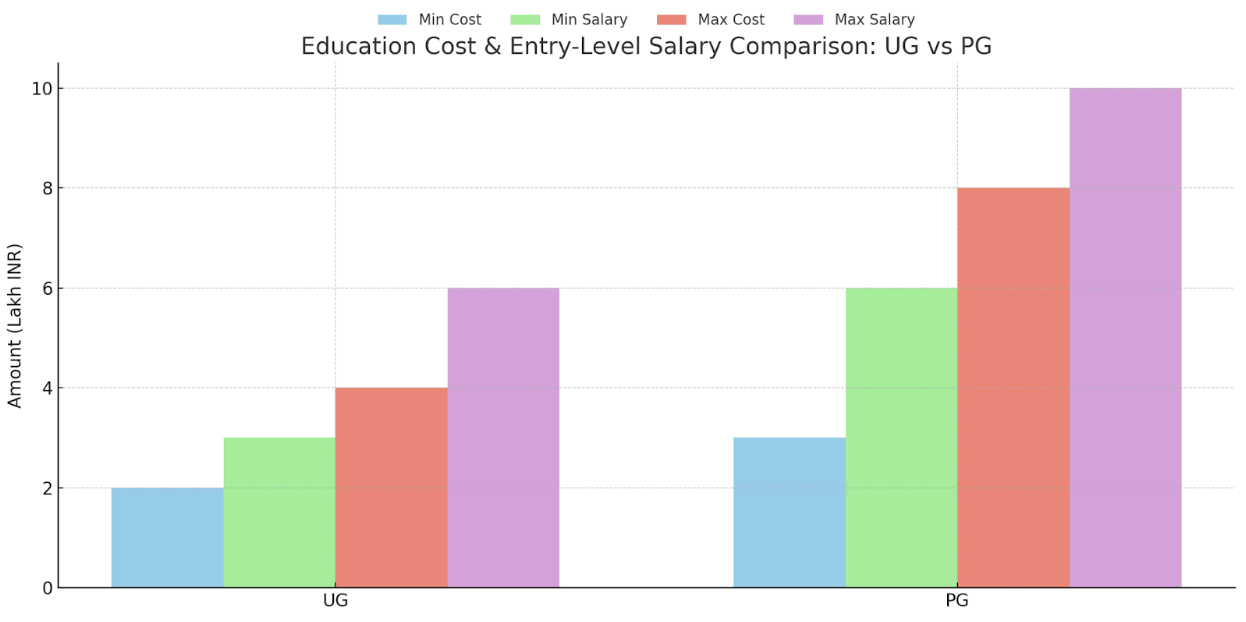
Education Costs (Approximate):
- UG: ₹2–4 lakh for the full program
- PG: ₹3–8 lakh depending on the institute
Earnings Potential (Approximate):
- Entry-level: ₹3–6 LPA for UG
- Entry-level: ₹6–10 LPA for PG.
Pharmacy careers tend to offer solid job security and competitive salaries, especially as you gain experience and potentially specialize in areas like clinical pharmacy, oncology, or drug research.
Pharmacist: Cost of Education Vs Returns on Investment
Return on Time (ROT)
Let’s talk about time—because for many students and parents, how long it takes to start earning is just as important as the salary itself.
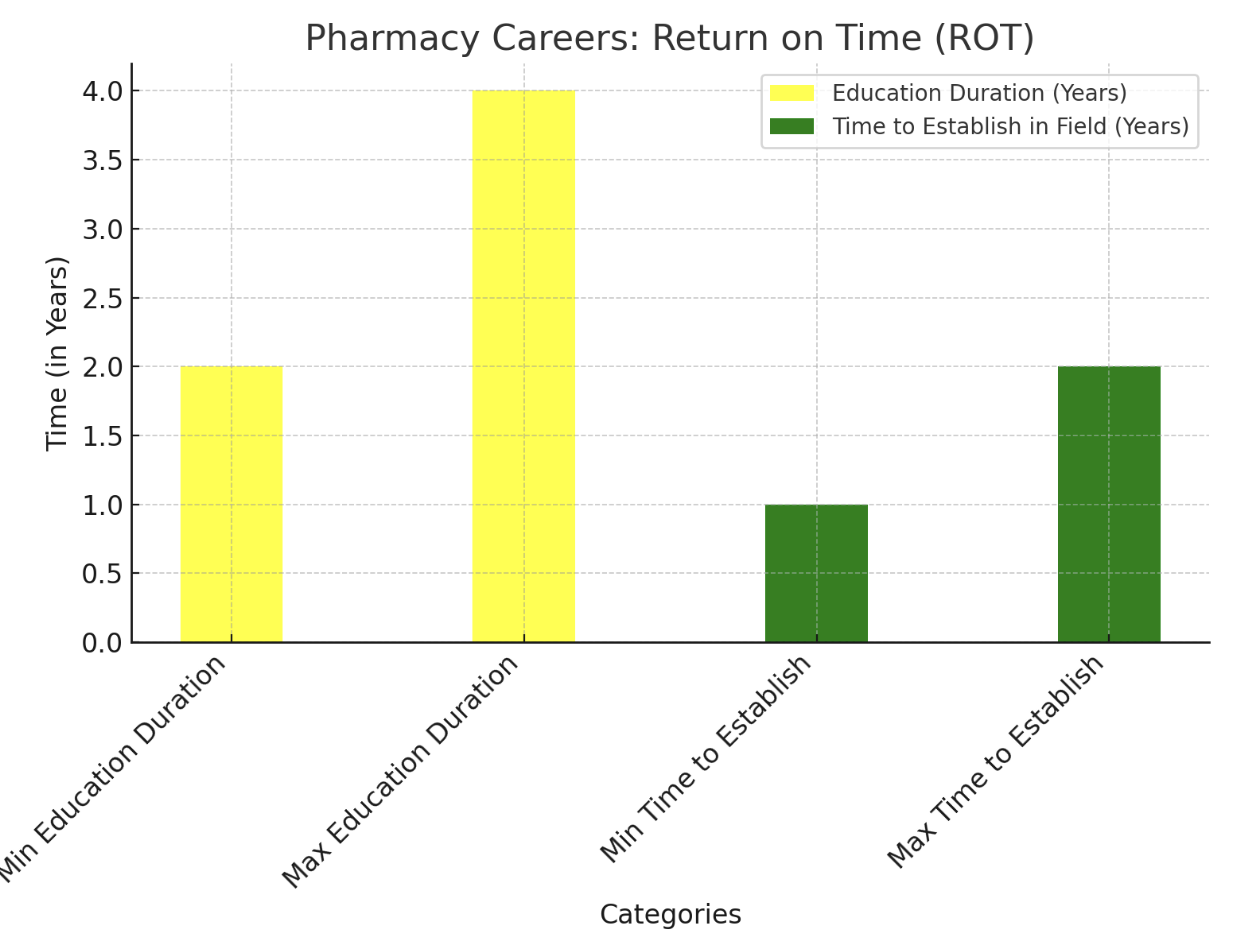
Education Duration:
- B.Pharm: 4 years
- M.Pharm (optional): 2 years
Break-even Point:
Most pharmacy graduates can begin working almost immediately after completing their undergraduate degree.
Fast-Track Options:
If you’re eager to dive into the pharmacy field early, there are certificate courses that can help you gain a specialized skill set before committing to a full degree.
Future Prospects: The Next 20–30 Years
The next 20–30 years will see pharmacists playing even more vital roles across every aspect of healthcare—from clinical settings and research labs to public health initiatives and the pharmaceutical industry. Pharmacists will be key players in personalized medicine, telehealth, and the integration of new technologies like AI and robotics in patient care.
Specialized roles will emerge—like pharmacogenomics experts, oncology pharmacists, or even roles in pharmaceutical policy and regulatory affairs. As we move toward more preventative and patient-centered care, the pharmacist’s role will expand beyond just dispensing medications to becoming a critical part of treatment teams.
India’s rapidly growing healthcare sector, paired with its increasing focus on health insurance coverage and access to healthcare, means pharmacists will be in high demand. Whether you work in a community pharmacy, a hospital, a pharmaceutical company, or in public health—your work will have a direct impact on improving health outcomes and ensuring the safe use of medications.
Conclusion
Thinking about becoming a pharmacist? If you’re passionate about healthcare, want to make a difference in people’s lives, and are excited by science and innovation—this path could be a perfect fit for you.
You don’t need to follow a rigid formula. Whether you come from a background in science, healthcare, or even business, there’s a place for you in pharmacy. The key is to stay curious, keep learning, and align your career path with the areas that excite you most—whether that’s patient care, research, or pharmaceutical development.
And the best part? You can start building your foundation right after Class 12. Explore internships, take online courses, or volunteer in healthcare settings—there’s no better time to start than now.
I hope this guide helps you see the potential of a pharmacy career. If you’re still figuring out which path in pharmacy suits you best, feel free to reach out—I’d be happy to help you along the way.