

Blog written by Preethi Durga, a career strategist and education innovator.
If you’re someone who loves fitness but feels unsure about turning it into a full-time career, let me share something with you. From my experience in career guidance, fitness training isn’t just a passion-driven choice anymore. It’s a career that’s steadily evolving and it can be sustainable if approached the right way.
When people ask me is fitness training a good career, my answer usually depends on how well they understand the profession beyond workouts and gym floors.
Because fitness training today is no longer limited to just counting reps. It has grown into a professional domain with multiple career paths, income models, and long-term opportunities. According to Indeed blog, 2025, there are multiple career options in fitness for the youth.
People often worry about stability and longevity—and rightly so. Is personal training a sustainable career in the long run? In my opinion, it is, but only for those who adapt. The future of fitness trainers lies in upskilling, specialization, and understanding client needs beyond just physical appearance.
At present, according to Course Era Blog, 2025, In India, entry-level fitness trainers typically earn between ₹20,000 to ₹35,000 per month, depending on certifications and location. With experience, specialization, and personal branding, many trainers cross ₹50,000 to ₹1 lakh per month through personal training, online coaching, or studio partnerships.
From what I’ve seen, the earning potential improves significantly once trainers stop treating it as a side hustle and start building it as a career.
A report by Healthandfitness in September, 2025, indicated that India’s fitness market expected to expand from ₹16,200 crore in 2024 to ₹37,700 crore by 2030, the industry is creating strong long-term career opportunities for fitness professionals. Currently, the fitness industry is expanding across gyms, wellness centers, corporate fitness, rehabilitation support, and digital platforms. This opens up real scope for fitness trainer career growth, especially for professionals who combine technical knowledge with communication and coaching skills.
So, is fitness training worth considering as a career in 2026 and beyond? I’d say yes—but with clarity, planning, and the right guidance. Let’s break it down further and look at the roles, earnings, and real-world challenges you should know before taking the leap.
Global Trends Shaping Fitness Training Careers in 2026 and Beyond
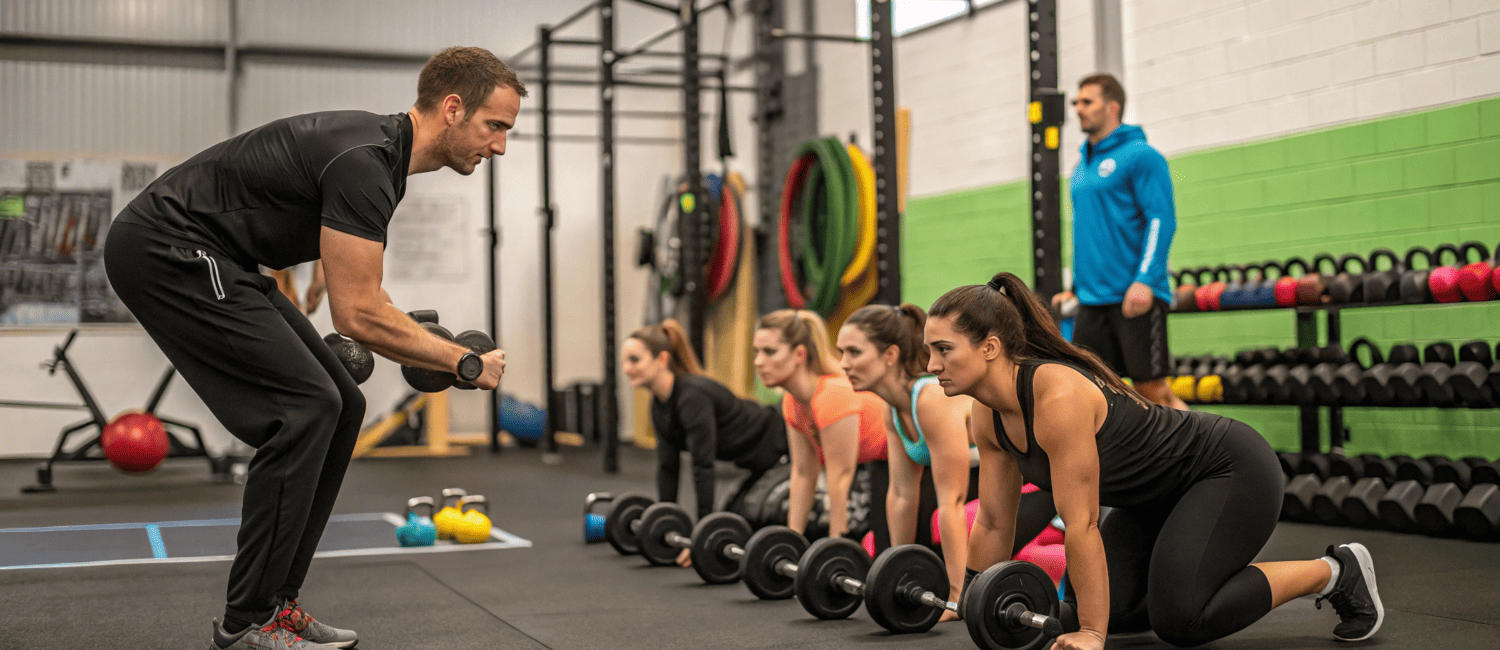
Whenever I speak to aspiring trainers or parents supporting this career choice, I always say this: fitness training today is no longer just about gyms. It’s part of a much larger global shift toward preventive health, lifestyle management, and long-term wellness.
Here are the key trends shaping the future of fitness trainers right now.
Preventive Healthcare Is Driving Fitness Demand
Across the world, healthcare systems are shifting focus from treatment to prevention—and fitness trainers are becoming a critical part of that ecosystem.
As per Emami Frank Ross Blog, 2025, lifestyle diseases like obesity, diabetes, and cardiovascular issues are rising rapidly in India. From what I’ve seen, doctors, corporates, and even insurance companies are increasingly recommending structured fitness programs as a preventive solution.
This has created consistent demand for certified trainers who understand exercise science, mobility, and long-term client care.
Insight for Aspirants
If fitness genuinely interests you, this trend alone makes a strong case for is fitness training a good career, especially when you position yourself as a health-focused professional—not just a workout instructor.
Online Coaching and Hybrid Fitness Models Are Expanding
One of the biggest changes I’ve witnessed in recent years is the rise of online and hybrid fitness models.
Trainers today are no longer limited by geography. Online personal training, app-based coaching, live sessions, and recorded programs have opened global income opportunities. Many trainers now earn more through online coaching than they ever did on a gym floor.
This shift plays a big role in answering is personal training a sustainable career—because scalability has changed the game completely. In fact, as per IFSI (Integrated Fitness and Sports Institute) blog, 2025, gym trainers, corporate wellness trainer, nutritionist, sports nutritionist, personal trainer and fitness content creator are some of the most trending career options in this field.
Insight for Aspirants
If you’re comfortable with digital tools and communication, online fitness coaching offers long-term stability and faster fitness trainer career growth.
Corporate Wellness Is Becoming Mainstream
Organizations are increasingly investing in employee wellness programs to improve productivity and reduce burnout. According to the University of Arizona Global Campus Blog (2025), corporate wellness initiatives now range from on-site corporate gyms to virtual fitness and wellness sessions. As a result, companies are actively hiring fitness professionals who can design structured, inclusive programs—creating steady demand for trainers capable of working with diverse age groups and varying fitness levels.
In my opinion, this is one of the most underrated yet stable career paths within the fitness industry.
Insight for Aspirants
If you prefer structured schedules and consistent income, corporate wellness roles make fitness training a more secure and sustainable career option.
Specialization Is Replacing General Training
Another clear trend I see is the growing importance of specialization.
Clients today look for trainers who understand specific needs like weight management, strength training, sports conditioning, rehabilitation support, pre- and post-natal fitness, or senior fitness. General training alone is no longer enough to stand out.
Specialized trainers often earn more, retain clients for longer periods, and build stronger professional reputations. In India, professional consultancy or practice in areas such as nutrition and dietetics also requires appropriate certifications. The IGMPI (Centre for Nutrition and Dietetics) highlights the importance of obtaining recognised credentials and offers structured certification programs, including a dedicated course with a January intake for interested learners.
Insight for Aspirants
The faster you specialize, the stronger your long-term positioning will be in the fitness industry.
Fitness and Mental Well-being Are Converging
Fitness is no longer just about physical results. Mental well-being, stress management, and lifestyle balance are becoming equally important.
Trainers who understand behavior change, motivation, and holistic wellness are seeing better client outcomes. As per Idea Fit Blog 2025, mental wellbeing is at the core of health, and fitness professionals play a vital role in supporting not just physical but emotional and psychological wellness.This convergence is shaping a more mature and respected future for the profession.
Insight for Aspirants
If you enjoy coaching, mentoring, and helping people transform their lives, fitness training offers meaningful impact along with career longevity.
Industries Hiring Fitness Trainers in 2026 (Far Beyond Just Gyms)

A lot of people assume fitness trainers only work inside gyms—and from my experience, that’s one of the biggest misconceptions holding people back. Fitness training today cuts across multiple industries, many of which didn’t even exist in this form a decade ago.
When someone asks me is fitness training a good career, I usually respond by showing them how wide the hiring landscape has become. Trainers are no longer restricted to treadmills and dumbbells. They’re being hired wherever health, performance, and lifestyle improvement matter.
According to Wod Guru Blog 2025, top-earning roles in the fitness industry include personal trainers, gym managers, studio owners, and wellness consultants — all of which offer higher income potential with the right skills and certifications.
Here’s where fitness professionals are increasingly finding opportunities.
Gyms, Health Clubs & Fitness Studios
This is still the most visible entry point for many trainers.
From large chains to boutique studios, gyms continue to hire certified trainers for floor training, group sessions, and personal coaching. What’s changed, though, is expectations. Gyms now prefer trainers who can retain clients, upsell personal training, and deliver measurable results.
From what I’ve seen, trainers who treat gyms as a learning and client-building phase—not a lifetime dependency—grow faster and earn more.
Corporate Wellness & Workplace Fitness
Corporate wellness is one of the fastest-growing spaces for fitness professionals.
Companies are hiring trainers to conduct on-site sessions, virtual fitness programs, posture correction workshops, and stress-management routines. These roles often offer fixed pay, structured hours, and long-term contracts—something many people don’t associate with fitness careers.
In my opinion, this sector plays a big role in making personal training a sustainable career, especially for those who value stability.
Online Coaching & Digital Fitness Platforms
This is where the fitness industry has completely changed the rules.
Online coaching platforms, fitness apps, and independent trainers running their own digital programs are creating global income opportunities. Trainers are now hired—or self-employed—through online platforms to coach clients across cities and even countries.
This shift has had a massive impact on fitness trainer career growth, allowing trainers to scale their income without being limited by location or gym schedules.
Sports Academies & Performance Centers
Athletes—professional and amateur—need trainers who understand performance, recovery, and injury prevention.
Sports academies, schools, and performance centers hire fitness professionals for strength conditioning, mobility training, and endurance development. This industry values specialization, and trainers here often command higher fees due to the technical nature of the work.
If you’re passionate about sports, this is one of the most rewarding and respected career paths in fitness.
Rehabilitation & Medical Fitness Centers
Fitness and healthcare are coming closer than ever.
Physiotherapy clinics, rehabilitation centers, and wellness hospitals work with fitness trainers to support recovery, mobility, and long-term physical health. Trainers in this space work alongside doctors and therapists, which adds credibility and career longevity.
From what I’ve observed, this crossover is becoming central to the future of fitness trainers.
Senior Fitness & Lifestyle Wellness
As life expectancy increases, so does the demand for age-specific fitness programs.
Senior fitness centers, community wellness initiatives, and home-based training services hire trainers who can safely work with older adults. This sector values patience, consistency, and trust—and often offers long-term client relationships.
It’s not flashy, but it’s stable and deeply impactful.
Fitness Education & Coaching Institutes
Experienced trainers are also moving into teaching, mentoring, and content creation.
Fitness academies, certification bodies, and coaching platforms hire trainers as educators, assessors, and mentors. This path allows professionals to step away from physically demanding routines while staying active in the industry.
In my opinion, this is one of the smartest long-term moves for trainers thinking ahead.
Skills Required for Fitness Training (and How They Map to Best-Fit Career Zone™)
People often ask me this—especially parents and career-switchers:
“My child loves fitness and helping people… but how do we know if fitness training is actually the right long-term career for them?”
And that’s a very valid question.
From my experience, fitness training isn’t just about liking workouts or having a good physique. It requires a very specific mix of mindset, personality traits, and cognitive strengths. This is exactly where our proprietary frameworks come into play.
Fitness professionals who grow sustainably usually have a certain career DNA—and we identify that through the Best-Fit Career Zone™.
Here are the core skills required for fitness training, and how they map to long-term success.
Human-Centric Thinking & Coaching Ability
Great fitness trainers don’t just instruct—they coach.
They understand how people think, what motivates them, why they quit, and how to help them stay consistent. Fitness training is deeply people-focused, and trainers must be able to adapt workouts to different personalities, body types, and lifestyles.
Mapped to:
✔ People Alignment Intelligence™
✔ Behavioural Coaching Strength
Applied Knowledge of Body Mechanics
Fitness training requires understanding how the human body moves, adapts, and responds to stress.
Trainers don’t need to be doctors—but they must understand posture, muscle function, recovery, and injury prevention. This applied knowledge is what separates a professional trainer from someone who just follows routines.
Mapped to:
✔ Practical Science Aptitude™
✔ Applied Learning Index™
Consistency, Discipline & Emotional Endurance
This is a skill many people underestimate.
Fitness trainers often work early mornings, late evenings, and with clients who struggle with motivation. Progress isn’t instant, and results take time. Trainers who succeed long-term are those who stay disciplined—even when results aren’t immediate.
Mapped to:
✔ Career Endurance Signature™
✔ Long-Haul Motivation Profile™
Communication & Trust-Building Skills
From what I’ve seen, clients don’t stay because a trainer knows exercises—they stay because they trust them.
Trainers need to communicate clearly, listen actively, and build long-term rapport. This skill directly impacts client retention, referrals, and income stability.
Mapped to:
✔ Interpersonal Impact Quotient™
Curiosity & Willingness to Upskill
The future of fitness trainers belongs to those who keep learning.
New training methods, recovery tools, digital platforms, and wellness models keep emerging. Trainers who stay curious and open to learning grow faster and stay relevant longer.
Mapped to:
✔ Growth Adaptability Index™
✔ Continuous Skill Evolution Marker™
Parent Coaching Prompt #1
Ask your child:
“Do you enjoy helping people stay consistent and improve over time—not just showing exercises?”
If the answer is yes, that’s a strong indicator of fitness career alignment.
Case Study: “How Rohan Found His Fit in Fitness Training”
When Rohan came to me after completing his graduation, he was confused. He loved fitness but wasn’t sure if turning it into a career made sense.
During his assessment, a few patterns stood out clearly:
✔ Strong people skills
✔ High discipline and routine orientation
✔ Natural leadership during group activities
✔ Genuine interest in body transformation and coaching
To test his alignment, I asked him to design a simple fitness plan for a hypothetical client struggling with consistency.
He didn’t just focus on exercises. He spoke about motivation, habits, and realistic progress timelines.
His parents, who were initially unsure, felt reassured.
“This actually sounds like him,” they said.
Today, Rohan is a certified trainer working in both offline and online coaching—and building a sustainable client base. His career didn’t feel forced. It felt aligned.
Case Study: “How Ananya Turned Her Empathy into a Fitness Career”
Ananya came to me with a background in psychology and a deep interest in wellness. She wasn’t keen on traditional corporate roles but wasn’t sure where fitness fit in.
Her assessment revealed:
✔ High empathy and listening skills
✔ Strong interest in lifestyle transformation
✔ Consistent self-discipline
✔ Natural mentoring ability
I gave her a simple task—design a beginner fitness routine for someone with low confidence and high anxiety.
She immediately said,
“I’d start slow, focus on comfort, and build trust before intensity.”
That moment made everything clear.
Today, Ananya works in lifestyle coaching and senior fitness, combining physical training with emotional support. She’s built a career that matches who she is—not just what she studied.
This is exactly what we mean by the Best-Fit Career Zone™—when an individual’s natural strengths align with real-world career demands. That’s when fitness training stops being a risk… and starts becoming a sustainable career path.
The Real Challenges in Fitness Training (That You Must Know)
Fitness training can be deeply fulfilling—but I’ll be honest, it’s not an easy or “quick money” career. From my experience, the people who struggle are usually the ones who walk in without understanding the realities.
Here are the challenges you should be aware of before choosing this path.
Inconsistent Income in the Early Years
This is probably the biggest concern—and rightly so.
Most fitness trainers don’t earn big in the first year. Early income depends on client retention, gym commissions, location, and personal effort. There can be months where earnings fluctuate, especially at the start.
This is often why people ask, is personal training a sustainable career. In my opinion, it becomes sustainable only when trainers stop relying on just one income source and start building long-term value.
Physically and Emotionally Demanding Work
Fitness training isn’t just physically tiring—it’s emotionally demanding too.
Early mornings, late evenings, and working around other people’s schedules can take a toll. Trainers also deal with clients who lose motivation, quit midway, or expect instant results.
Patience, empathy, and emotional endurance matter just as much as physical fitness.
Client Results = Your Responsibility
Unlike many careers, fitness trainers are directly accountable for outcomes.
If a client doesn’t see results, they often blame the trainer—even when consistency or lifestyle is the real issue. Trainers must constantly educate, motivate, and adjust plans.
This responsibility can feel heavy, especially for those who prefer low-pressure roles.
Need for Constant Upskilling
Fitness is not a “learn once and relax” profession.
New training methods, recovery tools, nutrition insights, and digital platforms keep emerging. Trainers who don’t upskill eventually struggle to retain clients or justify higher fees.
In my experience, the trainers who grow fastest are the ones who treat learning as part of the job—not an extra burden.
Lack of Clarity Can Lead to Burnout
Many people enter fitness without a clear long-term plan.
They start as general trainers, work long hours, and eventually burn out because they don’t see progression. This is where fitness trainer career growth often stalls—not due to lack of talent, but lack of direction.
Insight for Aspirants
Those who enjoy people-focused work, routine discipline, and continuous learning usually thrive. Those who expect fixed hours, guaranteed income, or quick success may feel overwhelmed.
This is exactly why career clarity before committing matters.
Fitness Training Careers 2026: What the Next 3–5 Years Look Like
Here’s the part most people really want to know:
- Is fitness training a good career in the future?
- Does it have scope beyond gyms?
- Will it still be relevant long-term?
From what I see across industry trends and career outcomes—the answer is yes, with conditions.
What’s driving demand (2026–2030):
✔ Rising focus on preventive healthcare and lifestyle correction
✔ Growth of online and hybrid fitness coaching models
✔ Increased corporate wellness investments
✔ Aging population driving demand for senior fitness and rehab support
✔ Strong overlap between fitness, mental well-being, and lifestyle coaching
The future of fitness trainers is not shrinking—it’s evolving. Trainers who adapt will find more opportunities, not fewer.
Key Takeaways
✔ Fitness training goes far beyond gym floors today
✔ Income stabilizes with specialization and planning
✔ Career growth depends on skills, not physique alone
✔ The profession rewards consistency, empathy, and adaptability
✔ Long-term success requires clarity—not pressure or guesswork
Why Career Guidance Makes a Difference
This is where career counselling and coaching play a critical role.
From my experience, people who enter fitness with clarity about their strengths, preferred work style, and long-term direction make smarter choices—and avoid burnout. Career guidance helps identify whether fitness truly aligns with your personality, endurance, and growth expectations.
According to the Indian Institute of Fitness Courses Blog (2025), a successful career in fitness requires patience, empathy, and in-depth knowledge of anatomy and wellness science—these are non-negotiable skills.
Therefore, it is essential for your child to understand whether he or she is truly the right fit for this career path. In this context, when fitness training aligns with one’s Best-Fit Career Zone™, it stops feeling like a struggle and starts feeling sustainable.
Try This Today
Ask Your Child These Questions
Sit down for a simple, honest conversation and ask:
- Do you enjoy helping people improve their health and confidence over time?
- Are you patient enough to guide someone—even when results are slow?
- Do you like explaining things, motivating others, and building trust?
- Are you open to learning continuously and adapting to new fitness methods?
If the answer is yes, there may be strong alignment with a career in fitness training.
Let Them Experience Real Fitness Coaching
Instead of just talking about it, let them experience it.
Have them observe or assist in a real training session—whether it’s a gym floor, a group class, or an online coaching setup. Watch how they react when someone struggles, asks questions, or needs encouragement.
From my experience, genuine interest shows up quickly. If they’re engaged, curious, and eager to help—that’s a powerful signal.
Book a Best-Fit Career Zone™ Assessment
This is where clarity replaces assumptions.
Through our assessment, we decode:
✔ People-centric coaching ability
✔ Applied body-movement understanding
✔ Career endurance and discipline levels
✔ Communication and trust-building strengths
✔ Learning adaptability and growth mindset
So families can move forward with confidence—not guesswork.
Conclusion: Beyond Fitness — Toward a Sustainable, Impact-Driven Career
Fitness training in 2026 is no longer just about workouts, gym routines, or physical appearance. From my experience, it’s becoming a profession rooted in preventive health, lifestyle transformation, and long-term well-being.
For individuals considering this path, fitness training offers:
✔ Meaningful, people-focused work that creates real impact
✔ Multiple career directions—from gyms to online coaching and wellness programs
✔ Strong alignment with the growing focus on preventive healthcare
✔ Opportunities to build long-term income through specialization and personal branding
✔ A future that evolves with health, wellness, and human performance
For families and parents, it provides:
✔ A career built on real-world relevance—not trends
✔ Growing demand across industries beyond traditional gyms
✔ Respect as professionals who contribute to healthier lives
✔ Long-term scope when approached with planning and guidance
So, is fitness training a good career? In my opinion, it can be—when it aligns with the individual’s strengths, mindset, and long-term expectations. And is personal training a sustainable career? Yes, especially for those who are willing to adapt, upskill, and grow with the industry.
The future of fitness trainers is not about who lifts the heaviest—it’s about who understands people, health, and consistency the best. That’s where real fitness trainer career growth happens.
If you’re still unsure whether this path truly fits your child—or even yourself—a single guided conversation can bring clarity that years of trial and error cannot.
At NextMovez, we help families and professionals move beyond assumptions and understand whether fitness training aligns with their natural abilities, endurance, and long-term goals. Through structured career counselling and coaching, we help individuals choose paths that don’t just look good—but actually fit.