
Blog written by Preethi Durga, a career strategist and education innovator.
With the global automobile industry shifting towards electric vehicles, smart mobility, and sustainable transport, many parents and students are asking an important question: “Is automobile engineering still a safe and future-ready career?”
In my opinion, this concern is completely valid—especially when traditional mechanical roles are changing and new technologies are taking over.
According to my experience while interacting with students and parents over the years, there’s a common assumption that automobile engineering is only about engines, gears, and workshop jobs. But the future of automobile engineering looks very different from what it did a decade ago.
Today, it’s about innovation, software integration, battery technology, automation, and clean energy solutions. It’s no longer just a mechanical field—it’s a blend of engineering, electronics, data, and sustainability. In fact, according to a blog published by Chegg India in October 2025, With the rise in the demand for quality automobiles among people, the need for skilled, creative, and knowledgeable automobile engineers is also increasing.
From a Parent’s Perspective…
“I worry whether automobile engineering still has scope,” a parent recently told me. “With electric vehicles and automation coming in, will my child’s degree still be relevant after 10 years?”
That concern comes up often—and honestly, it’s fair. But according to my experience, the answer lies in understanding the skills needed for automobile engineers today and how the industry is evolving.
Students who upskill in areas aligned with current trends in automotive engineering are not only employable—but highly sought after.
An Introduction to the Career
Automobile engineering today is deeply connected to the future of mobility. From electric vehicles and hybrid systems to autonomous driving and connected cars, the field is expanding rapidly.
Electric vehicle engineering careers, in particular, are opening up new opportunities for students who are willing to adapt and learn beyond conventional engineering subjects.
According to a blog published by Saraswati College of Engineering in 2025, hydrogen fuel cells and hybrid technologies are emerging as important complements within the electric vehicle segment. As these technologies gain traction, they are opening up new and promising career opportunities for automobile engineering students who choose to specialize in this area.
Many people still think automobile engineers are limited to manufacturing plants or service centers. In reality, the career now involves vehicle design, battery management systems, EV infrastructure, AI-based diagnostics, and sustainability-focused innovation. According to my experience, students who understand where the industry is headed—and build the right skill set—stand out quickly.
As mobility continues to transform globally, automobile engineering is no longer a static career path. It’s dynamic, technical, and full of long-term potential—provided students prepare for what the future actually demands, not what the past looked like.
Global Trends Affecting This Career
Automobile engineering today isn’t just about vehicles—it’s about shaping how the world moves. In my opinion, this is one of the most transformation-driven careers right now, influenced by sustainability goals, digital technologies, and changing consumer expectations. These shifts are redefining what it means to be an automobile engineer, bringing both challenges and powerful opportunities.
According to the Allied Market Research report on the Global Automotive Industry, the global automotive market was valued at USD 3.8 trillion in 2023 and is projected to reach USD 6.1 trillion by 2035, growing steadily as electric mobility and smart transportation gain momentum.
According to a Times of India report from March 2025, the government-run Bhubanananda Orissa School of Engineering (BOSE) partnered with Mercedes-Benz India to introduce an Advanced Diploma in Automotive Mechatronics (ADAM). The course is meticulously designed to address the growing demand for expertise in electric mobility, automation, and intelligent vehicle systems.
Additionally, governments worldwide—including India, the EU, and the US—are pushing aggressive policies toward clean energy, EV adoption, and emission reduction.
What it signals: The future of automobile engineering is strongly aligned with sustainability, innovation, and technology-led mobility solutions.
What This Means for Your Child: Automobile engineers who adapt to new-age skills will see long-term job security and global career opportunities.
Rise of Electric Vehicles and Clean Mobility
According to the International Energy Agency (IEA) Global EV Outlook 2025, electric vehicle sales are expected to account for over 40% of global vehicle sales by 2030. India alone aims to achieve 30% EV penetration by 2030 under its national electric mobility mission.
This rapid growth is driving demand for engineers skilled in battery technology, power electronics, vehicle software, and charging infrastructure—making electric vehicle engineering careers one of the fastest-growing specializations.
What it signals: EVs are no longer experimental—they’re becoming the norm.
What This Means for Your Child: Students who develop EV-focused expertise can access high-demand roles in automotive R&D, manufacturing, and infrastructure development.
💡 Reflective Prompt: Ask your child, “Would you enjoy working on battery systems, EV motors, or clean-energy vehicles rather than traditional engines?”
Automation, AI, and Smart Vehicles
According to Government of India Data by heavyindustries Dept., India ranks as the world’s second-largest manufacturer of two-wheelers, the largest producer of three-wheelers, and the third-largest manufacturer of passenger cars. Overall automobile production in the country—including trucks, buses, cars, two-wheelers, and three-wheelers—has been growing at a rapid pace.
Likewise, McKinsey Insight On India’s Auto Component Industry – 2025, India’s auto component industry could reach $200 billion in value by 2030, driven by rising domestic demand and export opportunities.
Automobile engineering is now deeply connected with software, sensors, data analytics, and automation. In my experience, students who understand these trends in automotive engineering—especially AI-integrated vehicle systems—have a clear advantage in the job market.
What it signals: The role of automobile engineers is shifting from purely mechanical to interdisciplinary.
What This Means for Your Child: Engineers with hybrid skills (mechanical + software + electronics) will be highly valued by global manufacturers.
💭 Reflection Prompt: “Are you curious about how machines think, react, and make decisions on the road?”
Increasing Demand for Specialized Roles
According to a 2025 KollegeApply report, citing Glassdoor India’s salary data, entry-level automobile engineers earn between ₹4–6 LPA. In contrast, professionals specializing in EV systems, automotive software, and automation can earn ₹10–18 LPA or more, particularly in metro cities and with global firms.
Specializations such as EV design, autonomous systems, battery engineering, and vehicle simulation are growing faster than traditional roles.
Why it matters: The skills needed for automobile engineers today determine earning potential and career growth.
What This Means for Your Child: Specialization leads to higher salaries, global exposure, and meaningful work in future-focused domains.
Many parents ask us: “My child likes machines but also enjoys coding—is automobile engineering still the right fit?”
That’s exactly the kind of clarity our career-mapping sessions aim to provide.
Parent Insight: If your child is willing to upskill and specialize, automobile engineering can be a highly rewarding and future-ready career.

Global and Indian Demand Outlook
According to Nasscom Insight, India’s ER&D services sector reached USD 19–20 billion in FY 2025, highlighting its growing role in global engineering innovation. As the industry shifts toward IP-led, innovation-driven solutions, it is creating strong career opportunities in areas like automotive electronics, EV systems, ADAS, and intelligent vehicle technologies, making automobile engineering a future-ready career choice.
While competition exists in conventional roles, demand is growing rapidly for future-ready engineers.
What it signals: Opportunity lies where innovation meets preparation.
What This Means for Your Child: Graduates with the right skill set can find opportunities not just in metro cities, but also in global automotive hubs.
Wondering how your child can stand out among thousands of automobile engineering graduates each year?
That’s exactly the kind of question our counselors help families answer—every single day.
Technological Innovations & Industry Changes
In my experience, automobile engineering is one of those careers where technology doesn’t just support the job—it completely shapes it. The industry today is going through massive changes, driven by innovation, digitalization, and sustainability goals.
Traditional internal combustion engines are gradually making way for electric and hybrid vehicles. This shift has changed the skill set expected from automobile engineers.
Battery technology, power electronics, thermal management, and charging infrastructure are now core areas of learning. For students, this means the future of automobile engineering depends heavily on how well they adapt to these new technologies.
Another major change is the integration of software into vehicles. Modern cars rely on sensors, AI-based systems, and embedded software for safety, navigation, and performance optimization.
According to my experience, engineers who understand both mechanical systems and software integration stand out in today’s job market.
Automation and smart manufacturing are also reshaping how vehicles are built. Robotics, digital twins, and data-driven production lines are improving efficiency and reducing errors.
These trends in automotive engineering are creating demand for engineers who can work across design, testing, and production environments.
Simply put, automobile engineering is no longer static. Students who stay updated with technological innovations will find more opportunities, better roles, and stronger long-term career growth.
Job Demand & Hiring Trends
In my opinion, one of the most exciting things about automobile engineering right now is how job demand is shifting—not shrinking. You’ve probably heard people say cars will go away or robots will take over.
But that’s only half the story. What’s really happening is the type of jobs is changing, and demand is growing in areas many students don’t even think about yet.
Traditional roles in manufacturing and design are still there, but the real hiring momentum is in future-focused segments: electric vehicles, smart mobility, autonomous systems, and connected car technologies.
In fact, many global vehicle makers and technology firms are actively hiring engineers who understand both hardware and software.
According to IBEF insights, the electric vehicles industry is likely to touch Rs. 20,00,000 crore (US$ 234 billion) and will create around five crore jobs by 2030.
In India too, demand is rising—not just in metro cities but in emerging automobile clusters and EV hubs. Startups and tech firms are now part of the recruitment landscape, not just the big OEMs.
From my experience talking to industry insiders, candidates who have project experience, internships, or skills in vehicle electrification are snapped up faster than others.
What this means for your child: Jobs aren’t disappearing—they’re evolving. If they build skills that match where the industry is hiring today, they won’t just find work—they’ll thrive.
Emerging Skills & Career DNA Fit
When I speak to students who aspire to become automobile engineers, they often say, “I love cars and machines.” That’s a good starting point—but in my experience, succeeding in this field takes much more than just an interest in vehicles.
Think of an automobile engineer today as a problem-solver and innovator—someone who blends mechanical knowledge with technology, data, and sustainability. To thrive in this career, students need a mix of technical depth, analytical thinking, and adaptability.
Key Skills:
Core Engineering Fundamentals:
Strong understanding of mechanics, thermodynamics, materials, and vehicle dynamics remains essential.
Electric Vehicle & Battery Knowledge:
Familiarity with EV systems, battery management, power electronics, and charging infrastructure is becoming critical.
Software & Digital Skills:
Basic exposure to coding, embedded systems, simulation tools, and AI-assisted vehicle systems gives students a clear edge.
Systems Thinking:
Modern vehicles are complex ecosystems. Engineers must understand how mechanical, electrical, and software components work together.
Problem-Solving Ability:
Diagnosing issues, improving performance, and designing efficient solutions are daily tasks in this field.
💬 Reflective Prompt: “Do you enjoy solving technical problems and learning new tools—even when the technology keeps changing?”
Want to check if your child’s Career DNA fits automobile engineering? Take our 2-minute assessment.
From a Student’s Journey…
Rohan always loved dismantling gadgets and sketching vehicle designs, but he wasn’t sure where that curiosity fit. His relatives kept saying, “Automobile engineering is outdated—go for IT instead.”
His parents were anxious too. “What if he studies for four years and ends up stuck in a low-growth job?” his father asked during a counseling session.
During career guidance, Rohan was introduced to EV design, vehicle simulation software, and smart mobility systems. For the first time, engineering felt aligned with his interests. “I didn’t know cars today involved software, AI, and sustainability,” he said.
From my perspective as a coach, the shift was instant. Once Rohan saw how his strengths matched emerging roles, his confidence changed.
Today, he’s pursuing automobile engineering with a clear focus on electric vehicle systems—building skills that match where the industry is headed, not where it used to be.
3–5 Year Future Outlook
According to a Forbes Report of 2025, India’s automotive market is expected to grow from about 5.1 million vehicles in 2023 to 7.5 million by 2030, reinforcing its position as one of the world’s largest auto markets.
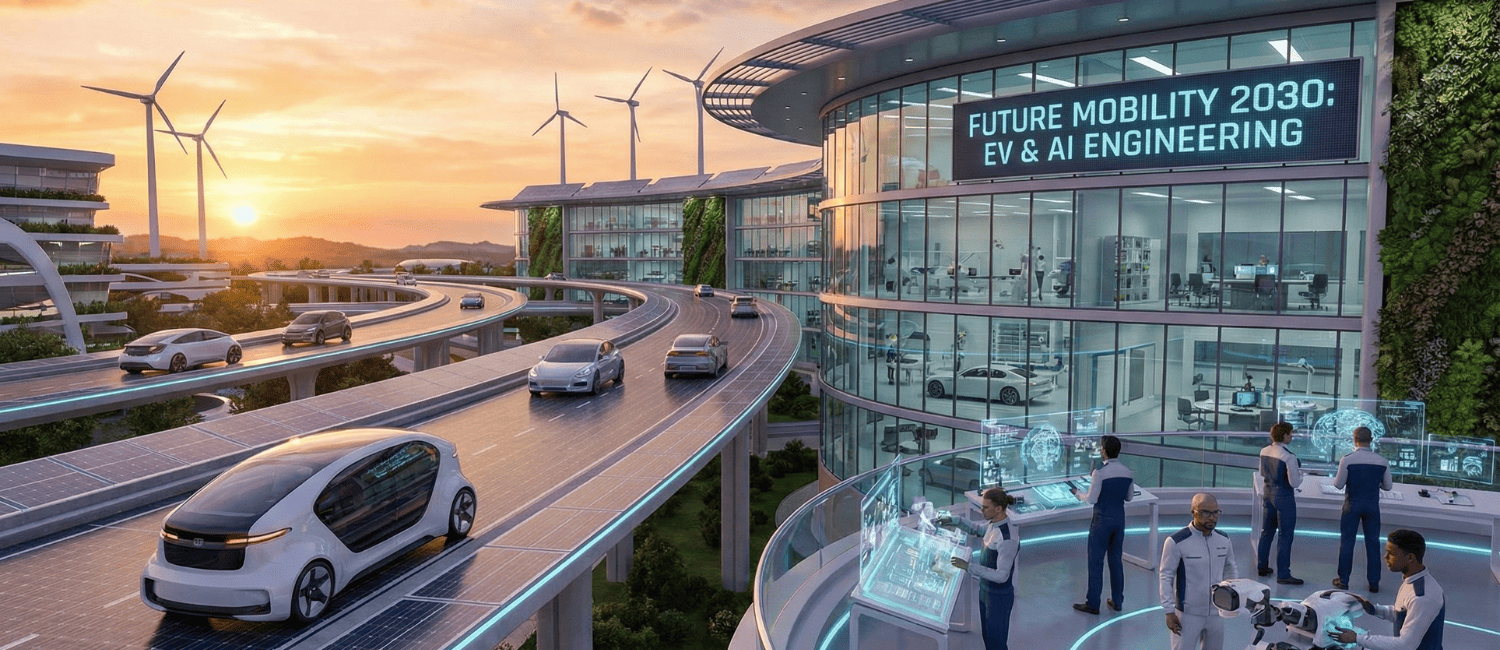
Wondering whether automobile engineering will still matter in the next 5–10 years? In my opinion, the answer is a clear yes—but with a shift. While engines, fuel systems, and vehicle designs will continue to change, the core of automobile engineering—solving mobility problems—will always stay relevant.
In the coming years, AI-driven diagnostics, smart sensors, and data analytics will assist engineers in improving vehicle safety, performance, and efficiency. Engineers will spend less time on repetitive testing and more time on innovation, system design, and problem-solving.
A 2025 research report published on ScienceDirect highlights several emerging trends shaping the future of mobility. One key finding is the growing focus on sustainable EV adoption policies, which signals a stronger link between engineering innovation and policymaking.
The automotive industry is also witnessing a gradual shift away from fuel-based mobility toward cleaner and more sustainable transportation solutions. Trends such as electric vehicles, hydrogen fuel systems, and shared mobility models are increasingly shaping the direction of the industry and influencing future engineering priorities.
According to my experience, engineers who understand both traditional vehicle fundamentals and emerging technologies will be the most future-ready.
Parent Insight: Encourage your child to stay curious about both mechanical systems and digital technologies. A student who is adaptable, analytical, and open to learning will always find opportunities in the future of automobile engineering.
Try This Today — 7-Day Automobile Engineering Skill-Building Plan
Day 1 — Systems Observation
Watch a short video explaining how an electric vehicle or hybrid system works. Note how mechanical, electrical, and software components interact.
Day 2 — Problem-Solving Practice
Look up a common vehicle issue (battery overheating, braking failure, or poor mileage). Write down possible causes and solutions—this builds engineering thinking.
Day 3 — Curiosity & Research Day
Read about a recent innovation in automotive engineering (EV batteries, autonomous driving, or lightweight materials).
Ask yourself: How does this improve safety, efficiency, or sustainability?
Day 4 — Digital Tools Awareness
Explore tools like CAD software, vehicle simulation platforms, or diagnostic scanners.
List two tools you’d like to learn more about.
Day 5 — Analytical Thinking Exercise
Compare an electric vehicle and a petrol vehicle.
Think about differences in design, maintenance, and energy efficiency.
Day 6 — Design & Aesthetic Sense
Look at modern vehicle designs.
Ask yourself:
What makes the design efficient?
How does form support function?
Good engineers think visually too.
Day 7 — Teamwork & Communication Check
Observe how you work in group tasks at school or coaching classes.
Are you a planner, a problem-solver, or a communicator?
Identify one skill you can strengthen—it matters in real-world engineering teams.
Conclusion: What This Means for Aspiring Professionals
According to my experience working closely with students and parents, a career in automobile engineering isn’t just about designing vehicles—it’s about solving real-world mobility challenges, improving safety, and contributing to a more sustainable future.
From electric mobility to smart transportation systems, automobile engineers play a direct role in shaping how people and goods move every day.
For students, this field offers intellectual challenge, hands-on problem-solving, and continuous learning as technology evolves. For parents, automobile engineering represents a career that blends technical expertise, innovation, and long-term relevance—provided students are guided toward the right skills and specializations.
At NextMovez, we help families look beyond outdated notions of “engines and workshops” to understand what modern automobile engineering truly demands. It’s no longer a one-dimensional mechanical career—it’s a multidisciplinary field that values adaptability, analytical thinking, and technological curiosity.
Many families aren’t sure how to align their child’s strengths with the rapidly changing demands of the mobility sector. That’s where our Best-Fit Career Zone™ comes in. Our expert coaches map your child’s interests, abilities, and personality traits to future-ready pathways within automobile engineering—whether that’s electric vehicle systems, automotive software, design, or mobility innovation.