
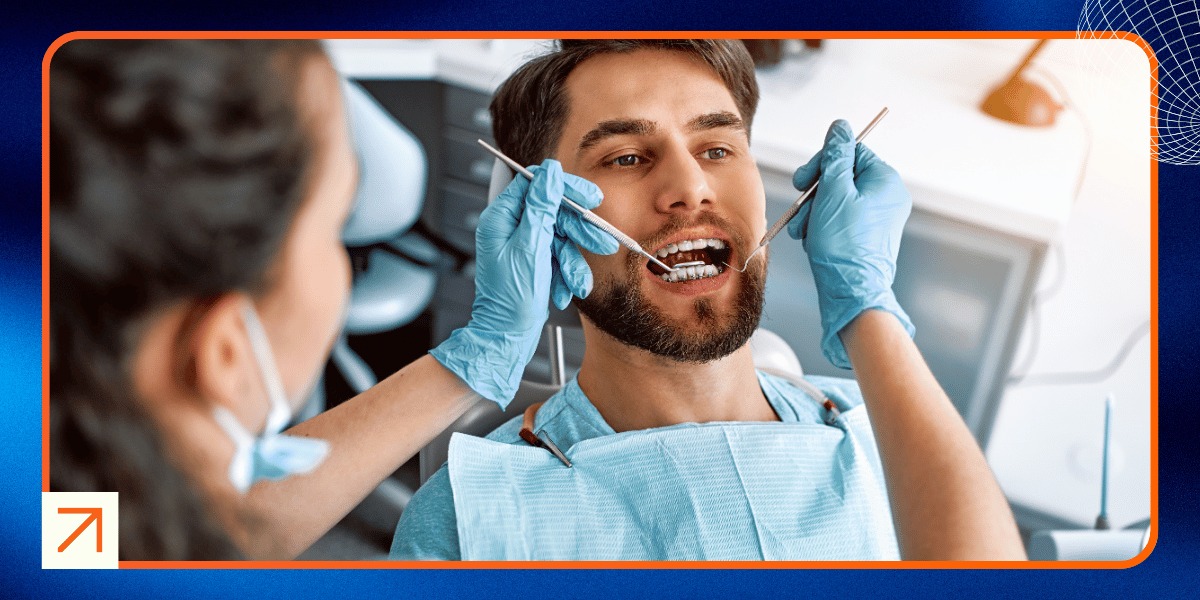
With BDS fees crossing ₹25–40 lakhs and 18,000+ new dentists graduating every year, many parents are worried. They’re now asking a tough question: “Is dentistry still a safe, high-ROI career for my child — or a risky, saturated path?”
This is the reality Indian families are navigating in 2025–2030. Dentistry is no longer a “backup option” for those who miss MBBS.
Recently, when I met a third-year BDS (Bachelor of Dental Surgery) student, I noticed their common assumption. Many people think dentistry is only about treating teeth.
But modern dentistry is far more dynamic, specialized, and future-proof than most parents realise.
It blends healthcare, technology, aesthetics, surgery, digital imaging, and patient care.
From a Parent’s Heart…
“I always assumed dentistry was a niche career,” a parent recently shared. “But once I understood the scope, specializations, and long-term career stability, I realised it could be a strong fit for my child — not just a backup.”
And that’s exactly where NextMovez comes in. We help families cut through myths, understand the real scope, cost, ROI, and long-term opportunities in dentistry, and decide confidently.
According to India Today Report of 2025 on India’s top dental colleges, the following institutions rank as the best in India in terms of placement.
- Bharati Vidyapeeth (deemed university) Dental College & Hospital, Sangli
- Noorul Islam College of Dental Sciences, Thiruvananthapuram
- Vivekanandha Dental College for Women, Tiruchenkode (Namakkal District)
- Rishiraj College of Dental Sciences and Research Centre, Bhopal
- Rungta College of Dental Sciences & Research, Bhilai
The dental profession offers a unique blend of medical science, hands-on work, and human connection.
Whether you’re an aspiring dentist or a parent trying to understand the appeal, it’s important to look beyond the surface.
An Introduction to the Career
Many think of dentistry as just dealing with teeth. But it involves everything from diagnosing diseases, offering treatments, performing surgeries, and building long-term relationships with patients.
According to the CurveDental Report of 2025, 3D printing, laser dentistry, and digital smile designs, among others, are some of the most popular dental services that patients are seeking these days.
Dentists with the necessary expertise and skills will stand out. Plus, it’s a career that provides excellent job security — the dental profession continues to grow in India, with increasing demand for oral healthcare.
In fact, according to the Market Research Future (MRFR) report of October 2025, the India dental services market size was estimated at USD 29.62 billion in 2024.
The Indian market is projected to grow from USD 31.52 billion in 2025 to USD 58.72 billion by 2035, exhibiting a compound annual growth rate (CAGR) of 6.42% during the forecast period from 2025 to 2035.
In my experience, some view dentistry as a stable, traditional career, while others find it to be a fulfilling blend of healthcare and artistry.
But like any career, it has its pros and cons, which we’ll explore later. And let’s not forget: as healthcare continues to evolve in India, the future of dentistry offers exciting opportunities.
According to an Observer Research Foundation Online Blog of November 21st, 2025, India now has one dentist for every 3,846 people, which is nearly double the WHO-recommended ratio of 1:7,500.
However, this surplus is unevenly distributed, with a heavy concentration in urban and metro areas. This means that the country currently has more dentists than it actually needs. But we need more dentists in rural areas than urban metro centers.
This imbalance creates gaps in access to safe and ethical dental care, particularly in underserved areas, and indirectly contributes to the rise of unregulated practices.
Furthermore, according to the FDI World Dental Federation (FDI) report of 2025, the organization has taken a strong stance against illegal dental practice, recognizing it as a serious global public health issue.
This practice not only jeopardizes patient safety but also undermines the integrity of the dental profession.
As the leading international organization representing dentists, FDI has acknowledged the severity of the problem and adopted the ‘Action Against Illegal Dental Practice’ policy statement to address it.
Key Trends Shaping Dentistry 2025–2030
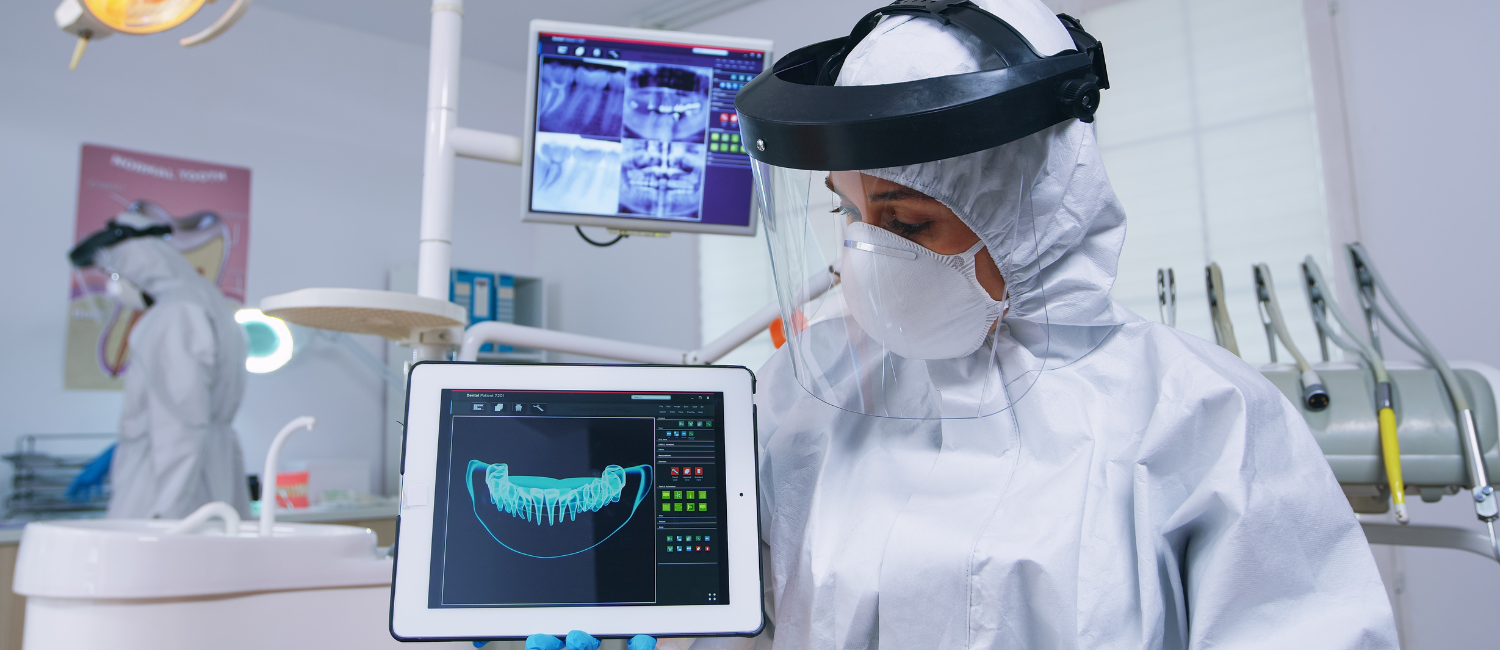
Dentistry isn’t just about treating teeth; it’s about adapting to shifts in healthcare and technology. These changes are redefining what it means to be a dentist, offering both challenges and exciting opportunities.
According to the Cervicorn Consulting report on Global Dental Services Market Size, dated March 31st, 2025, the global dental services market was valued at USD 473.92 billion in 2024 worldwide. It is projected to grow to USD 754.78 billion by 2034. This growth is expected at a compound annual growth rate (CAGR) of 4.8% from 2025 to 2034.
Additionally, the demand for dental services in urban areas is increasing due to rising disposable incomes and greater health awareness.
What it signals: India’s growing focus on oral health creates numerous career opportunities for young dentists. You’ll get plenty of opportunities in metropolitan regions.
What This Means for Your Child: There will be a higher demand for dental professionals, from general practitioners to specialists. This means more job security and growth opportunities.
Rise in Dental Implants and Cosmetic Dentistry
According to Grand View Research’s Dental Implants Market Analysis Report of 2025, the global dental implant market is expected to grow from USD 5.16 billion in 2024 to USD 11.02 billion by 2033, registering a CAGR of 8.92% from 2025 to 2033.
Many adults, particularly in the younger age groups, are increasingly considering cosmetic dental procedures as part of their healthcare.
Among these, dental implants have become one of the most sought-after treatments, reflecting a growing interest in aesthetic dentistry.
What it signals: Cosmetic dentistry, including dental implants, teeth whitening, and smile design, is no longer a niche. It’s becoming mainstream. The rising focus on aesthetics is opening up more opportunities for dentists to specialize in these high-demand areas.
What This Means for Your Child: Aspiring dentists interested in cosmetic procedures and patient aesthetics will find a growing market and the potential for a rewarding, specialized career.
Impact of Teledentistry and Remote Care
According to the Future Market Insight’s Teledentistry Market Report of 2025, the Teledentistry Market is estimated to be valued at USD 2.7 billion in 2025 and is projected to reach USD 12.2 billion by 2035, registering a compound annual growth rate (CAGR) of 16.3% over the forecast period.
This trend is especially significant in rural and underserved regions, where access to dental care has historically been limited.
Virtual consultations are not just about convenience — they’re improving accessibility and reaching patients who otherwise may not receive care.
What it signals: As telehealth becomes more embedded in healthcare, teledentistry will play a key role in broadening access to dental services.
What This Means for Your Child: Students interested in leveraging technology for patient care will have exciting opportunities to incorporate teledentistry into their practices.
💡 Reflective Prompt: Ask your child, “How comfortable are you with using digital tools to diagnose or treat patients remotely?”
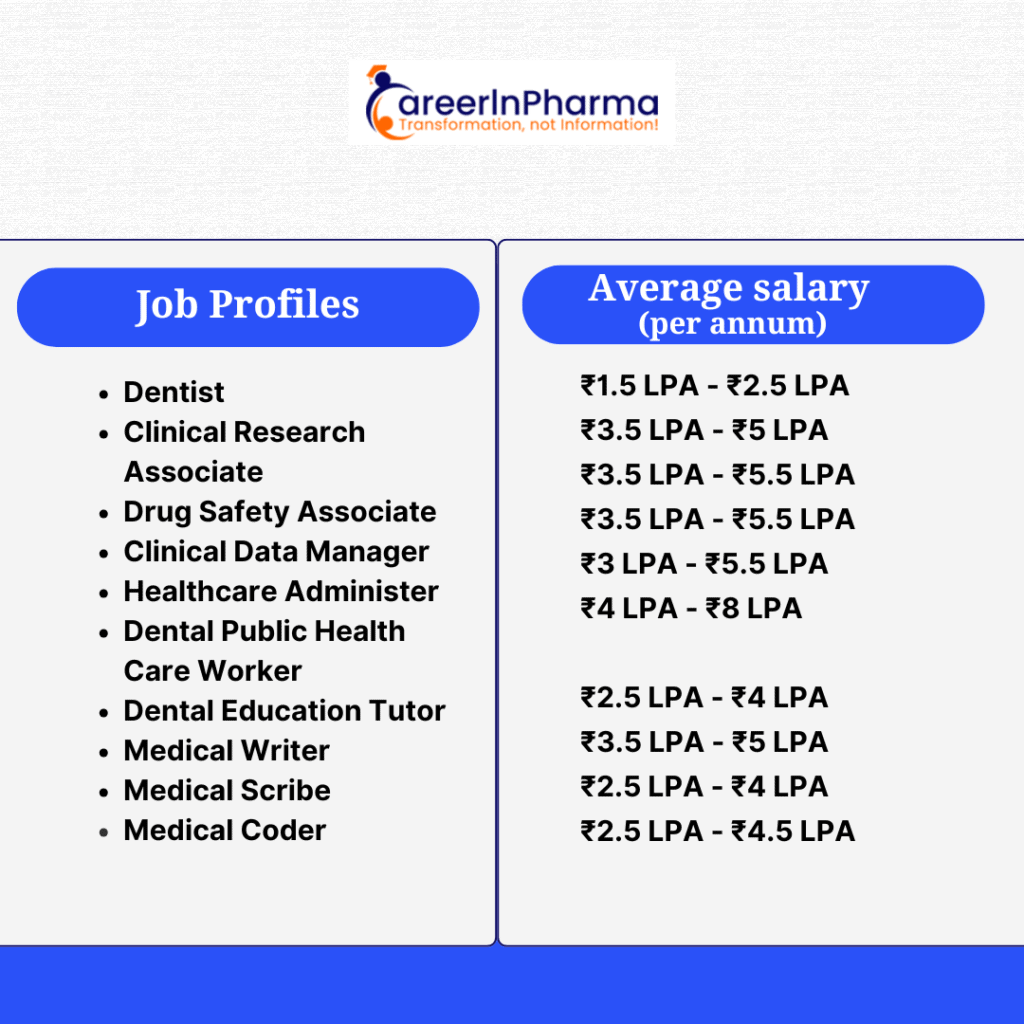
According to Glassdoor India’s analysis on dentist salaries, the average salary for a general dentist ranges from ₹3 LPA to ₹6 LPA per year, but specialized dentists, especially those working in urban centers, can earn ₹12 LPA or more annually.
💭 Reflection Prompt: “What excites you more—mastering the science of dentistry, building patient relationships, or specializing in a high-demand field like implants or orthodontics?”
Dentistry’s real saturation isn’t in numbers—it’s in the lack of specialization.
Increasing Demand for Specialized Roles
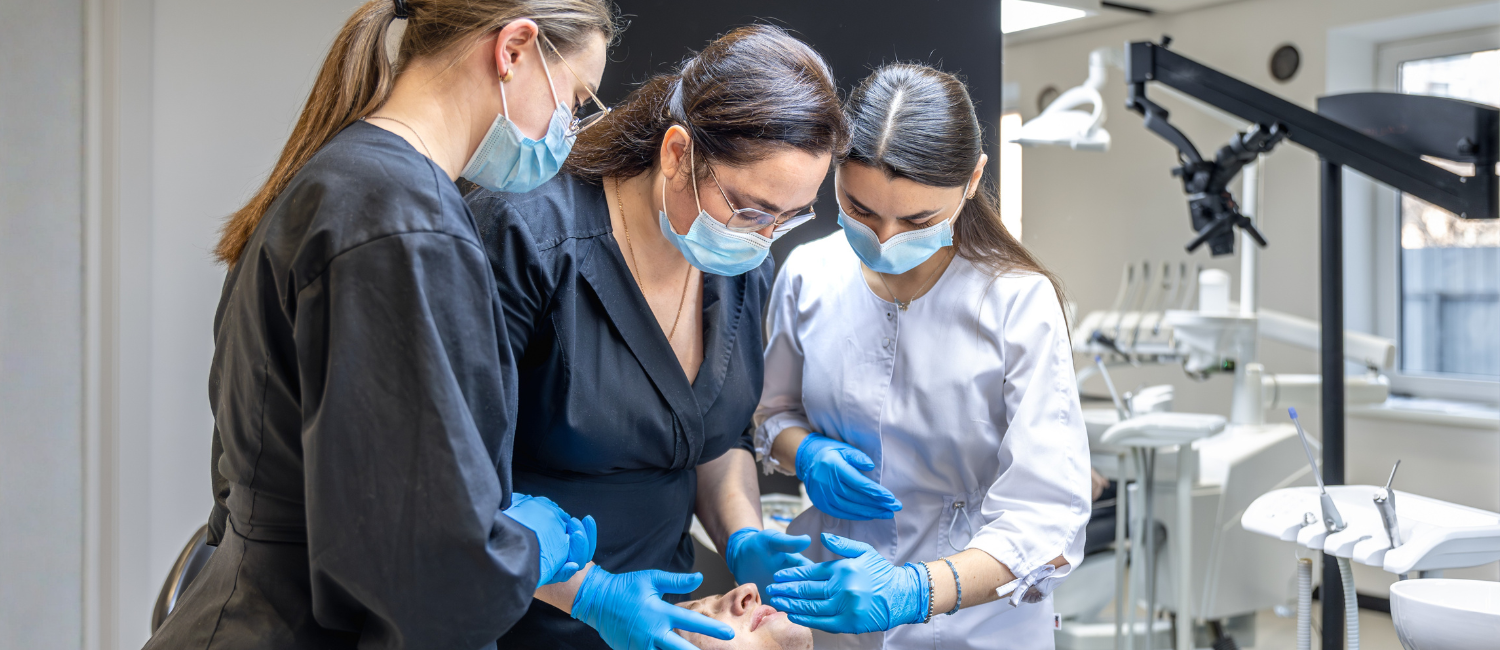
Specialist dentists in areas like implants and orthodontics can expect to earn up to 30% more than general practitioners.
Cosmetic dentistry is no longer niche—it’s becoming mainstream.
Why it matters: Specializations offer greater earning potential and more varied, impactful patient interactions.
With demand for aesthetic dental procedures on the rise, specializing is a lucrative career choice.
Many parents ask us: ‘My child loves biology but hates blood — is dentistry still safe?’ That’s exactly the nuance our Best Fit Career Zone™ reveals in one session.
Parent Insight: If your child is interested in specialized fields like orthodontics or cosmetic dentistry, they can look forward to higher earnings and a fulfilling career.
According to a Deccan Herald’s article, dated August 25, 2024, on India’s Oral Health, the demand for dentists is steadily increasing due to rising awareness of oral health and expanding access to dental care.
For instance, while the World Health Organization (WHO) recommends a dentist-to-population ratio of 1:7,500, in urban India, this ratio is approximately 1:10,000. As a result, the demand for dental professionals continues to rise.
What This Means for Your Child: Dentists are in high demand across the country, including smaller towns where dental care is becoming more accessible.
Graduates may find exciting opportunities in regions with less competition and higher job availability.
Wondering how your child can stand out among 18,000+ graduates? That’s exactly the kind of question our coaches help families answer every day.
Explore Your Child’s Dentistry Career Fit
Emerging Skills for Success
When I meet students aspiring to become dentists, they often say, “I love healthcare!” That’s a great start—but thriving in this field takes more than just a passion for helping people.
Think of a dentist as both a clinician and a communicator—combining technical expertise with the ability to connect with patients.
To succeed, students need both soft skills (for patient interaction and care) and technical abilities (for precision and treatment planning).
Key Skills:
- Clinical Expertise: Mastery of dental procedures, including diagnosis, treatment, and preventive care.
- Communication Skills: Explaining treatment options and educating patients about oral health in a clear, compassionate way.
- Manual Dexterity: Precise, steady hands are critical for performing procedures with accuracy and care.
- Empathy: Building trust and understanding with patients, particularly during complex or sensitive treatments.
- Attention to Detail: The ability to spot subtle signs of dental issues and address them effectively.
- Adaptability: Responding to patient needs and the latest advancements in dental technology and techniques.
- Technology Proficiency: Familiarity with digital tools like 3D imaging, AI diagnostics, and teledentistry platforms.
By 2030, tech-savvy dentists will earn 30–50% more than traditional ones—adapt or lag.
💬 Reflective Prompt: “Which skill do you feel most confident in—and which one could you start developing this month?”
Want to check if your child’s Career DNA fits dentistry? Take our 2-min quiz
India Dental Services Market
USD 29.62 billion in 2024
USD 58.72 billion by 2035
CAGR of 6.42% (2025-2035)
Source: https://www.marketresearchfuture.com/reports/india-dental-services-market-52405
Global Dental Services Market
USD 473.92 billion in 2024
USD 754.78 billion by 2034
CAGR of 4.8% (2025-2034)
Source: https://www.cervicornconsulting.com/dental-services-market
Teledentistry Market
USD 2.7 billion in 2025
USD 12.2 billion by 2035
CAGR of 16.3% (2025-2035)
Source:
https://www.futuremarketinsights.com/reports/teledentistry-market
From a Student’s Journey…
Ayan scored 650 in NEET, but secretly dreaded the idea of studying pure medical theory for the next decade.
He loved sketching, design, and anything visual — but felt guilty admitting it because “doctors aren’t supposed to be creative,” as he often heard.
His parents were also concerned, especially his mother, who said, “I worry that Ayan will graduate along with thousands of others, only to spend 5-7 years struggling to find his true path.”
During a career coaching session, Ayan was introduced to cosmetic dentistry, 3D smile design, and digital aesthetic workflows.
Suddenly, everything clicked. He said, “This is the first time a medical career actually feels like me.”
His mother, after seeing his newfound confidence, shared, “I was so scared of him falling into the same trap as others. But now, I see a clear direction, and I can breathe easy.”
As a parent, it’s natural to feel anxiety around your child’s future — the fear of them following a path that leads nowhere can trigger fight-or-flight responses. This is often driven by the overwhelming pressure of seeing so many students struggle to find their niche. But when the path becomes clear, that anxiety eases.
From the coach’s perspective, it was a moment of clarity. “Ayan’s passion was hidden beneath his academic anxiety. When we brought that to the surface, everything changed. It’s about finding that intersection between what students love and what they’re capable of.”
Today, Ayan’s a first-year BDS student, building a portfolio of digital smile makeovers — something he didn’t even know existed a year ago.
3–5 Year Future Outlook
Curious if a career in dentistry will hold relevance in 10 years? The answer: absolutely.
Because while treatment methods and technologies may evolve, the core of dentistry—improving patient health—remains timeless.
AI-powered tools will assist in diagnosing dental conditions, allowing dentists to focus more on personalized care and complex procedures.
The focus is shifting from treatment to prevention. Dentists will play a key role in educating patients on lifestyle choices and holistic approaches to maintain long-term oral health.
Parent Insight: Encourage curiosity about both traditional dental care and emerging technologies.
A child who is adaptable and tech-savvy will always be future-ready in this ever-evolving field.
Try This Today — 7-Day Dentistry Skill-Building Plan
Day 1 — Communication Boost (Patient Interaction)
Watch a short dental consultation video (e.g., explaining a root canal or implant).
Write down three communication techniques the dentist uses to make the patient feel comfortable.
Day 2 — Precision & Dexterity Practice
Spend 10 minutes doing a simple fine-motor activity: threading beads, sketching small patterns, or assembling a tiny model.
Notice your hand steadiness and focus — key indicators for dentistry.
Day 3 — Empathy Builder
Ask a family member about a dental experience they found stressful.
Reflect on:
What made them anxious?
What helped them feel reassured?
This helps students understand the emotional side of patient care.
Day 4 — Digital Dentistry Awareness
Search online for modern tools like 3D imaging, CAD/CAM crowns, digital scanners, or AI diagnostics.
Note two technologies that you find interesting or futuristic.
Day 5 — Analytical Thinking Exercise
Try a simple dental case scenario online (e.g., “patient has swelling + pain — what next?”).
Write down your thought process.
This builds diagnostic reasoning.
Day 6 — Aesthetic Sense Check
Look at “before and after” smile design or cosmetic dentistry results.
Ask yourself:
What changed?
What looks natural?
What skills would this require?
Aesthetic awareness is crucial in modern dentistry.
Day 7 — Observing Patient-Centered Behavior
While at school, home, or coaching, observe your own behaviour in group situations:
Are you a listener, explainer, observer, or decision-maker?
Make one small improvement that would benefit you as a future dentist.
According to a WebMd’s article on dentistry, dated August 3rd, 2025, a dentist’s career isn’t just about treatments—it’s about improving lives, building trust, and contributing to long-term health.
For students, it offers a chance to make a real difference, face intellectual challenges, and experience professional growth. For parents, it’s a path that combines technical skills, empathy, and community impact.
When a career aligns with personal values and passions, it sparks lasting fulfillment—much like how the brain’s reward system lights up with dopamine when we achieve something meaningful.
At NextMovez, we help families look beyond the myths of “white coats and clinics” to understand the true skills and mindset required for success in dentistry.
Takeaways
Not sure how to align your teen’s strengths with the evolving demands of the dental profession? Our expert coaches use the Best-Fit Career Zone™ to map your child’s interests, abilities, and personality to the right dental pathways. We guide them toward informed, confident career decisions that last a lifetime.
We help students identify how their Career DNA—strengths, interests, and values—aligns with high-growth roles in dentistry. Whether it’s advanced procedures, patient care, or dental research, this framework helps them discover where they’ll naturally excel.
At NextMovez, we help families move from uncertainty to clarity—decoding your child’s strengths and guiding them toward a future that’s both fulfilling and achievable. Because success isn’t about rushing to a decision—it’s about choosing the right path.
Let’s help your child make that choice with confidence.
Resources & References
Market Research Future (MRFR) report of October 2025
Cervicorn Consulting report on Global Dental Services Market Size
Deccan Herald Article on India’s Oral health
Policy Bazaar Analysis on Dentist Salary
Future Market Insight’s Teledentistry Market Report of 2025
Glassdoor India’s analysis on dentist salaries
Grand View Research’s Dental Implants Market Analysis Report of 2025