

By Preethi Durga, Career Strategist & Education Innovator
I’ve noticed a growing number of students are now choosing Psychology as a career. Many of them often ask me questions like “Can I become a psychologist?” or “What does it take to build a career in psychology?”
I can understand why this field is getting more attention. Conversations around mental health, emotional well-being, human behaviour, and counselling have become much more common than they were a decade ago. Students are seeing psychologists work in schools, hospitals, corporate organisations, sports teams, and even private practice, which naturally creates curiosity about the profession.
Some students are genuinely fascinated by understanding human behaviour and helping people navigate challenges. Others are attracted to the field because it seems meaningful, flexible, or increasingly popular. The problem is that interest in people and interest in psychology as a profession are not always the same thing.
Many students assume that if they enjoy giving advice to friends or listening to people’s problems, they should become psychologists. In reality, the profession involves much more than that. It requires scientific understanding, emotional maturity, ethical responsibility, continuous learning, and a genuine interest in understanding how people think, feel, and behave.
In this guide, I’ll explain how to become a psychologist, the educational qualifications required, career opportunities, specialisations, and what the reality of working in this field looks like. We’ll also explore how to become a psychologist after 12th, including the academic pathways available to students from different backgrounds.
If you are a school student preparing for your upcoming +2 examination with Psychology, understanding how to plan for your future career can be highly beneficial. Check out our Career Counselling for School Students page to learn more about how our neuroscience-powered career counselling can help you.
What Does a Psychologist Actually Do?
Now before we go deeper into how to become a psychologist, I want you to understand what this career actually looks like in real life.
Because this is where many students have misconceptions.
From the outside, psychology often looks like a profession where you simply listen to people’s problems and offer advice.
But according to my experience, that’s only a very small part of what psychologists actually do.
A psychologist’s role is to understand human thoughts, emotions, behaviours, and mental processes in a structured and scientific way. They help individuals understand challenges, develop coping strategies, improve mental well-being, and make healthier decisions. Depending on their specialization, psychologists may work with children, adults, families, students, athletes, employees, or individuals facing mental health concerns.
Whether it’s helping a student manage exam stress, supporting a child with learning difficulties, assisting a company with employee well-being, or conducting research on human behaviour, psychology is ultimately about understanding people and helping them function better in different areas of life.
Let’s look at some of the key responsibilities involved in this profession.
Key Responsibilities

1. Understanding Human Behaviour and Emotions
One of the primary responsibilities of a psychologist is understanding how people think, feel, and behave.
This often involves:
- Observing behavioural patterns
- Understanding emotional responses
- Identifying thought processes
- Exploring factors that influence decision-making
A large part of learning how to become a psychologist is developing the ability to understand people without making assumptions.
2. Conducting Assessments and Evaluations
Psychologists often use structured tools and assessments to gain deeper insights into an individual’s strengths, challenges, personality, emotions, or behaviour.
This may include:
- Psychological assessments
- Behavioural evaluations
- Personality assessments
- Cognitive and learning assessments
The goal is to understand the individual more accurately before recommending support strategies.
3. Providing Guidance and Therapeutic Support
Depending on their area of practice, psychologists help people manage personal, emotional, academic, or professional challenges.
This can involve:
- Individual counselling sessions
- Behavioural interventions
- Emotional support strategies
- Stress and anxiety management techniques
The focus is not on giving quick advice, but on helping individuals understand themselves and develop healthier ways of coping.
4. Research and Continuous Learning
Psychology is a field that constantly evolves.
Many psychologists spend time:
- Studying new research
- Understanding emerging mental health trends
- Developing evidence-based practices
- Improving intervention methods
This makes continuous learning an important part of the profession.
Work Environment
As a psychologist, your work environment can vary significantly depending on your specialization and career path.
You could be:
- Working in hospitals and healthcare settings
- Supporting students in schools and colleges
- Running a private counselling practice
- Working with corporate organizations
- Contributing to research institutions
- Supporting sports teams and athletes
- Working in rehabilitation and community centres
Most psychologists spend a significant part of their day interacting with people, understanding their experiences, conducting assessments, and helping them move toward better outcomes.
Skills You Actually Need to Become a Psychologist

Many students start researching psychology courses, colleges, specializations, and even the psychologist salary india offers before they understand the skills required for how to become a psychologist.
According to my experience, this is where many students make assumptions. They imagine psychology as a career built only on empathy and communication. While those qualities are important, the profession requires much more than simply being a good listener.
Before you decide whether this profession is right for you, take a look at some of the skills that are commonly seen in successful psychologists.
Soft Skills
- Empathy and Emotional Awareness
- Active Listening
- Communication Skills
- Patience and Compassion
- Critical Thinking
- Observation Skills
- Problem-Solving Ability
- Ethical Decision-Making
- Emotional Resilience
- Interpersonal Skills
Technical Skills
- Psychological Assessment Techniques
- Research and Data Interpretation
- Understanding of Human Behaviour
- Counselling and Intervention Methods
- Behavioural Analysis
- Cognitive Psychology Fundamentals
- Mental Health Assessment
- Report Writing and Documentation
- Knowledge of Psychological Theories
- Evidence-Based Practice
One thing I always tell students is this: psychology is not a profession you choose simply because you enjoy helping people. It’s a field that requires both heart and structure—the ability to care deeply about people while also approaching situations with objectivity, professionalism, and scientific thinking.
Educational Pathways and Required Qualifications

Now this is where many students start looking for a clear roadmap.
When someone asks me how to become a psychologist, one of the first questions they usually have is whether there is a fixed educational pathway for this profession.
The answer is yes—to a large extent.
One thing students often ask me is how to become a psychologist after 12th if they are certain about entering this field.
My suggestion is to focus on building a strong foundation first. Psychology is a profession where higher education often plays an important role, especially if you want to work in counselling, clinical practice, research, or specialized areas of mental health.
Typical Career Path: How to Become a Psychologist
Now we’ll discuss something that many students don’t think about when they start exploring how to become a psychologist.
They spend a lot of time researching degrees, colleges, and psychology courses.
But they rarely think about what happens after completing those qualifications—how the career actually develops over time.
And according to my experience, this is where many students get surprised.
Because there’s a common assumption that once you complete a psychology degree, you’ll immediately start working as a psychologist.
In reality, that’s rarely how the journey works.
Let’s break it down realistically.
Entry-Level Stage (0–3 Years)
Typical Roles:
- Psychology Intern
- Counselling Intern
- Assistant Psychologist
- Behavioural Support Associate
- Research Assistant
- School Counsellor (Entry-Level)
What You’ll Actually Do:
At this stage, your focus should be on learning and gaining practical exposure.
You’ll typically be:
- Assisting senior psychologists
- Conducting basic assessments
- Observing counselling sessions
- Preparing reports and documentation
- Supporting research and behavioural studies
- Working with students, clients, or patients under supervision
This is where you begin understanding how psychological concepts are applied in real-life situations.
Growth Tip:
Don’t focus only on earning potential at this stage.
Instead, focus on:
- Building practical experience
- Improving communication skills
- Learning assessment techniques
- Understanding different psychological approaches
- Working with diverse groups of people
A strong foundation here can significantly influence your future career growth.
Mid-Level Stage (3–7 Years)
Typical Roles:
- Counselling Psychologist
- Child Psychologist
- Educational Psychologist
- Corporate Wellness Consultant
- Behavioural Specialist
- Mental Health Professional
What Changes Here:
At this stage, you’re expected to work more independently.
You may:
- Conduct individual counselling sessions
- Handle assessments and interventions
- Work directly with clients and families
- Develop specialized expertise
This is usually the stage where professionals begin building their reputation and professional identity.
Growth Tip:
Specialization can help you stand out.
You may choose to focus on areas such as:
- Clinical Psychology
- Counselling Psychology
- Child Psychology
- Educational Psychology
- Industrial and Organizational Psychology
Senior-Level Stage (7–15+ Years)
Typical Roles:
- Senior Psychologist
- Clinical Psychologist
- Lead Counsellor
- Mental Health Consultant
- Psychology Educator
What Your Role Looks Like:
At this stage, your responsibilities often go beyond direct counselling.
You may:
- Run your own practice
- Mentor junior psychologists
- Design intervention programs
- Lead mental health initiatives
- Conduct advanced assessments
Some professionals also move into consulting, corporate leadership roles, academic research, or mental health advocacy.
And honestly, this is something I always tell students who ask me how to become a psychologist. Long-term success in this field doesn’t come from qualifications alone. It comes from your ability to connect with people, continue learning, and build trust through your work over many years.
Return on Investment (ROI) in Psychology as a Career
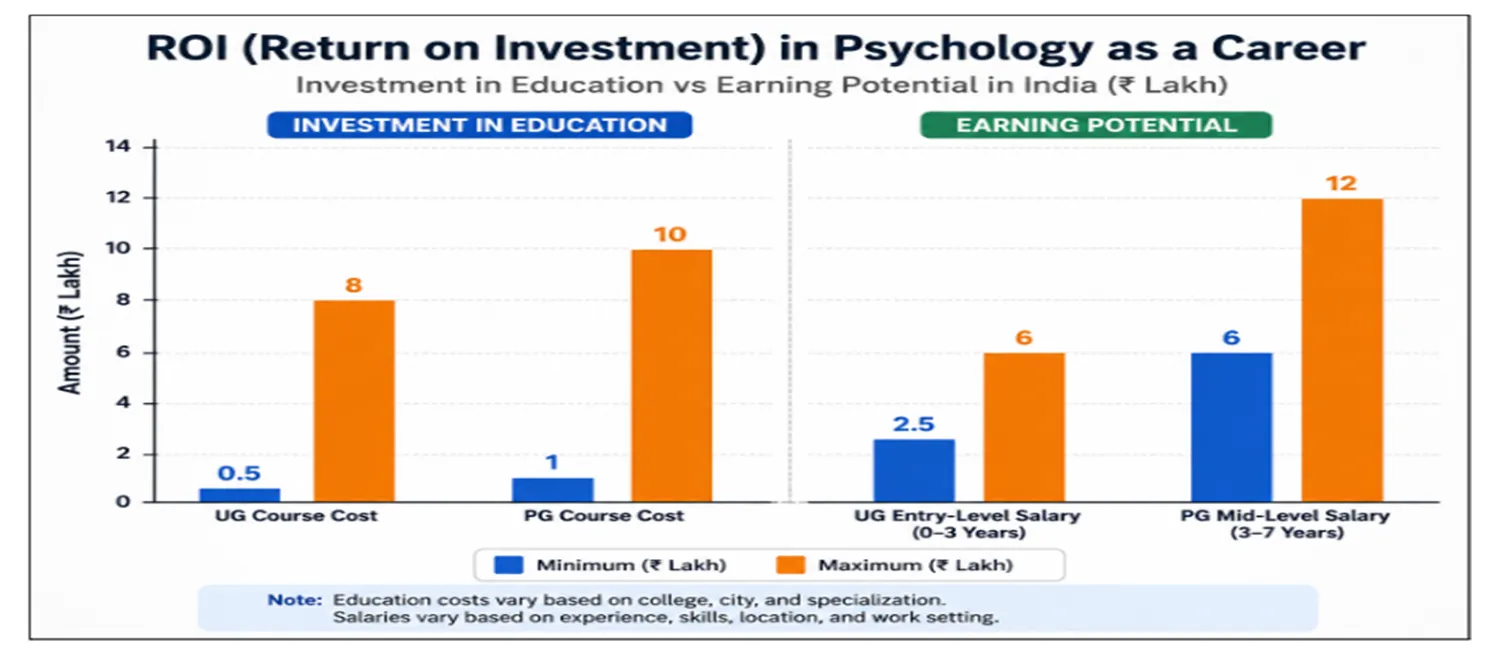
If you’re seriously trying to understand how to become a psychologist, you also need to look at the investment side of the decision.
The real investment here is not just your degree. It’s the time you spend developing expertise, gaining practical experience, and building professional credibility.
Learning Investment (Time + Money)
Psychology is a profession where higher education often plays an important role.
Undergraduate Degree
₹50,000 to ₹8 lakh+
3–4 years
Common degree options include:
- B.A. Psychology
- B.Sc Psychology
- Applied Psychology
During this phase, you’ll build your understanding of human behaviour, research methods, and psychological foundations.
Postgraduate Degree
₹1 lakh to ₹10 lakh+
2 years
Common options include:
- M.A. Psychology
- M.Sc Psychology
- Counselling Psychology
- Applied Psychology
For many psychology-related careers, a master’s degree significantly improves opportunities and professional credibility.
Specialized Training & Certifications
₹20,000 to ₹5 lakh+
Several months to 2 years
Students often pursue additional training in:
- Counselling Techniques
- Cognitive Behavioural Therapy (CBT)
- Child Psychology
- Career Counselling
- Behavioural Interventions
These certifications can strengthen practical skills and improve career prospects.
👉 So the real investment is not just financial. It’s your commitment to continuous learning, practical experience, and professional development.
Earning Potential in India

Entry-Level (0–3 Years)
₹2.5 lakh to ₹6 lakh per annum
Typical roles:
- Psychology Intern
- Counselling Associate
- School Counsellor
- Behavioural Support Professional
- Research Assistant
At this stage, gaining experience is often more important than maximizing income.
Mid-Level (3–7 Years)
₹6 lakh to ₹12 lakh per annum
Typical roles:
- Counselling Psychologist
- Child Psychologist
- Educational Psychologist
- Corporate Wellness Consultant
This is usually when professionals begin establishing themselves and developing specialized expertise.
Senior-Level (7+ Years)
₹12 lakh to ₹30 lakh+ per annum
Typical roles:
- Senior Psychologist
- Clinical Psychologist
- Mental Health Consultant
- Private Practice Owner
- Organizational Psychology Consultant
At this stage, experience, specialization, reputation, and client trust can significantly influence income.
Students often ask me about the psychologist salary india offers and even the highest salary of a psychologist in india. The truth is that earnings can vary widely depending on specialization, location, qualifications, and whether you work independently or within an organization.
The highest salary of a psychologist in india is usually seen among experienced clinical psychologists, organizational psychologists, consultants, and professionals who have built strong private practices over time.
So while understanding psychologist salary india figures is important, I would encourage you not to make your decision based only on income. The professionals who tend to do best financially are often the same people who genuinely enjoy understanding human behaviour and helping others grow.
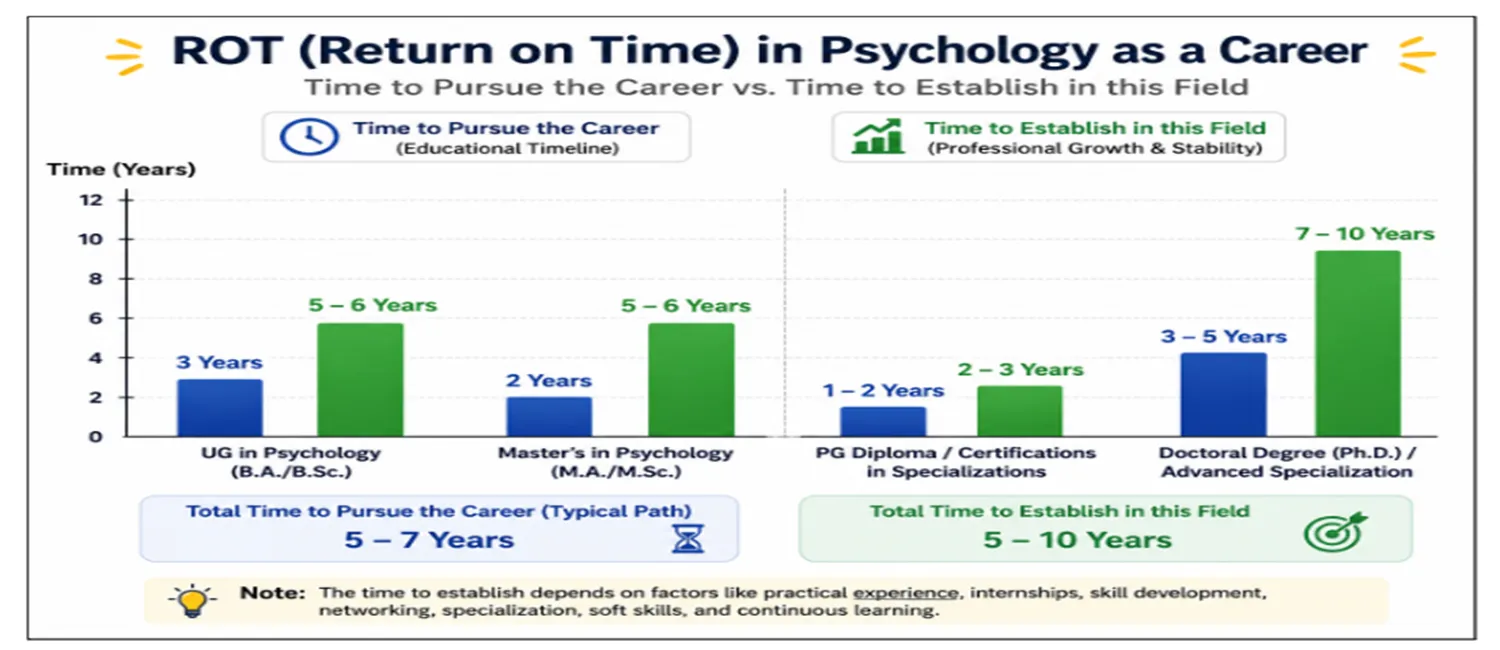
Return on Time (ROT) for a Psychologist
Now this is something many students and parents don’t really think about when exploring how to become a psychologist.
They usually focus on the degree, specialization, or future career opportunities.
But they rarely stop and ask—how long will it actually take before all that education starts translating into professional opportunities and meaningful career growth?
And honestly, this is where expectations need to stay realistic.
Break-even Point: When Do You Start Seeing Results?
Most students start seeing initial professional opportunities after:
👉 5 to 6 years — typically after completing a Bachelor’s degree followed by a Master’s degree in Psychology and beginning work in counselling centres, schools, hospitals, NGOs, or corporate settings.
For students who pursue advanced specialization, licensing requirements, or doctoral studies, stronger career growth may usually begin after:
👉 7 to 10 years — especially when moving into clinical psychology, private practice, research, organizational psychology, or senior counselling roles.
But here’s the reality.
This timeline depends on:
- Whether you pursue the right specialization aligned with your interests
- Whether you gain supervised practical experience during your studies
- Whether you develop strong communication and counselling skills
- Whether you build professional networks and mentorship opportunities
Future Prospects: The Next 20–30 Years in Psychology
The field of psychology is expected to grow significantly over the next 20–30 years, making it an increasingly relevant option for students exploring how to become a psychologist.
Today, psychology is no longer limited to therapy clinics or hospitals. It is gradually becoming an important part of education, healthcare, corporate environments, sports, rehabilitation, research, and even technology-driven industries.
The role of a psychologist is also expanding. In the future, professionals may work across areas such as mental health counselling, organizational psychology, sports psychology, child development, behavioural research, forensic psychology, educational psychology, and digital mental health platforms.
Simply completing a degree may not be enough. Future psychologists will need strong communication skills, emotional intelligence, research capabilities, ethical decision-making abilities, and the capacity to work with people from diverse backgrounds. Continuous learning and specialization will become increasingly important.
Conclusion
Choosing psychology as a career can feel both exciting and overwhelming.
Many students begin researching how to become a psychologist after 12th because they are interested in understanding human behaviour, mental health, emotions, and personal development. Others become curious after hearing about growing opportunities, increasing awareness around mental well-being, or learning about the psychologist salary India professionals can earn as they gain experience.
However, choosing psychology should never be based only on salary, trends, or demand.
The more important question is whether the work itself aligns with who you are.
Do you genuinely enjoy understanding people?
Can you listen patiently and objectively?
Are you interested in behaviour, emotions, learning, and personal growth?
Do you feel motivated by helping individuals overcome challenges and improve their lives?
These questions matter just as much as understanding the highest salary of a psychologist in India or exploring future career opportunities.
This is where career guidance, career coaching, or structured career counselling can make a meaningful difference.
At NextMovez, we believe career decisions should not be based only on marks, trends, external opinions, or assumptions. They should be based on a deeper understanding of how you think, learn, communicate, solve problems, and interact with people.