

By Preethi Durga, a career strategist and education innovator.
Introduction: Cracking the Code of Modern Interviews
Every job seeker—whether a fresh graduate or an experienced professional—dreams of stepping confidently into an interview room and walking out with an offer. Yet the biggest challenge many face is not the lack of skills, but not knowing how to answer job interview questions effectively. Interviews today are more competitive, more behaviour-driven, and more strategically designed to test clarity, confidence, and fit.
Imagine Arjun, a talented marketing graduate from Pune, sitting across from his dream company’s hiring manager. He’s prepared, excited, and optimistic—until the first question hits: “Tell me about yourself.” Within seconds, his mind blanks. His parents later ask, “What happened? You knew your subject so well.” Arjun, frustrated, replies, “I just didn’t know how to frame my answers.”
This is where understanding common job interview questions and learning the right way to respond becomes a game-changer. Interviews are not just conversations—they’re strategic evaluations of your potential, personality, and promise.
In our CCC-style coaching journeys, we’ve seen countless learners struggle—not because they lacked capability, but because they lacked a clear framework for job interview questions and answers. Let’s break down the mindset, structure, and tools you need to transform confusion into clarity and deliver the best answers for interview questions with confidence.
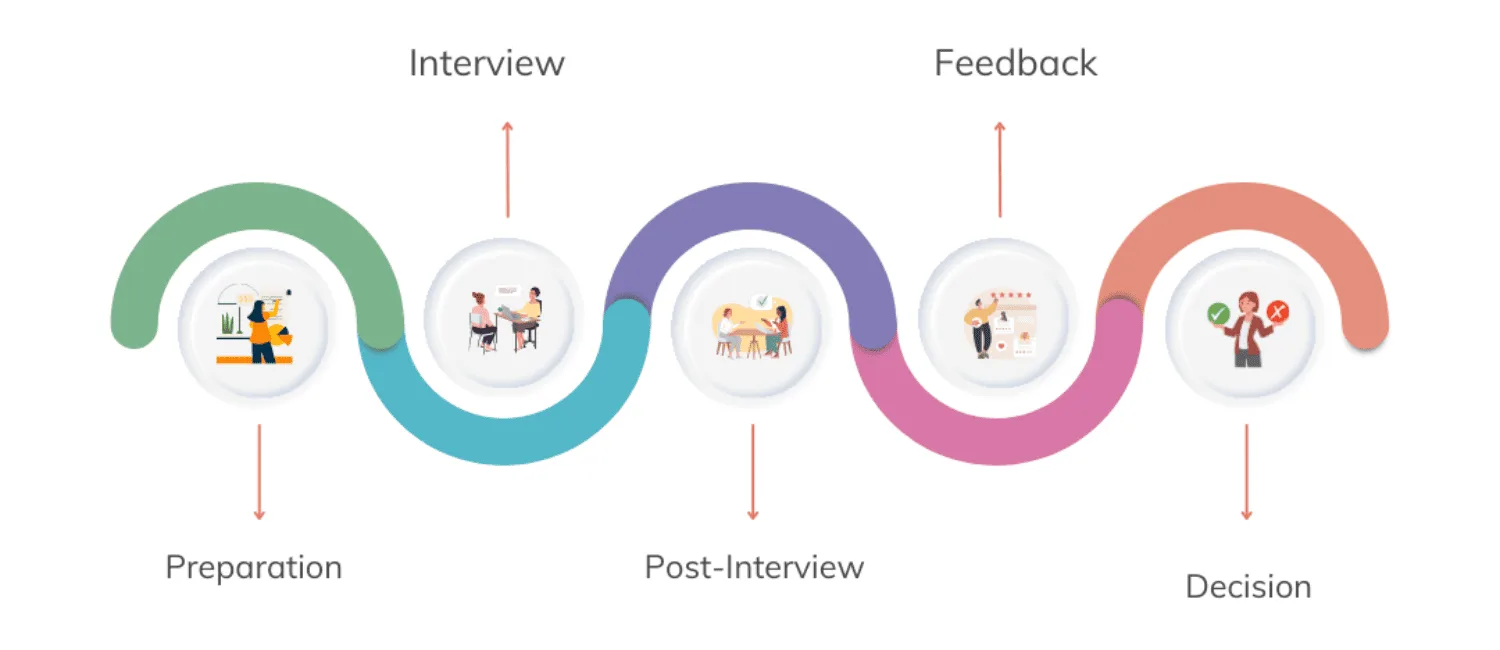
Tools & Frameworks for Strategic Interview Preparation
Here are some practical frameworks—drawn from student- and professional-coaching contexts—that make navigating common job interview questions far less intimidating and far more strategic. We also blend in real hiring statistics to ground the process in today’s competitive job landscape.
1. The “Research → Match” Ladder – Understand the Company First
What it is:
A simple process: Research the role → Match your strengths → Tailor your responses.
Example:
A finance graduate preparing for an analyst role began by researching the company’s work culture and recent market performance. Then she mapped her strengths—Excel skills, analytical ability, and internship experience—to the job description. Finally, she crafted tailored job interview questions and answers aligned with the company’s expectations.
Why it matters:
Many candidates fail because they give generic responses rather than demonstrating why they fit the role.
Note:
According to the Stagwell Weekly Data Report (2024), 68% of hiring managers say candidates fail interviews because of their rudeness, making professionalism and preparedness essential.
Parent Coaching Tip:
Encourage your child to shortlist 2–3 strengths and match them directly to the job description before crafting their interview responses.
2. The “STAR” Framework – Structure Your Success Stories
What it is:
Use Situation → Task → Action → Result (STAR) to answer behavioural questions clearly.
Example:
A final-year IT student preparing for a technical interview framed his answer like this:
- Situation: The college coding club struggled with low hackathon participation.
- Task: Lead the hackathon team.
- Action: Conducted coding workshops and created weekly practice sessions.
- Result: The team won second place at a regional hackathon.
He used this as one of his best answers for interview questions on leadership.
Why it matters:
Hiring managers want real examples—not textbook statements. STAR demonstrates clarity, structure, and measurable impact.
Parent Coaching Tip:
Ask your child: “What is one experience where you solved a problem or took initiative?” Encourage them to frame it in STAR format for clarity and confidence.
3. The “2-Minute Kick-Start” Rule – Beat Interview Prep Procrastination
What it is:
If preparing for interviews feels overwhelming, start with just 2 minutes—review one common question, browse a company page, or list one achievement.
Example:
A job seeker preparing for a product management interview spent just 2 minutes daily reviewing one question. Within days, this habit expanded to 20–30 minutes, helping him refine strong answers to job interview questions.
Why it matters:
Most candidates delay preparation thinking they need long study sessions. The 2-minute rule builds consistency and reduces anxiety.
Parent Coaching Tip:
Suggest your child start with the easiest prompt—such as drafting an answer to “Tell me about yourself.” Even a small start builds confidence.
What it is:
Use four quadrants to organise preparation tasks:
- Urgent & Important → Practise must-know questions
- Important, Not Urgent → Schedule mock interviews
- Urgent, Not Important → Quick admin tasks (CV printouts)
- Not Urgent & Not Important → Distractions to avoid
Example:
A working professional juggling a job and interview prep realised via this matrix that practising technical questions was urgent & important, while portfolio updates could be scheduled later.
Why it matters:
Many candidates spend hours on low-priority tasks, forgetting to focus on how to answer job interview questions that matter the most.
Parent Coaching Tip:
Help your child list all prep tasks, then place them in the matrix. This makes the plan clear and helps reduce overwhelm.
5. Common Job Interview Questions and the Best Ways to Answer Them
Tell Me About Yourself
Framework to use: Research → Match Ladder and 2-Minute Kick-Start Rule
Best Answer Structure: Briefly introduce your background, key strengths, and how they align with the role.
Why Should We Hire You?
Framework to use: STAR
Best Answer Structure: Focus on your relevant skills, achievements, and how they directly solve the company’s needs.
What Are Your Strengths and Weaknesses?
Framework to use: Research → Match Ladder
Best Answer Structure: Discuss strengths that align with the job description, and choose a weakness you’re actively working on improving.
Where Do You See Yourself in 5 Years?
Framework to use: Research → Match Ladder
Best Answer Structure: Show your ambition, while aligning your goals with the company’s values and long-term vision.
Describe a Challenge You’ve Overcome
Framework to use: STAR
Best Answer Structure: Use a real-life example showing your problem-solving skills and ability to overcome obstacles.
6. Statistics-Backed Insights: Understand Today’s Hiring Reality
Here are some key facts to shape your approach to job interview questions and answers:
According to EnterpriseAlumni’s 2023 HR Statistics: Hiring, Retaining & Rehiring report, 118 people apply for the same vacancy on average, and in large corporates this number can exceed 250 applicants per role.
According to Zirtual’s 2024 interview analysis, 75% of hiring managers believe behavioural questions are highly effective, and 63% of organisations use competency-based questions to evaluate skills.
According to StandOut CV’s Job Interview Statistics 2025 (UK), 93% of people experience interview-related anxiety, and 41% say their biggest fear is not being able to answer a difficult question—highlighting the importance of structured preparation.

Bringing It All Together
From using the Research → Match Ladder to shape targeted, thoughtful responses, to applying the STAR framework for clear and persuasive storytelling, to using the 2-Minute Kick-Start Rule and Eisenhower Matrix to transform scattered intention into focused preparation—each of these steps strengthens your confidence and clarity.
They help you move from feeling overwhelmed by common job interview questions to knowing exactly how to answer job interview questions with structure and purpose.
Remember: the journey to delivering strong, compelling answers to job interview questions doesn’t have a one-size-fits-all formula—but the right frameworks make the process far more manageable, predictable, and effective.
For students and parents alike, your roles mirror a simple trio: the Coach (parent or mentor offering structure), the Doer (student or professional putting in the practice), and the Supporter (school, institution, or network providing timely guidance). When all three align, the mindset shifts from “I hope I do well” to “I’m prepared, confident, and ready.”
Reflection Questions
- If you had to describe your interview persona in 7 words, what would it be?
- Which of these frameworks feels the easiest for you to start applying today?
If you mapped all your interview-prep tasks into the Eisenhower Matrix, which one task would you stop doing immediately?
Case Studies: Real-World Stories of Interview Success
Case Study 1: Meera — From Self-Doubt to Cracking a Competitive Job Interview
Myth:
“I don’t come from a top college, so I can’t compete with elite applicants in interviews.”
Challenge:
Meera was a graduate from a mid-tier college and constantly compared herself to candidates from bigger institutions. She worried that she couldn’t give strong answers to job interview questions because her profile felt “too ordinary.”
Solution:
- She shortlisted companies that valued skills over pedigree and reviewed their interview patterns using the Research → Match Ladder.
- She used the STAR framework to narrate her achievements:
- i) Situation: College event committee had poor participation.
- ii) Task: Improve event engagement.
iii) Action: Created social media campaigns and revamped event formats.
- iv) Result: Event turnout improved by 45%.
- She practised for just 2 minutes daily (which grew into 20+ minutes) to refine her job interview questions and answers.
- Using the Eisenhower Matrix, she prioritised:
- i) Urgent → Resume update & shortlisting companies
- ii) Important → Mock interviews & STAR story refinement
Result:
Meera cleared three interview rounds in a major tech company and landed a well-paying role—despite originally thinking she “wasn’t good enough.”
Parent Takeaway:
Success in interviews isn’t about the college brand—it’s about clarity, storytelling, preparation, and consistent action.
Why it matters:
Meera’s journey reflects a larger truth: candidates often fail not because of lack of ability, but because of under-preparation and weak narratives.
According to NACE’s Job Outlook 2024 report, 91.2% of employers prioritise candidates with strong communication and problem-solving stories—more than GPA or college ranking.
Case Study 2: Arnav — A Mid-Career Professional Who Reframed His Interview Strategy
Myth:
“Interviews favour fresh graduates—professionals with gaps or career shifts struggle the most.”
Challenge:
Arnav, a 32-year-old operations manager, wanted to shift into a product role. He feared his experience wasn’t directly relevant and that he wouldn’t know how to answer job interview questions for a new field.
Solution:
- He researched companies that welcomed cross-functional talent and targeted roles requiring 3–8 years of experience.
- He reframed his achievements using STAR:
- i) Situation: Customer complaints increased due to delivery delays.
- ii) Task: Improve fulfilment time.
iii) Action: Introduced a new workflow and trained the operations team.
- iv) Result: Reduced delivery time by 28% in just 6 months.
- He used the 2-Minute Kick-Start Rule every night to practise behavioural answers.
- Through the Eisenhower Matrix, he identified:
- i) Urgent → Building his portfolio and updating LinkedIn
- ii) Important → Product-skills upskilling and networking
Result:
Arnav cracked interviews at two companies and secured a 40% salary hike, proving that experience gaps or pivots can be managed with smart, structured interview preparation.
Parent Takeaway:
Interviews are not “age or background restricted.” With the right structure, even mid-career professionals can pivot into competitive roles.
Why it matters:
Many experienced professionals underestimate how transferable their stories are. A 2023 LinkedIn Workplace Report shows that over 45% of professionals who transitioned roles did so using transferable skills—not direct prior experience.
Additionally, Zippia’s 2023 Interview Statistics reveal that 60% of interviewers make decisions based on how well candidates explain their past achievements, not how perfect their career path looks.
Conclusion
Cracking a job interview isn’t about luck—it’s about clarity, structure, and consistent preparation. The journey to mastering answers to common job interview questions begins with self-reflection (what you offer), then alignment (what the company values), and finally execution (communicating your story with confidence).
At NextMovez, we help students and professionals navigate this exact journey by:
- Clarifying career and role-fit
- Identifying the right opportunities
- Building strong interview-ready profiles
- Turning practice into winning performance
In this article, we’ve shared the most common interview questions and the best ways to answer them using our strategic frameworks. With these tools in hand, you can step into any interview with clarity and confidence.
Ready to turn your interview anxiety into interview confidence?
At NextMovez, we guide learners through our Career Clarity Compass™ and Best-Fit Career Zone™ frameworks—so every response becomes structured, relevant, and impactful during interviews.
Book your Interview Clarity Call to discover the roles that fit you best, build compelling narratives, and prepare strategically for your next career move. This one conversation can save you months of trial-and-error—and bring you one step closer to landing the offer you deserve.