
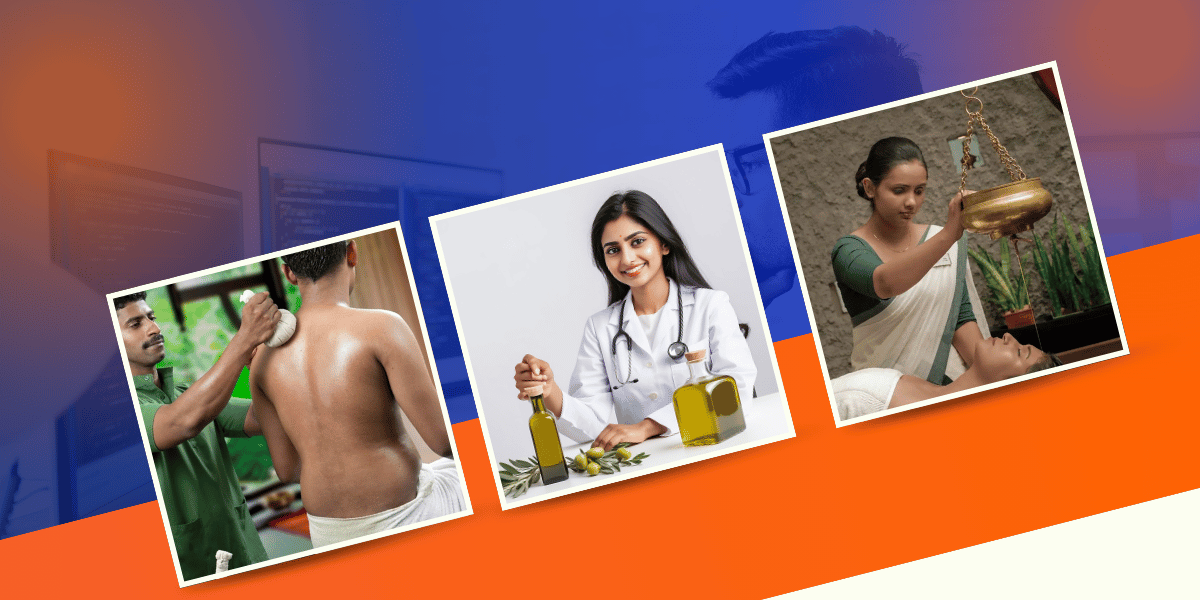
Blog written by Indu R Eswarappa, Career Coach & Education Change-Maker
I’ve seen a lot of students and parents revisiting career options that were once considered “traditional.” One of them is Ayurveda. Some are genuinely interested in healthcare through natural healing, while others are simply exploring it because of family influence or familiarity.
When it comes to career decisions like this, the brain often gets pulled in two directions—one side says “choose something modern and high-paying,” while the other says “go for something stable and respected like Ayurveda.” This conflict between traditional and modern choices creates confusion.
So instead of jumping straight into how to become ayurvedic doctor, look at it properly.
In this blog, I’ll walk you through what this career actually involves, the ayurvedic doctor course options available, the real scope, and even what the ayurvedic doctor salary in india looks like today.
Because our goal is not just to understand how to become ayurvedic doctor. The goal is to make sure you don’t choose a path today that limits your options or creates doubt later.
What Does an Ayurvedic Doctor Actually Do?
Now before we go deeper into how to become ayurvedic doctor, I want you to really understand what this career looks like on a day-to-day basis.
Because this is where most people make assumptions.
From the outside, it may look simple—“they give herbal medicines and natural treatments.”
But when you actually understand the role, it is much more detailed and responsibility-driven than that. Ayurveda is all about understanding the human body, lifestyle, and long-term healing patterns. The Union Government’s Directorate of AYUSH has created a special section on their website with all essential information, including FAQs, for students.
Key Responsibilities
1. Diagnosing Patients Holistically
The core responsibility of an Ayurvedic doctor is to understand the patient’s condition—not just physically, but also mentally and lifestyle-wise.
This is not like quick symptom-based treatment.
It involves:
- Understanding body constitution (Prakriti)
- Identifying root causes, not just symptoms
- Observing diet, habits, and daily routine
So a big part of learning how to become ayurvedic doctor is developing the ability to think beyond surface-level problems.
2. Prescribing Natural Treatments and Therapies
Once diagnosis is done, the next step is treatment.
This includes:
- Herbal medicines
- Panchakarma therapies
- Diet and lifestyle changes
The focus is always on long-term healing, not instant relief.
And honestly, this is where patience becomes very important—for both doctor and patient.
3. Monitoring Progress and Adjusting Treatment
Ayurvedic treatment is not a one-time solution.
You’ll need to:
- Regularly track patient progress
- Modify treatments based on response
- Guide patients through recovery
This requires consistency and attention—because every individual responds differently.
4. Educating and Guiding Patients
A big part of this role is also awareness.
You’ll often guide patients on:
- Daily routines (Dinacharya)
- Food habits
- Preventive healthcare
In many cases, you’re not just treating—you’re helping people change how they live.
Work Environment
As an Ayurvedic doctor, your work environment can vary depending on your career path.
You could be:
- Working in an Ayurvedic clinic or hospital
- Running your own practice
- Joining wellness centers or resorts
- Exploring consultation-based work (even online in some cases)
There’s also growing interest in ayurvedic doctor course online formats for learning—but practice itself remains very hands-on.
Most of your work will involve direct interaction with patients—understanding their concerns, diagnosing, and guiding them over time.
Skills You Actually Need to Become an Ayurvedic Doctor
Many students start searching for the ayurvedic doctor course, colleges, or even salary details—without first understanding what skills are actually required for how to become ayurvedic doctor.
According to the Mansarovar Ayurvedic Medical College Hospital and Research Center, Bhopal blog, after completing BAMS, students can explore a range of career opportunities in both clinical and non-clinical fields. Popular roles include Scientist, Medical Expert, Ayurveda Physician, Lecturer, and Pharmacist. These options allow graduates to choose a path that aligns with their interests and long-term goals.
In my opinion, this is where many wrong decisions begin. This career is not just about medical knowledge—it’s a combination of how you think, how patient you are, and how deeply you understand people.
Soft Skills
- Patience and Long-Term Thinking (More Important Than You Think)
- Observation and Analytical Thinking
- Communication and Patient Handling
- Attention to Detail
Technical Abilities
- Strong Foundation in Ayurvedic Knowledge
- Basic Medical Understanding
- Practical Application Skills
Educational Pathways and Required Qualifications
Now this is where things are very different—and honestly, much clearer compared to many modern careers.
When people try to figure out how to become ayurvedic doctor, they sometimes assume there are multiple shortcuts or flexible paths.
But in reality, this is a structured medical career.
Typical Career Path: How to Become an Ayurvedic Doctor
Now we’ll discuss something that most people don’t really think about when they explore how to become ayurvedic doctor.
They focus a lot on the ayurvedic doctor course or the degree…
But they don’t think about what happens after that—how the career actually grows over time.
And according to my experience, this is where confusion starts later.
Because many students assume: “Once I complete BAMS, everything is sorted.”
But in reality, your growth depends on how you build your experience, specialization, and practice over time.
Let me break this down in a simple, realistic way.
Entry-Level Stage (0–3 Years)
Typical Roles:
Junior Ayurvedic Doctor, Assistant Doctor, Clinic Associate, Intern
What You’ll Actually Do:
At this stage, your focus is not on earning big—it’s on learning deeply.
You’ll be:
- Assisting senior doctors
- Observing patient diagnosis and treatment
- Handling basic consultations
- Learning practical application of theory
This is where your real understanding begins—beyond textbooks.
Growth Tip:
Don’t rush into opening your own clinic immediately.
Focus on:
- Gaining hands-on experience
- Understanding patient behavior
- Learning different treatment approaches
Because your foundation here decides how strong your future practice will be.
Mid-Level Stage (3–7 Years)
Typical Roles:
Independent Practitioner, Clinic Owner, Ayurvedic Consultant, Wellness Specialist
What Changes Here:
Now you start working more independently.
You may:
- Run your own clinic
- Build a regular patient base
- Specialize in areas like Panchakarma, chronic diseases, or wellness care
- Work with hospitals or wellness centers
At this stage, your reputation and results start mattering more.
Growth Tip:
Specialization can make a big difference.
Instead of doing everything, focus on:
- A specific treatment area
- A certain type of patient group
This helps you stand out and grow faster.
Senior-Level Stage (7–15+ Years)
Typical Roles:
Senior Ayurvedic Doctor, Specialist, Wellness Consultant, Educator, Clinic Chain Owner
What Your Role Looks Like:
At this stage, you’re not just treating patients—you’re building a long-term presence.
You might:
- Expand into multiple clinics
- Become known for a specific expertise
- Mentor junior doctors
- Work in large wellness or healthcare organizations
Some professionals also move into teaching, research, or content-based consultation.
Return on Investment (ROI) in Ayurveda as a Career
If you’re seriously trying to understand how to become ayurvedic doctor, you can’t ignore the ROI part.
But here’s something important—this is very different from many modern careers.
Learning Investment (Time + Money)
Unlike short-term courses, this is a long-term commitment.
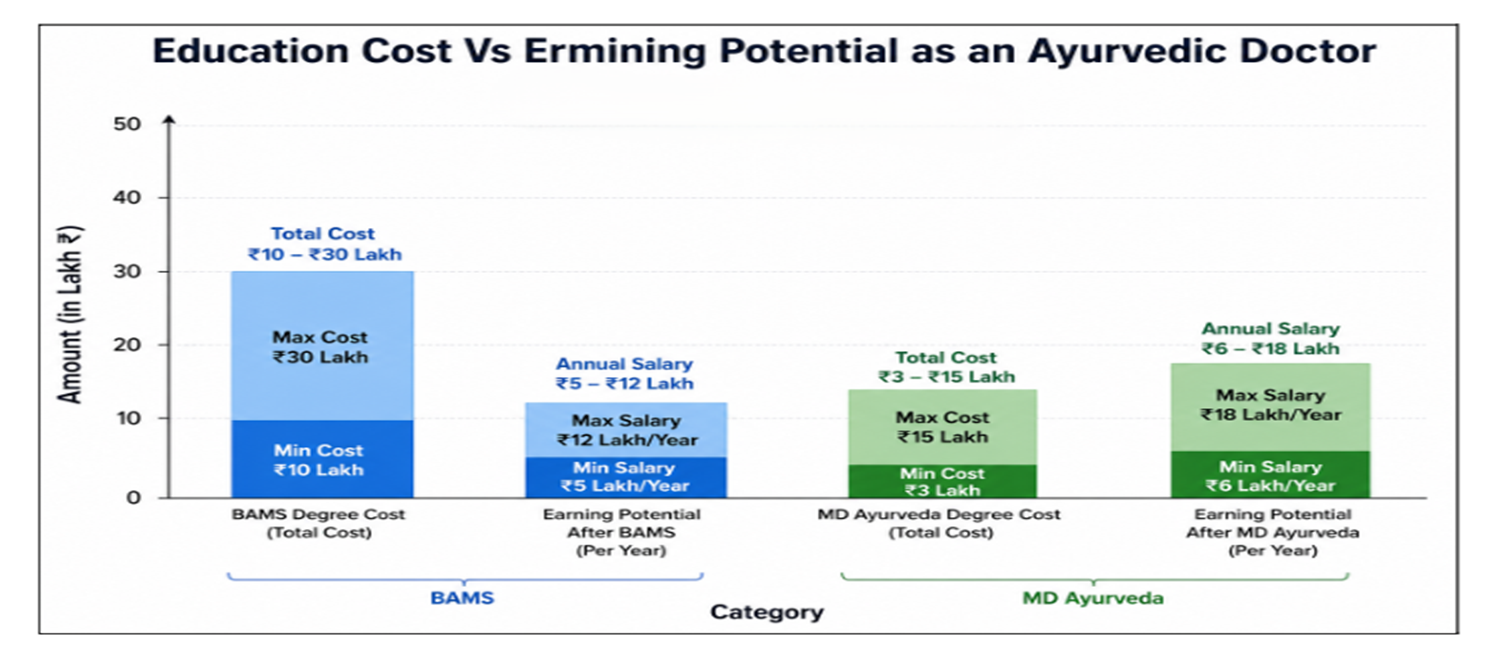
Formal Education (BAMS Degree Course):
₹10 lakh to ₹30 lakh (depending on government or private college)
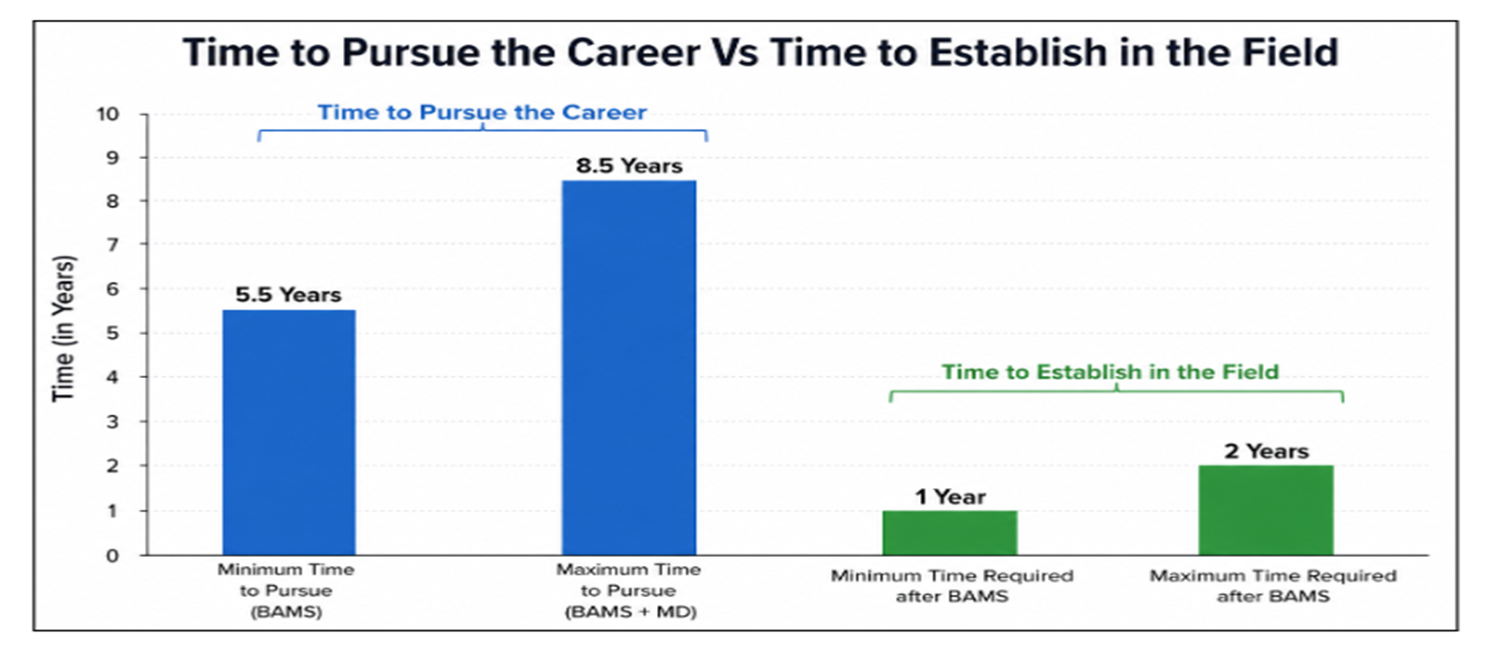
- 5.5 years including internship
- Full medical training (Ayurveda + basic modern medicine)
Postgraduate Specialization (Optional):
₹3 lakh to ₹15 lakh
- Advanced knowledge in specific areas
- Better career opportunities and specialization
Now yes, you might explore basic knowledge through an ayurvedic doctor course online, but that won’t replace your main degree.
👉 So the real investment here is not just money—it’s time and consistency.
Earning Potential in India
Entry-Level (0–3 Years) – For BAMS Degree Holders
₹40,000 – ₹100,000 per month
- Assistant roles
- Clinic-based practice
- Early-stage independent work
At this stage, your focus should be on learning—not income.
Mid-Level (3–7 Years)
₹50,000 to ₹150,000 lakh per month – For MD Ayurveda Degree holders
- Independent practice
- Regular patient base
- Work in wellness centers or clinics
Return on Time (ROT) for an Ayurvedic Doctor
Now this is something many students and parents don’t really think about when exploring how to become ayurvedic doctor.
They usually focus on the course, the degree, or even the ayurvedic doctor salary in India.
But they don’t pause and ask—how long will it actually take to start earning and seeing results?
And honestly, this is where expectations need to be a bit practical.
Break-even Point (When Do You Start Seeing Results?)
According to my experience, the journey to become an Ayurvedic doctor takes time compared to many modern short-term careers—but it builds a much stronger and stable foundation in the long run.
Most students start seeing initial returns after:
👉 5 to 6 years (after completing the ayurvedic doctor course like BAMS)
But here’s the catch.
This timeline depends on:
- Whether you gain practical experience during your studies
- Whether you work under experienced practitioners or hospitals initially
- Whether you choose to specialize further (which may take more time but increases earning potential)
If you start early exposure—like internships, assisting in clinics, or even exploring an ayurvedic doctor course online for additional learning—you’ll gain confidence faster and start building your career more smoothly.
So yes, it takes time. But once established, it offers long-term stability, respect, and consistent growth.
Future Prospects: The Next 20–30 Years in Ayurveda
The field of Ayurveda is slowly gaining more attention—not just in India, but globally as well. Over the next 20–30 years, we’re likely to see a stronger shift toward preventive healthcare, natural healing, and lifestyle-based treatments.
The role of an Ayurvedic doctor will expand beyond traditional clinics. You might see opportunities in wellness centers, integrative hospitals, research, online consultations, and even global healthcare platforms.
At the same time, the field will also demand more depth. It won’t be enough to just have a degree—you’ll need strong clinical understanding, updated knowledge, and the ability to explain treatments clearly to modern patients. Those who adapt and keep learning will find much better opportunities in the long run.
Conclusion
Choosing a career like Ayurveda can feel a bit confusing—especially when you’re trying to balance tradition with future growth. I’ve seen many students and parents get stuck here, unsure whether they’re making a safe choice or limiting future options.
That’s why it’s important to slow down and evaluate things properly. Not just the course or salary—but your long-term fit, lifestyle, and interest in this field.
Getting the right career guidance or career coaching at this stage can really help. A career coach can guide you in understanding whether this path truly suits you, what the journey looks like in reality, and how to move forward with clarity instead of assumption.