

Blog written by Indu R Eswarappa, Career Coach & Education Change-Maker
When Riya finished Class 12 with a keen interest in writing, she knew one thing for sure — she wanted a career where she could express her creativity, engage with different ideas, and help businesses or individuals connect with their audience. Not just a job, but something where her words could make an impact and drive meaningful change. That’s when she first came across the role of a content writer — and it immediately sparked her curiosity.
But, what does a content writer actually do on a daily basis? How can someone, like Riya, transform a passion for writing into a structured career?
But this path wasn’t as simple as it seemed.
Riya’s parents worried about job stability. They were concerned about her pursuing a career that seemed more creative than secure, especially in a competitive job market. Riya dreamed of creative freedom and building something meaningful through her words, but she wasn’t sure if it would translate into a stable income.
That’s when they decided to reach out to NextMovez for career coaching.
The coach’s role was pivotal—helping them navigate their concerns through a structured approach. The coach helped Riya and her parents gain clarity on how content writing could be both creative and financially viable, addressing their fears and guiding them towards a plan that aligned with Riya’s dreams while considering her parents’ concerns.
In my experience, many beginners wonder how to turn their love for writing into a career. Content writing today is so much more than just putting words on paper. It’s a growing, dynamic industry with clear paths to explore, offering opportunities to specialize and work across fields like tech, marketing, education, and lifestyle. It’s a career that offers flexibility, creativity, and room to grow.
Content writing isn’t just about being creative—it’s about driving results. Writers help businesses build brand identity, attract traffic, and connect with customers. They work across various sectors, from healthcare to e-commerce, creating content that informs, educates, and engages. In India, the demand for skilled content writers is growing fast, with job listings increasing by 50% last year alone.

Key Responsibilities
A lot of students I meet are curious about content writing but aren’t exactly sure what a content writer does on a daily basis. Let’s break it down. Understanding the different responsibilities can help you figure out what excites you most about writing, and where your strengths might fit.
The role of a content writer has evolved, especially in the digital age. It’s no longer just about writing well. It’s about understanding SEO, tailoring content for different platforms, and engaging with readers in a way that feels natural yet strategic. Writers need to stay ahead of trends, use data to drive content decisions, and optimize their work for online visibility. This career offers a great balance of creativity, strategy, and growth opportunities.
Content writing is a broad field, and your role can vary depending on the type of writing you do, the industry you’re working in, or the company you’re writing for. Here are some common focus areas:
- Creative Writer: Writes blog posts, articles, and web content. Focuses on making content engaging, informative, and SEO-friendly.
- SEO Specialist: Optimizes content for search engines to improve rankings. Researches keywords and integrates them naturally into content.
- Social Media Content Creator: Creates content for platforms like Instagram, Facebook, and Twitter. Analyzes performance metrics to refine content strategies.
- Copywriter: Writes persuasive copy for advertisements, product descriptions, or email campaigns. Focuses on compelling the audience to take action.
- Content Strategist: Develops content plans and calendars to align with business objectives. Works closely with teams across the business to ensure content aligns with the brand voice.
- Content Editor & Proofreader: Reviews content for clarity, grammar, and consistency. Ensures that content is error-free before publication.
Content writers thrive in environments where creativity and strategy come together to deliver value to readers and businesses. While you’re not directly involved in product design or software development, the content you create plays a significant role in shaping brand perception, driving traffic, and engaging audiences.
Where Content Writers Work:
Content writers are essential in small, medium, and large companies across all industries. Whether it’s a blog post, social media caption, or website content, there’s a need for skilled writers who can craft compelling messages and tell stories that resonate with an audience.
You’ll find content writers in:
- Digital marketing agencies
- E-commerce brands and startups
- Media outlets and publishing houses
- Educational institutions and ed-tech companies
- Health, wellness, and lifestyle brands
- Nonprofits and government organizations
In short, any business that communicates with an audience through written content benefits from having skilled content writers, regardless of its size or sector.
According to a UGC Report, In 2024, popular content writing tools in India include Grammarly, Ahrefs, and Surfer, which assist in grammar checking, SEO optimization, and AI-generated content detection, respectively.
Work Environment of a Content Writer
Content writers thrive in environments where creativity and strategy come together to deliver value to readers and businesses. While you’re not directly involved in product design or software development, the content you create plays a significant role in shaping brand perception, driving traffic, and engaging audiences.
Where Content Writers Work
Content writers are essential in small, medium, and large companies across all industries. Whether it’s a blog post, social media caption, or website content, there’s a need for skilled writers who can craft compelling messages and tell stories that resonate with an audience.
According to Economics Times, India’s white-collar hiring grew by 10% year-on-year in September 2025, with strong demand in non-IT sectors, including content writing.
You’ll find content writers in:
- Digital marketing agencies
- E-commerce brands and startups
- Media outlets and publishing houses
- Educational institutions and ed-tech companies
- Health, wellness, and lifestyle brands
- Nonprofits and government organizations
In short, any business that communicates with an audience through written content benefits from having skilled content writers, regardless of its size or sector.
Day-to-Day Responsibilities
A content writer’s daily tasks can vary depending on the type of content they create and the company they work for. Here’s what a typical day might involve:
- Writing and editing blog posts, articles, and website content
- Conducting research to ensure content is accurate, relevant, and engaging
- Collaborating with marketing and design teams to optimize content for SEO and user engagement
- Interacting with clients or managers to understand content goals and audience needs
- Reviewing analytics to assess content performance and refine strategies
- Staying updated on industry trends and emerging topics to keep content fresh and relevan

Whether you’re working on a long-form article, crafting social media posts, or collaborating with the team to fine-tune messaging, content writing is all about delivering valuable, engaging, and informative content. If you’re someone who enjoys writing, researching, and continuously improving your craft, then content writing could be the perfect fit for you.
Educational Path for a Career in Content Writing
If you’re planning to build a career in content writing after Class 12, here’s some good news — there isn’t just one route. Whether you’re strong in writing, communication, or even marketing, there’s a path that fits your strengths and interests.
Here’s a structured look at popular courses:
Depending on your interest—creative writing, SEO content, digital media, or marketing—you can choose the path that fits you best. In my experience, the most successful content writers are those who combine strong writing skills with an understanding of digital marketing and SEO. The ability to analyze audience needs and adapt content accordingly is also crucial.
Necessary Soft Skills & Technical Abilities
If you’re considering a career in content writing, remember—it’s not just about writing well or producing articles. From my experience, the most successful content writers combine creativity, technical know-how, and an understanding of audience psychology.
Soft Skills:
- Communication: Clear, engaging, and persuasive communication is essential—whether you’re writing blog posts, social media content, or website copy.
- Creativity: Coming up with fresh ideas, angles, and approaches that capture the audience’s attention is key to standing out.
- Critical Thinking & Research: Analyzing topics, gathering reliable information, and presenting it in an engaging way is a skill every writer needs.
- Attention to Detail: Ensuring accuracy in writing, grammar, spelling, and formatting is crucial. A small error can undermine your credibility.
- Time Management & Organisation: Meeting deadlines, managing multiple projects, and balancing creative work with revisions requires strong time management skills.
- Adaptability & Emotional Intelligence: Understanding different audiences and adapting your tone to match their preferences while staying true to the brand voice.
Technical Skills:
- SEO Knowledge: Proficiency in search engine optimization, keyword research, and content optimization to ensure your writing ranks well on search engines.
- Content Management Systems (CMS): Familiarity with platforms like WordPress, Wix, or Squarespace for publishing and managing content.
- Analytics Tools: Understanding Google Analytics, Ahrefs, or SEMrush to measure content performance and refine strategies.
- Digital Marketing Awareness: A basic understanding of social media marketing, email campaigns, and online sales funnels can be a big advantage.
- Copywriting Techniques: Knowledge of persuasive writing techniques for sales pages, landing pages, and email marketing.
- Editing & Proofreading: Being able to edit your own work (and others’) for clarity, flow, and grammatical accuracy is critical.
In short, being a content writer isn’t just about writing—it’s about connecting with your audience, staying on top of trends, and continuously refining your craft. Soft skills often set you apart, transforming good content into great content that resonates with readers.
Typical Career Path in Content Writing:
- Entry-Level: Junior Content Writer, SEO Content Writer, Copywriter, Freelance Writer
- Mid-Level: Content Writer, Blog Writer, Social Media Content Specialist, Web Content Manager
- Advanced-Level: Senior Content Writer, Content Lead, Editorial Manager, Content Strategist
- Specialised Roles: Technical Writer, UX Writer, Copywriting Specialist, Video Scriptwriter
- Entrepreneurship & Advisory: Content Marketing Consultant, Freelance Content Strategist, Founder of a content agency, or personal blog owner
As you gain experience, you may also branch out into areas like content marketing, social media strategy, or even product copywriting. The beauty of content writing is its flexibility—you can work in a variety of industries like technology, healthcare, fashion, or e-commerce, or specialize in areas like long-form content, technical writing, or creative writing.
With time, you can also explore international opportunities, working with global brands or in multinational companies. As the demand for high-quality content grows, writers who can combine creativity with strategic thinking and data-driven insights are in high demand.
Salary Expectations & ROI-ROT
If you’re wondering whether a career in content writing is “worth it” in the long run, let’s break down both sides—what you invest in education and training, and what you can realistically earn back.
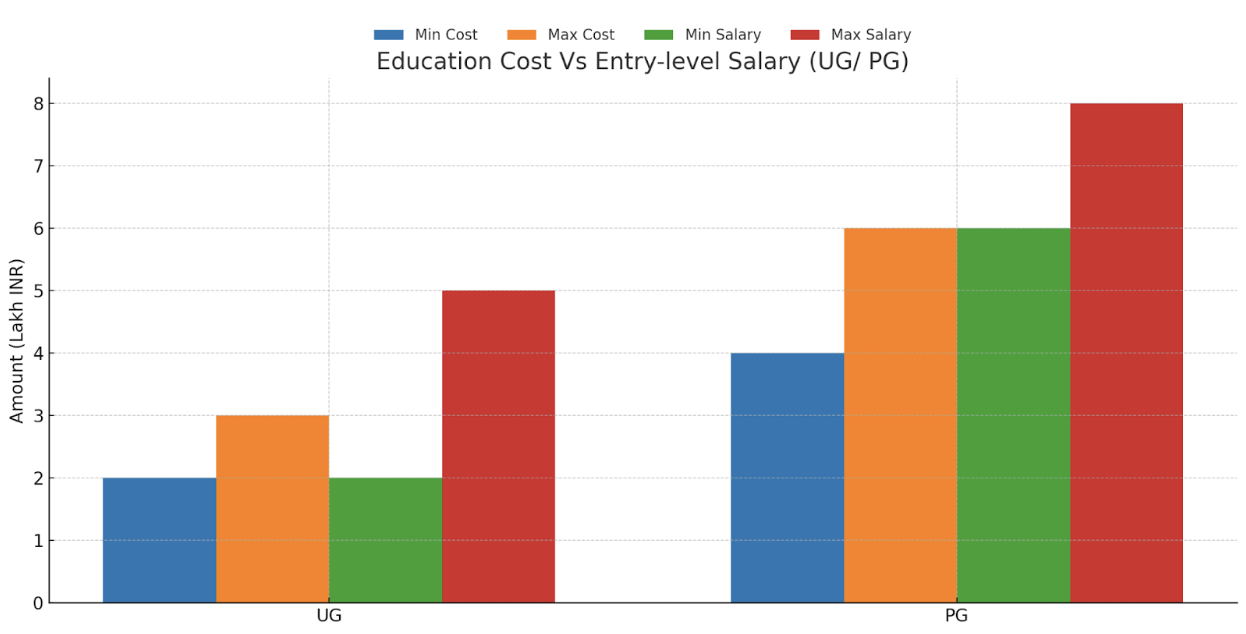
Return on Investment (ROI):
Degrees and certifications for content writing, digital marketing, or journalism are typically affordable compared to specialized professional programs. More importantly, they often provide opportunities for internships, freelance projects, and writing workshops, giving you valuable hands-on experience before you even enter the workforce.
Education Costs (approximate):
- UG: ₹2–3 lakh
- PG: ₹4–6 lakh
Earnings Potential:
- Entry-level: ₹2–5 LPA for UG
- Entry level: ₹6-8 LPA for PG
Some high-performing content writers, especially those in technical writing, UX writing, or niche industries like tech or finance, can exceed these numbers by working on specialized projects or offering premium services like whitepapers, case studies, and in-depth research content.
Return on Time (ROT)
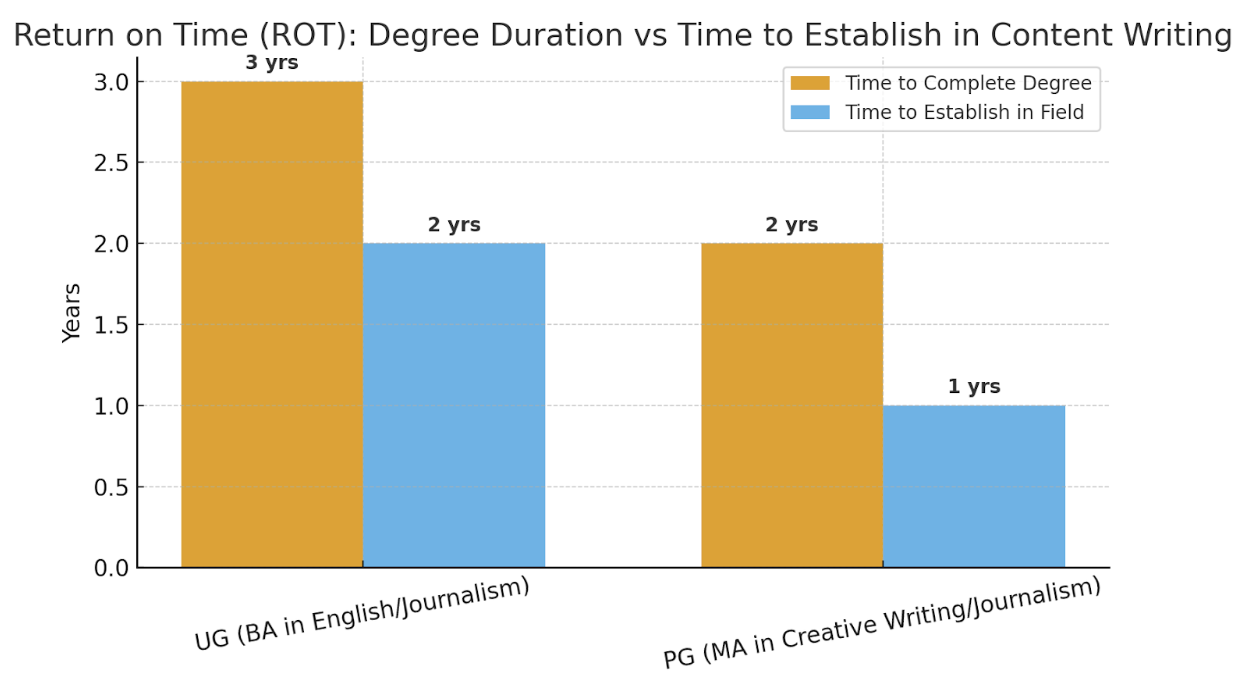
Let’s talk time—because for many students and parents, how long it takes to start earning matters just as much as the salary.
Education Duration:
- BA in English Literature / Journalism: 3 years
- MA in Creative Writing / Journalism: 2 years
Break-even Point:
From what I’ve seen, many postgraduate students land their first content writing roles—whether as Junior Content Writers, SEO Content Writers, or Freelance Writers—within the first year after graduating. For undergraduate degree holders, they typically start earning after gaining experience through internships. In general, it takes about two years for them to properly settle into the content writing field.
Fast-Track Options:
If you want to jumpstart your career, short-term certificate courses in content writing, SEO, or digital marketing can help you gain practical exposure. These courses often provide the tools and techniques to start working as a freelance writer or content creator early on, giving you hands-on experience and the opportunity to start earning before committing to a full degree or post-graduate program.
Content writing offers a structured, flexible, and fast-paced path—with opportunities to grow, work across industries, and even earn incentives for high-performing freelance projects.
Future Prospects: The Next 20–30 Years
Content writing is no longer just about writing articles or blog posts—it’s now an integral part of content marketing strategies, driven by rapid technological advancements and evolving consumer expectations. Over the next 20–30 years, AI, automation, and data analytics will revolutionize the way content writers work, making the need for skilled, tech-savvy writers even more essential.
With AI-powered tools like content optimization platforms, predictive writing assistants, and analytics tools, content writers will be able to produce more targeted, data-driven content in less time. These tools will automate routine tasks like keyword research, grammar checks, and SEO optimization, allowing writers to focus more on creative and strategic tasks like storytelling and audience engagement. As businesses increasingly rely on data to guide their content strategies, the role of the content writer will evolve to include creating content for AI-driven platforms and optimizing content strategies based on real-time data.
In India, with the digital economy growing rapidly and industries embracing content-driven strategies, the demand for skilled content writers will continue to rise. Whether you’re in a digital marketing agency, a media outlet, or a tech startup, content writing will remain a critical function in building brands, engaging customers, and driving growth.
Conclusion
Thinking about becoming a content writer? If you enjoy writing, storytelling, and creating content that resonates with audiences, this could be the career for you. But today, it’s more than just writing articles—it’s about integrating technology, leveraging SEO, and staying ahead in an ever-changing digital landscape.
You don’t need a single fixed path to get there. Whether you come from a background in communications, marketing, business, or even engineering, there’s room for you in the content writing space. The key is to stay curious, develop your writing and research skills, and embrace digital tools like SEO, content management systems (CMS), and analytics platforms. Gaining real-world exposure through internships, freelance projects, or part-time roles will help set you apart.
Content writing today is not just about creating words; it’s about crafting content that drives engagement, enhances brand presence, and provides value to readers. The sooner you start gaining experience, optimizing content for search engines, and exploring how AI tools can enhance your writing, the faster you’ll progress into specialized roles like content strategist or copywriter.
I hope this guide gave you some clarity and direction. If you’re still figuring out which niche in content writing—like SEO, technical writing, social media, or creative writing—suits you best.
Many families struggle matching a student’s creative spark to stable careers—expert coaching uncovers hidden motivators using tools like our Best-Fit Career Zone™. Reflect: What questions keep you up at night?