Blog written by Preethi Durga, a career strategist and education innovator.
Introduction: Why Learning Challenges Look Different Today Than They Did a Decade Ago
When Aarav’s teacher told his parents, “He’s bright, but he doesn’t pay attention,” they nodded politely — and then sat across from me looking worried.
At home, Aarav could explain science concepts beautifully.
In exams, he froze.
In class, he was labelled “distracted.”
His mother finally asked the question many parents carry quietly: “Is something wrong with how my child learns?”
This is the moment where most families misunderstand the problem. Today’s classrooms are faster, louder, more digital, and more comparison-driven than ever before. Students are expected to process information, perform academically, regulate emotions, and plan careers — often before their brains are fully ready.
What we call learning challenges for students today are rarely about intelligence.
They are about mismatch — between teaching styles, cognitive wiring, emotional load, and expectations.
The truth most families miss is this: Modern learning struggles are not weaknesses. They are signals.
In this guide, I’ll help you understand the types of learning challenges, why they show up in today’s classrooms, and how parents can move from confusion to clarity — without panic or labels.
Because learning is not broken. The system often is.
Ten years later, Aarav wasn’t sitting in a classroom — he was sitting across from me again.
This time, he wasn’t worried about exams.
He was confused about his career.
Despite scoring well enough to “get through” school, Aarav had chosen a commerce degree because it felt safe. But by his second job, a pattern emerged — he struggled in fast-paced, deadline-heavy roles that required constant task-switching.
“I always thought I was bad at focus,” he said quietly. “So I avoided careers that needed it.”
No one had ever explained that his school-level learning challenges were not a lack of ability — but a processing-style mismatch. Over time, that misunderstanding narrowed his career choices, confidence, and ambition.
This is the hidden truth parents rarely hear:
Unaddressed learning challenges don’t disappear after school — they quietly shape career decisions, risk appetite, and self-belief.
This is exactly why, at NextMovez, we look at learning challenges not just as academic concerns — but as early career signals.
Smart Frameworks to Understand Learning Challenges in Modern Classrooms
When I work with families, the biggest mistake I see is this:
They try to fix the child instead of understanding the learning environment.
Using a clarity-first framework, think of learning like a circuit. If one connection is misaligned, performance drops — even when potential is high.
CCC Lens: From Classroom Mismatch to Career Mismatch

In CCC conversations, we often role-play a future scenario with parents:
A child who learns slowly but deeply is pushed into speed-driven environments.
A reflective thinker is nudged into high-pressure competitive careers.
A hands-on learner is forced into theory-heavy paths.
The result?
Not failure — but misfit careers.
This is why CCC-style guidance doesn’t stop at “How is the child struggling now?”
We ask, “If this learning mismatch continues, which career zones will this child wrongly avoid — or wrongly enter?”
Learning challenges are not academic roadblocks.
They are career-alignment clues.
Here are three frameworks I use to decode learning challenges for students clearly and compassionately.
1. The C–E–S Framework (Cognition–Environment–Support)
Before assuming a problem, ask:
Cognition – How does the child process information naturally?
Environment – Does the classroom match that processing style?
Support – Is the right academic and emotional scaffolding in place?
Why it matters : Most common learning problems in students emerge not from low ability, but from environmental mismatch.
Story: One student was slow in written tests but exceptional in oral explanations. Once the assessment style changed, confidence returned.
Parent Tip: Never ask only, “Why is my child struggling?”
Also ask, “Where is my child expected to learn in a way that doesn’t suit them?”
2. The Load vs Capacity Test
Modern students carry three invisible loads:
- Academic pressure
- Digital overstimulation
- Emotional expectations
Why it matters: When load exceeds capacity, learning difficulties in classroom settings show up as distraction, anxiety, or shutdown.
Story: A high-performing student suddenly dropped grades after switching schools. The content wasn’t harder — the pace was.
Parent Tip: If effort increases but output drops, the issue is capacity — not motivation.
3. The Skill Gap vs Will Gap Lens
Not all struggles are about attitude.
Why it matters: Many types of learning challenges are skill gaps (organisation, memory, processing speed), but adults often misread them as laziness.
Story: A child labelled “careless” was actually struggling with working memory. With strategies, performance stabilised.
Parent Tip: Before correcting behaviour, investigate the skill behind it.
CCC Career Translation: When Skill Gaps Shape Career Zones
In CCC-style planning, we extend this lens beyond academics.
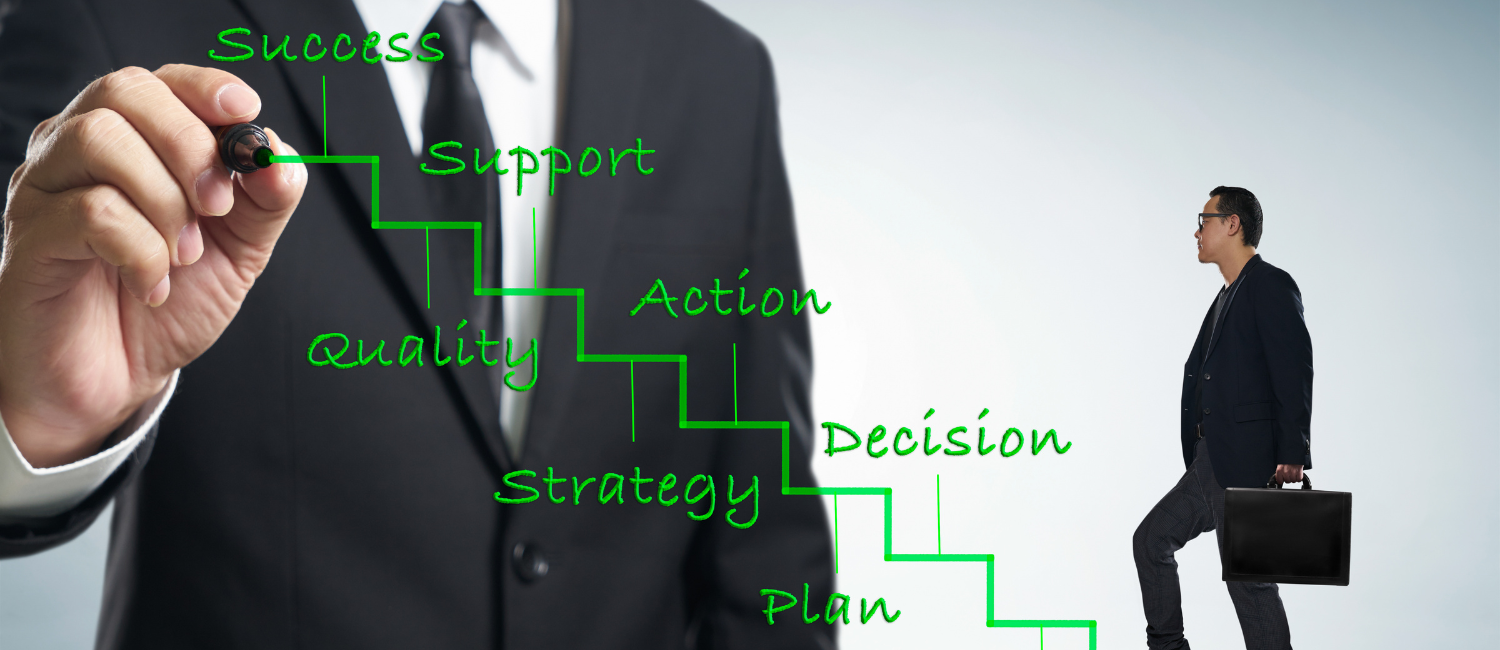
A misunderstood skill gap in school often becomes a career self-elimination pattern later.
For example:
- Working memory challenges → avoidance of multi-tasking careers
- Processing speed mismatch → fear of competitive professional environments
- Expression difficulties → underconfidence in leadership roles
This is why NextMovez integrates learning pattern analysis into the Best-Fit Career Zone™.
We don’t ask, “What careers are popular?”
We ask, “Which career zones respect how this student naturally thinks, processes, and performs under pressure?”
Learning Challenges in Today’s Classrooms: What Has Changed?
Parents often say, “We studied in the same system and turned out fine.” But the system has changed — radically.
Today’s classrooms demand:
- Faster comprehension
- Earlier abstraction
- Continuous assessment
- Emotional resilience
This has amplified learning challenges for students who learn differently.
Common Classroom Stressors Today
- One-size-fits-all teaching
- Heavy syllabus compression
- Reduced reflection time
- Comparison culture
Parent Insight: The question is no longer “Is my child capable?”
It’s “Is the classroom designed for how my child learns?”
From Learning Challenges to Career Fit: The Missing Link Parents Rarely See
In CCC conversations, this is the moment where the lens must widen.
Learning challenges don’t stay confined to classrooms.
They quietly influence career confidence, decision-making, and long-term fit.
Here’s how:
- A child who struggles with speed but excels in depth may later avoid high-pressure careers — even if they are well-suited cognitively.
- A student mislabelled as “average” may never explore high-skill career zones that require conceptual thinking.
- A learner who associates education with stress may prioritise safety over fulfilment in career choices.
This is why, at NextMovez, we treat learning challenges as early career indicators, not academic flaws.
Through our structured career planning process, we map learning styles directly to:
- Career environments (fast-paced vs reflective)
- Role expectations (execution-heavy vs thinking-heavy)
- Stress patterns in real-world professions
When this link is missed, students don’t just struggle in school —
they select careers that feel wrong long before they know why.
Case Studies: Real Students, Real Learning Breakthroughs
Every family believes their child’s situation is unique — and in many ways, it is.
Marks, temperament, emotional resilience, parental expectations, and classroom pressures combine differently for every student. That’s why quick fixes rarely work — and why comparison stories often mislead more than they help.
The cases you’re about to read are not “success stories” in the traditional sense.
They’re clarity stories.
Each one shows what happens when we stop asking, “How do we make the child fit the system?” and instead ask, “What does this child need to learn well?”
These breakthroughs didn’t come from more tuition or stricter discipline.
They came from understanding the real problem beneath the visible struggle — and responding with alignment, not pressure.
As you read them, don’t look for identical situations.
Look for familiar patterns.
That’s where insight begins.
Every child’s struggle looks different — but clarity changes outcomes.
Case Study 1: Riya — When Pressure Looked Like Inability
Riya was in Class 9 when her mother first said the sentence I hear too often:
“She studies for hours… but the results just don’t show.”
Riya wasn’t failing.
She was scoring just enough to stay unnoticed — the most dangerous place for a capable learner.
In our first CCC-style conversation, Riya sat quietly, twisting the strap of her backpack, while her mother spoke for her.
Mother: “She knows the answers at home. But in exams, she freezes.”
Teacher feedback: Bright, sincere, but lacks confidence under pressure.
When I asked Riya directly what she felt during exams, she paused.
Riya: “My mind goes blank. I can hear the clock louder than my thoughts.”
The Emotional Mislabel
At school, the narrative had already formed:
- “She’s not exam-oriented”
- “She doesn’t handle pressure well”
- “Maybe science isn’t for her”
By Class 10, this unspoken conclusion had started shaping career conversations at home.
Father: “Let’s not push her into competitive fields. She’ll get stressed.”
This is where learning challenges silently become career limitations — long before any career decision is officially made.
The CCC Intervention: Decoding Before Deciding
At NextMovez, we didn’t ask, “What stream should Riya take?”
We asked, “How does Riya’s mind work under load?”
Using our CCC C–E–S Framework (Cognition–Environment–Support) alongside the Best-Fit Career Zone™, we mapped:
- Cognition:
Deep conceptual understanding, strong verbal reasoning, slower processing under time pressure - Environment:
Speed-driven exams, high comparison, minimal reflection time - Support:
None addressing anxiety-triggered cognitive shutdown
The problem wasn’t ability.
It was a load exceeding cognitive safety.
The Turning Point Conversation
When we explained this to Riya, something shifted.
Riya: “So I’m not bad at studies… I just panic when I’m rushed?”
That single sentence mattered more than any mark sheet.
We redesigned her learning rhythm:
- Untimed concept mastery first
- Structured revision cycles
- Exam simulations focused on emotional regulation, not just content
Within months, her exam performance stabilised — but more importantly, her self-story changed.
The Career Impact (This Is the Part Most Families Miss)
By Class 11, Riya no longer avoided ambition.
Using the Best-Fit Career Zone™, we showed her career environments where:
- Depth mattered more than speed
- Thinking time was valued
- Pressure was episodic, not constant
Suddenly, careers she had silently ruled out came back into view — not because marks improved, but because self-trust returned.
CCC Career Takeaway
Riya didn’t need motivation.
She needed interpretation.
Had her learning challenge remained misunderstood, she wouldn’t have “failed” —
She would have chosen smaller dreams to stay safe.
That is the real cost of unaddressed learning mismatches.
Parent Insight (CCC Lens):
When a child says, “I can’t handle pressure,”
ask whether you’re seeing a personality flaw — or a temporary mismatch between learning style and system demands.
Because learning challenges don’t end in school.
They echo into career confidence — unless clarity enters early.
Case Study 2: Kabir — When Attention Was the Symptom
Myth: “He can’t concentrate.”
Challenge: Sensory overload and pace mismatch
Solution:
- Reduced cognitive clutter
- Changed note-taking method
- Introduced movement-based learning
Result: Improved engagement and retention
Parent Takeaway: Many learning challenges for students disappear when the environment aligns.
Case Study 3: Mehul — When Learning Mismatch Quietly Shrunk Career Options
Myth: “He’s average — nothing special.”
Challenge: Slow processing speed misread as low aptitude
What Actually Happened:
Mehul performed poorly in timed exams but excelled in project-based learning. Over time, he internalised the belief that he wasn’t “smart enough” for science or technology careers.
By Class 12, he self-eliminated from entire career zones — not because of lack of ability, but because of unidentified learning mismatch.
CCC Intervention: At NextMovez, we mapped Mehul’s cognitive style, stress response, and learning preferences alongside career environments.
Result: He moved into a design–technology hybrid pathway where depth mattered more than speed — and his confidence transformed.
Career Takeaway: When learning challenges are misunderstood, students don’t just lose marks —
they lose career imagination.
5 Practical Steps to Overcome Learning Challenges
At this point in the conversation, parents usually lean forward and ask, “Okay… but what do we actually do now?”
Not tomorrow.
Not after another report card.
Not once things “settle down.”
They want steps that don’t overwhelm the child or turn the home into another classroom. Steps that respect the child’s dignity while still moving things forward.
And that’s exactly where most advice fails.
It either offers generic motivation (“Just practise more”) or drastic solutions (“Change the school immediately”). Neither helps when a child is already tired of trying.
The steps that follow are not quick fixes.
They are clarity-led adjustments — small, intentional changes that reduce friction between how a child learns and what the system expects.
When applied consistently, these steps don’t just improve marks.
They restore confidence, reduce daily conflict, and help children believe again that learning can feel manageable — even meaningful.
As you read them, don’t aim to do everything at once.
Start with understanding.
Progress begins there.
- Identify the Exact Nature of the Challenge
Action Item – Observe patterns, not just outcomes
Why it Matters – Labels hide root causes
Sample – Struggles only in exams vs daily learning
Parent Tip – Look for where learning breaks down
Reflection Nudge – Do we understand the problem — or just the result?
2. Map the Learning Style
Action Item – Identify visual, auditory, or kinesthetic preference
Why it Matters – Teaching mismatch fuels learning difficulties in classroom settings
Sample – Concept clarity vs rote recall
Parent Tip – Learning style is not a trend; it’s neurological
Reflection Nudge – Is the method helping or hurting?
3. Reduce Cognitive Load
Action Item – Break learning into smaller cycles
Why it Matters – Overload mimics inability
Sample – 30-minute focused sessions
Parent Tip – More hours don’t equal better learning
Reflection Nudge – Are we chasing completion or comprehension?
4. Build Skill Bridges
Action Item – Strengthen memory, planning, and expression
Why it Matters – Many solutions for learning challenges lie in skill-building
Sample – Visual planners, mind maps
Parent Tip – Skills are trainable
Reflection Nudge – Which skill gap is being ignored?
5. Align Learning With Future Pathways
Action Item – Connect learning to long-term strengths
Why it Matters – Motivation rises with relevance
Sample – Linking subjects to careers
Parent Tip – Direction reduces resistance
Reflection Nudge – Does my child know why they are learning?
At NextMovez, this step becomes formalised through structured career planning — where learning styles inform career zone selection, not just subject choice.
When students see how today’s learning connects to tomorrow’s work, resistance reduces and direction strengthens.
How NextMovez Helps Students Navigate Learning Challenges
At NextMovez, we don’t diagnose. We decode.
Through our Best-Fit Career Zone™, we help families understand:
- Cognitive strengths
- Learning preferences
- Stress-response patterns
- Environment fit
Through our CCC-aligned Best-Fit Career Zone™,we translate learning patterns into career clarity by identifying:
- Career environments where the student’s learning style becomes an advantage
- Roles that minimise friction between cognition and expectation
- Long-term career paths that reduce burnout risk and confidence erosion
This ensures students don’t choose careers despite how they learn —
but because of it.
This prevents a dangerous pattern we see too often:
students choosing careers away from their learning challenges instead of aligned with their natural strengths.
When learning mismatches are decoded early, career fit improves dramatically — not just in performance, but in satisfaction and longevity.
Instead of asking, “What’s wrong with my child?” We ask, “Where will this child learn, grow, and thrive?”
By addressing learning challenges for students at the root — not the surface — we prevent long-term confidence damage and career confusion.
Reflection Questions for Parents
- Am I responding to my child’s struggle — or reacting to fear?
- Do I understand how my child learns best?
- Am I solving today’s problem — or building tomorrow’s confidence?
Conclusion: Learning Challenges Are Not Failures — They’re Signals
The most successful adults I’ve worked with were not the ones who learned easily. They were the ones who learned accurately.
Learning challenges for students are not warnings of failure. They are invitations to realign systems, expectations, and support. In CCC conversations, we say this clearly:
A misunderstood learner often becomes a misaligned professional — unless clarity enters early. When decoded early, learning challenges become one of the most powerful inputs into ethical, sustainable career planning.
At NextMovez, our role is not to push children into moulds — but to design pathways where learning feels empowering, not exhausting.
Book a Best-Fit Career Zone™ session today to discover how your child learns best and align it with their future career path. Because when learning aligns, confidence follows. And confidence changes everything.
Resources & References
- NCERT – Learning Outcomes & Pedagogy
https://ncert.nic.in - UNESCO – Inclusive Education & Learning Diversity
https://www.unesco.org - WHO – Child & Adolescent Mental Health
https://www.who.int - American Psychological Association – Learning Differences
https://www.apa.org - National Education Policy 2020 – Government of India
https://www.education.gov.in