Blog written by Preethi Durga, a career strategist and education innovator.
If you’ve ever watched a medical show and thought the real hero was the surgeon holding the scalpel… think again.
In every emergency room, every cancer diagnosis, every mystery illness — there’s one doctor quietly solving problems without even touching the patient.
The radiologist.
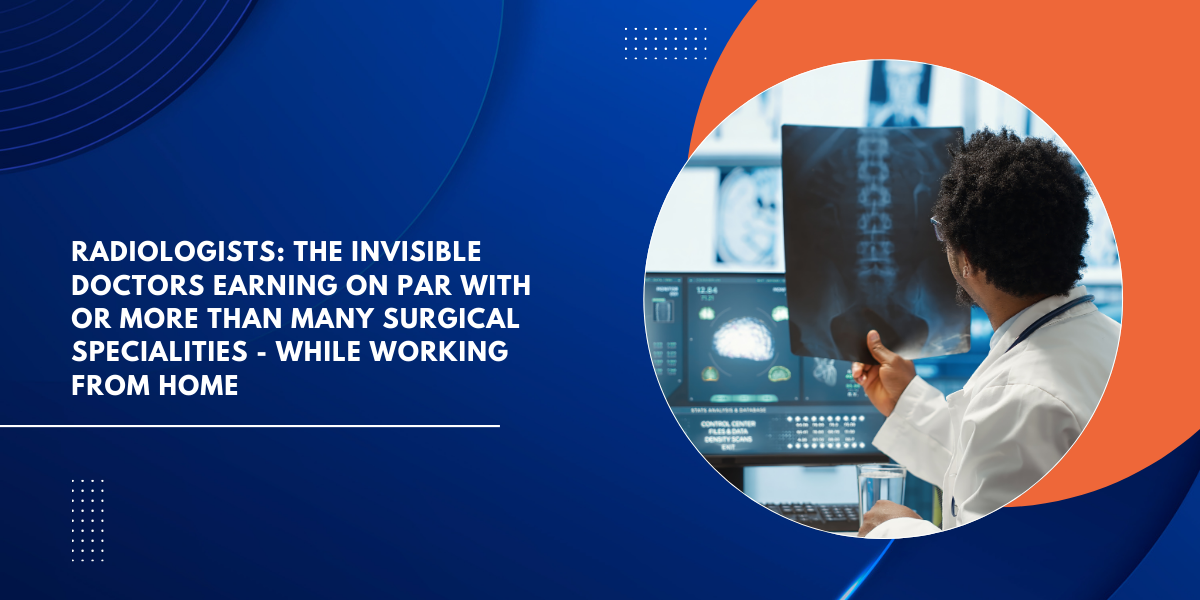
They sit in dim rooms, stare at glowing screens, and decode what the human eye can’t see. Broken bones? Hidden tumours? Stroke? Internal bleeding? Radiologists catch it all — often before symptoms even appear.
In a world where doctors are burning out at the bedside, radiology offers deep impact with better work-life balance and global flexibility. In fact, modern hospitals say that nearly 80% of medical decisions now rely on radiology (RSNA– — Imaging’s Role in Clinical Decisions) That means if your child loves medicine but also loves technology, or if they enjoy solving puzzles more than memorising textbooks… radiology might just be their dream career.
Welcome to the world of the invisible doctor — the one powering almost every diagnosis in 21st-century healthcare.
This guide simplifies everything — real statistics, challenges in the career, radiologist roles, skills, job demand, growth opportunities, and the complete MBBS-to-MD pathway.
Introduction: Why Radiologists Are the “Detectives” of Modern Medicine

Whenever a patient enters a hospital with chest pain, injury, fever, or a suspected tumour — the first question is:
“What’s really happening inside the body?”
This is where radiologists step in.
The role of radiologists in healthcare has expanded massively because modern medicine relies heavily on imaging. Globally, more than 3.8 billion diagnostic radiology examinations are performed every year (Grand View Research, 2025) — making imaging one of the biggest pillars of medical decision-making.
Radiologists may be invisible to patients, but hospitals rely on them for:
- Emergency trauma scans
- Cancer detection
- Stroke evaluation
- Heart disease monitoring
- Pre-surgical planning
- ICU patient assessment
Radiologists don’t see patients — they see the truth inside the body.
Global Trends Affecting the Radiology Career Landscape

Whenever I meet students interested in medicine, I always tell them this:
Radiology isn’t just a medical field anymore — it’s a global movement.
Why?
Because healthcare today runs on images.
Whether it’s AI-powered MRI scans, early cancer detection, robotic-assisted diagnostics, or even handheld ultrasound devices used in rural clinics — radiology is shaping how the world understands illness. Rural India continues to face a 79.5% shortfall of specialist doctors, including radiologists (MoHFW – RHS 2024).
Parents are often surprised when I say this, but it’s true:
Radiology has grown faster than almost any other medical specialty in the last decade.
And the trends shaping this growth are not small — they’re global forces transforming how doctors diagnose, how hospitals function, and how patients receive care. These shifts are opening new doors, new roles, and massive demand for future radiologists.
Let’s decode what’s changing — and what this means for your child’s career path.
1. Diagnostic Imaging Demand Is Exploding
Worldwide, imaging volumes are increasing due to ageing populations, lifestyle diseases, and early-screening programs.
A recent global update reports 3.6 billion radiology exams done annually (Radiology Today), covering X-rays, CT, MRI, and ultrasound.
Why it matters:
Every new scan = interpretation needed = more radiologists.
Parent Insight:
Your child enters a field where demand grows faster than supply, securing long-term opportunities.
2. AI + Radiology = The Future of Medicine
AI can detect fractures, tumours, and lung conditions earlier than humans — but AI cannot replace radiologists. Instead, it accelerates them.
AI adoption in radiology is projected to grow 40–45% by 2030 (WHO–ITU 2024).
By 2030, the most valuable radiologists won’t be the ones reading the most scans — they’ll be the ones who know how to work with AI, question it, and apply human judgment where machines can’t.
Students who enter radiology today are stepping directly into the Tech-Medicine Fusion Pathway™ — where AI, automation, and human expertise work together to elevate diagnosis accuracy.
Parent Insight:
If your child likes technology, radiology offers one of the world’s most future-proof medical careers.
3. Severe Specialist Shortage
WHO and multiple global health bodies report a widening shortage of specialists (including radiologists, pathologists, cardiologists, neurologists). India has only 7,721 radiologists, according to the latest NMC Health Workforce Report 2024–25 (NMC Health Workforce Report 2024–25)
This shortage makes radiology one of the high-demand careers worldwide.
Why it matters:
Radiologists are in demand in every country — making it a globally mobile career.
Parent Insight:
Your child gains international job flexibility — a huge advantage in medicine.
Skills That Will Matter in 2030 (Must-Have for Future Radiologists)
Radiology in 2030 will not be the same as radiology today. As AI, automation, and imaging technology transform healthcare, the skills radiologists need will also evolve. By 2030, the best radiologists won’t touch patients — they’ll touch lives from anywhere in the world.
Parents often ask me — “Does radiology match my child’s Career DNA — especially visual–spatial strength and analytical thinking?” Through our Best-Fit Career Blueprint, we decode how a student’s mental architecture — from pattern sensitivity to focus endurance — aligns with the demands of radiology
Here’s what the future demands and where your child’s Career DNA meets real-world opportunity.
1. Visual–Spatial Intelligence (Top Predictor of Radiology Success)
Radiologists must mentally “rotate” images, identify patterns, and see subtle abnormalities.
If your child loves puzzles, patterns, or visual problem-solving — their Career DNA is naturally aligned with radiology.
2. Pattern Recognition + Analytical Precision
Detecting micro-lesions, early cancer shadows, or tiny fractures requires razor-sharp analytical thinking.
3. AI-Assisted Diagnostics & Imaging Informatics
According to a 2024 WHO–ITU Joint Report, AI-driven radiology will rise 40–45% by 2030.
Students must know:
✔ AI ethics
✔ Machine-learning basics
✔ How to validate AI-generated reports
Radiologists who do not learn AI risk career stagnation.
4. Interventional Imaging Skills
Modern radiologists perform image-guided procedures: biopsies, drains, ablations.
Demand for “hybrid radiologists” (diagnostic + interventional) is rising globally.
5. Communication & Report Writing Skills
Hospitals increasingly rely on radiologists to lead tumor boards and advise surgeons.
6. Focus, Accuracy & Cognitive Endurance
Reading 200–300 scans a day requires stamina. This is where a student’s Cognitive Endurance Signature™ becomes crucial — radiology rewards those who can sustain precision, attention, and accuracy for long periods.
One parent I worked with recently told me,
“My son cracked NEET comfortably, and everyone assumed radiology was the obvious next step. But when you asked him whether he enjoyed long hours of silent analysis or preferred fast, people-facing decisions, he went quiet. That pause gave us more clarity than marks ever did.”
That’s when the family realised—radiology wasn’t about prestige or pay. It was about fit.
Navigating these evolving skills alone can feel overwhelming — that’s where personalised coaching brings direction.We help families assess this through the Best-Fit Career Zone™ Performance Patterns Assessment.
Parent Insight:
Choosing radiology without clarity = high ROI career, but potential ROT (Return on Time) loss if your child does not enjoy puzzle-solving and deep-focus work.
All these abilities map directly onto the Best-Fit Career Zone™ framework, which helps us identify whether a student naturally aligns with high-stakes, image-based medical specialities like radiology.
Case Study: “The Moment Aarav Finally Found His Path”
When Aarav first walked into my office with his mother, he looked overwhelmed. He was a bright Class 11 science student, scoring well in Physics and Biology, but still had no clue what direction to choose. His mother kept saying, “He’s good at everything, but he doesn’t feel connected to anything.”
During his Career DNA™ assessment, something remarkable stood out—Aarav had exceptionally high visual–spatial intelligence and pattern-recognition strength, the exact traits radiologists use every single day. When we showed him a sample MRI image and asked what he observed, his eyes lit up. He instinctively explained patterns that many adults miss.
That moment changed everything.
His mother said softly, “For the first time, I feel like he’s choosing a path that chooses him back.”
Today, Aarav is preparing confidently for NEET with a clear goal: MD Radiology. Not because it’s trending — but because it aligns with who he is at the core.
Curious if radiology fits your child? Explore our Career Pathway resources – the Best-Fit Career Zone, where your child’s strengths and future opportunities finally meet.
The Real Challenges in a Radiology Career
Before discussing challenges, let’s explore what radiologists actually do. Many parents think radiologists “just read X-rays. The truth is much bigger. Radiology doesn’t reward speed or popularity — it rewards depth, pattern recognition, and mental endurance. For the right brain type, it’s one of the highest ROT careers in medicine.
Radiology looks attractive on ROI—high salaries, global demand, advanced technology—but without clarity on ROT (Return on Time), students risk burnout after investing 10–12 years of training.
Radiologists perform critical diagnostic and interventional work:
Interpret Imaging Studies
X-rays, CT, MRI, PET, ultrasound, mammography.
Guide Emergency Care
Stroke? Internal bleeding? Trauma?
Radiologists decide the next steps within minutes.
Assist Surgeons & Specialists
They guide treatment plans for:
- oncologists
- cardiologists
- neurologists
- orthopaedic surgeons
Perform Image-Guided Procedures
Modern radiology includes minimally invasive procedures:
- biopsies
- draining abscesses
- tumour ablation
- angiography support
Lead Tele-Radiology Networks
Remote reporting for hospitals across India and abroad.
However, every medical field has realities parents should know.
Radiology is rewarding — but demanding.
Here are the real challenges students must be prepared for:
- Long Working Hours & Night Shifts – Emergency scans come at unpredictable times.
- High Mental Fatigue – Reading hundreds of images requires deep focus.
- Emotional Toll – Radiologists often detect life-threatening conditions first.
- Initial Pay Variations – Early career (post-MD) salaries vary widely depending on location, hospital category, and workload.
- High Responsibility, Low Visibility – They make huge decisions — but rarely meet patients.
Parent Insight: These challenges don’t diminish the career — they shape maturity, resilience, and precision. Students who thrive in structured, analytical, tech-driven environments excel in radiology.
3-5 Year Career Outlook: A Career With Massive Upside
When I speak to parents, one question always comes up — “Will this career still matter 10 years from now?”
Radiology is one of the few medical fields where the answer is a confident yes. As India expands its hospitals, diagnostic chains, and tele-health networks, radiologists have become the backbone of modern medicine. From early cancer detection to emergency trauma diagnosis, healthcare today simply cannot function without imaging — and this reality is only getting stronger.
Radiology isn’t just growing; it’s transforming into a future-ready, technology-powered medical career with immense long-term potential. Every career decision sits somewhere on the Career Success Strategy System — we simply help you see it clearly. India’s diagnostic imaging sector is projected to grow at 9.6% CAGR through 2030 (Grand View Research, 2025).
Radiology is one of the highest-paying and fastest-growing medical careers. Some reasons:
- Imaging is used in 80% of medical treatment decisions (RSNA)
- Tele-radiology enables doctors to work from anywhere
- AI expands opportunities instead of reducing jobs (WHO–ITU)
- India’s diagnostic sector is growing exponentially
With increasing hospitals, diagnostic chains (Apollo, Aarthi Scans, SRL Diagnostics), and AI-powered imaging platforms — radiologists are among the most future-proof medical professionals.
In our coaching experience, we’ve seen that scope without soul leads to struggle. Radiology rewards deep focus, pattern recognition, and patience—but only for minds naturally wired for it.
Parent Insight : If your child chooses radiology, they’re stepping into a career where demand will always outpace supply, technology will amplify their skills, and their work will directly improve — and often save — lives.
For parents looking for a career path that offers stability, respect, purpose, and upward mobility, radiology is one of the safest and smartest choices today.
Overall Future Outlook
Radiology is one of the highest-paying, most technology-driven and future-ready medical careers because:
- 80% of treatment decisions rely on imaging
- AI enhances — not replaces — radiologists
- Tele-radiology allows remote work
- Diagnostic chains are expanding exponentially
Parent Insight:
If your child chooses radiology, they enter a career where demand will always outpace supply, and their expertise will directly save lives.
Key Takeaways for Parents
✔ Radiology powers 80% of hospital decisions
✔ India has only 7,252 radiologists for 1.4 billion people
✔ Imaging demand is exploding due to cancer, cardiac & lifestyle diseases
✔ AI is amplifying radiology — not replacing it
✔ High salaries + global mobility + tele-radiology flexibility
✔ But success depends heavily on:
- visual-spatial Career DNA
- puzzle-solving ability
- cognitive endurance
- analytical depth
Try This Today (Quick Parent Action Box)
- Check Your Child’s Career DNA Fit
Ask them these simple questions:
- Do you enjoy solving visual puzzles?
- Do you love working with tech, screens, or patterns?
- Do you prefer accuracy over speed?
- Do you enjoy decoding clues rather than memorizing facts?
If “yes”, radiology is a strong fit.
- Show Them a Real Scan
Open a free anonymized MRI/X-ray viewer online and let them explore.
See if their curiosity activates.
- Book a Best-Fit Career Zone™ Assessment
This helps decode:
- Visual–Spatial Ability
- Pattern Recognition
- Analytical Strengths
- Focus Endurance
- Tech Adaptability
All essential for radiology.
Conclusion: Beyond Scans & Machines — Toward Diagnostic Leadership
Radiologists are not “behind-the-scenes” doctors by accident — they are the diagnostic engine behind nearly 80% of modern medical decisions, guiding treatment across oncology, cardiology, neurology, orthopaedics, emergency care, and preventive medicine.
If there’s one key takeaway from this guide, it’s this:
Radiology rewards a specific kind of mind.
Students who thrive in radiology typically demonstrate:
- Strong pattern recognition and analytical thinking
- Comfort with technology, data, and imaging tools
- The ability to make high-stakes decisions without constant patient interaction
- Deep satisfaction in accuracy, interpretation, and clinical impact
For parents, radiology stands out as a future-resilient medical career — offering specialization depth, professional respect, stable earnings, flexible work models (including teleradiology), and long-term relevance as AI-enhanced imaging expands.
But here’s the most important truth most families discover too late:
Radiology is not about popularity or pay — it’s about cognitive fit.
That’s why some doctors feel fulfilled in radiology while others feel disengaged, despite identical degrees.
Your Next Best Step
Before committing years of preparation, multiple competitive exams, and significant financial investment, pause and ask one powerful question:
Is my child’s thinking style truly aligned with radiology?
At NextMovez, we help families answer this before irreversible choices are made. Through our Best-Fit Career Zone, we map your child’s strengths, decision-making patterns, attention style, and long-term motivation — helping you evaluate whether radiology is a natural match or if another medical path will offer greater fulfillment and success.
Many parents tell us this clarity conversation saved their child years of confusion — and helped them choose with confidence, not pressure.
Because the best medical career isn’t the most visible one — it’s the one your child is wired to excel in.
If you’re considering radiology and want clarity in under 30 minutes, a simple conversation could change everything.
Resources and References
- Global Diagnostic Imaging Volume (2024 Update)
Grand View Research (2025). Diagnostic Imaging Services Market Size Report.
https://www.grandviewresearch.com
- Total Radiologists in India (2024–25 Workforce Update)
National Medical Commission — Health Workforce Report 2024–25.
https://www.nmc.org.in
- Rural Specialist Shortage – India
Ministry of Health & Family Welfare — Rural Health Statistics (RHS) 2024.
https://main.mohfw.gov.in
- Global Specialist Shortage
OECD — Health Workforce Statistics 2024.
https://www.oecd.org/health
- AI Growth in Radiology (2024)
WHO–ITU — AI for Health: Radiology Adoption Index 2024.
https://www.itu.int
- Imaging in Medical Decision-Making (2024)
Radiological Society of North America — Imaging’s Role in Clinical Decisions, 2024.
https://www.rsna.org
- INI-CET Seat Matrix (2024)
AIIMS Exams — INI-CET Prospectus 2024.
https://www.aiimsexams.ac.in
- Radiology Today, Global Imaging Utilization Update
https://www.radiologytoday.net/archive/rt0119p30.shtml
- Medical imaging trends to watch in 2025 — Radiology Business (2025)
- AI In Medical Imaging Market Size, Share & Outlook to 2033 — Global Growth Insights (2025)
- AI in Healthcare: Reimagine Care with AI-Driven Transformation — KPMG (2025)