
Blog written by Indu R Eswarappa, Career Coach & Education Change-Maker
Introduction: Why Management Consulting Matters
When I first heard the term “management consultant,” I imagined a suit-clad professional giving fancy advice in boardrooms. But once I began working with students and young professionals aiming for this field, I realized it’s far more than that. Management consultants are the problem-solvers of the business world—brought in when companies face complex challenges and need fresh, strategic solutions.
If you’ve ever been the kind of person who enjoys analyzing situations, breaking down problems, and suggesting ways to improve things, you’re already thinking like a consultant. Becoming a management consultant isn’t just about business knowledge—it’s about curiosity, resilience, and the ability to turn ideas into impact.
In this blog, I’ll walk you step by step through how to become a management consultant: from responsibilities and qualifications to skills, growth, salaries, and long-term opportunities. By the end, you’ll know exactly what it takes to enter this exciting and rewarding career path.

Key Responsibilities and Work Environment
When I shadowed a consultant during a project for a manufacturing firm, I was surprised by the variety of work they handled in just one week. One day, they were interviewing employees on the shop floor; the next day, they were presenting a digital transformation plan to the board.
As a management consultant, you’ll rarely have two identical days. Your role blends analysis, strategy, and people management, often under tight deadlines. Here’s what you’ll actually do:
- Problem Diagnosis – Understanding a client’s biggest challenges, from declining sales to operational inefficiencies.
- Strategic Planning – Designing actionable solutions like restructuring processes, adopting new technology, or entering new markets.
- Data Analysis – Using data-driven insights to recommend the most effective changes.
- Client Presentations – Translating complex analysis into clear recommendations for executives.
- Change Management – Guiding organizations through the implementation of your recommendations.
Work Environment
Consultants often travel to client sites, work in fast-paced teams, and balance multiple projects. Expect long hours, high-pressure deadlines, and collaborative environments—but also the thrill of influencing decisions that shape entire businesses.
According to NASSCOM’s 2024 Knowledge Report, India’s consulting and professional services industry is projected to grow at over 10% CAGR through 2030, driven by digital transformation and global demand.
Educational Pathways and Required Qualifications
Why Management Consulting Is the Ultimate Future-Proof Career — And How to Break In Without an MBA
When I mentor students asking how to become a management consultant, many assume it’s only for MBAs. The truth is—while an MBA helps, there are multiple pathways into consulting. What truly matters is your ability to combine analytical skills with business understanding and the curiosity to solve complex problems.
Here’s the counterintuitive truth:
In the next decade, non-business degrees like psychology, design thinking, and data science may outperform traditional MBAs in consulting—thanks to the rise of human-centered AI and behavioral strategy.
Top firms are already diversifying their talent pools. LinkedIn’s Skills-Based Hiring 2025 Report discusses the shift toward hiring based on skills rather than credentials, but does not split it specifically by consulting hires or those percentages.
The message is clear — the future of consulting isn’t reserved for MBA graduates. It belongs to curious thinkers who can blend data, empathy, and business sense to drive transformation.
As per AICTE’s Management Education Report 2024, updated MBA curricula now emphasize analytics, sustainability, and leadership—key competencies for consulting careers.
Tip: If you’re still in school, focus on developing your math, economics, and communication foundation—you’ll thank yourself later when case interviews roll around!
Try This Now: Ask yourself (or your teen): “What business problem would you love to solve, and why?” This simple reflection helps uncover curiosity alignment—one of the strongest predictors of long-term success in finance careers.
Necessary Soft Skills and Technical Abilities
One of my students once told me: “Consulting is like detective work, but with PowerPoint and Excel.” And in many ways, that’s true. Consultants need sharp problem-solving skills, but also the ability to convince clients and rally teams behind their ideas.
Here’s what you’ll need:
Soft Skills
- Analytical Thinking – Breaking down complex issues into manageable parts.
- Communication Skills – Explaining solutions clearly to executives and employees alike.
- Teamwork & Leadership – Collaborating with diverse teams under pressure.
- Adaptability – Thriving in changing industries and client needs.
Technical Abilities
- Data Analysis Tools – Excel, SQL, or business analytics platforms.
- Presentation Tools – MS PowerPoint, Tableau, or visualization software.
- Industry Knowledge – Understanding finance, operations, or sector-specific issues.
- Research Skills – Gathering insights to back every recommendation.
According to LinkedIn’s 2025 Jobs on the Rise Report, analytical reasoning, consulting, and AI literacy are among the top five sought-after business skills globally.
Think of these as your “consulting toolkit”—the stronger your skills, the faster you’ll stand out.

Career Progression and Growth Opportunities
I once worked with a young consultant who started as an intern at a boutique consulting firm. At first, his days were filled with endless research and late-night slide decks. But five years later, he was leading meetings with CEOs, shaping digital transformation strategies, and even mentoring juniors.
That’s the reality of consulting—the steeper the learning curve, the faster the growth. Here’s the typical career ladder:
- Business Analyst / Associate (Entry-Level): Focus on research, data crunching, and supporting senior consultants.
- Consultant / Senior Consultant: Lead parts of projects, work closely with clients, and manage junior teams.
- Manager / Project Leader: Own entire projects, oversee multiple teams, and drive client impact.
- Principal / Partner / Director: Set firm-wide strategy, bring in clients, and influence industry trends.
Growth Opportunities
- Specializing in industries (healthcare, IT, finance, etc.).
- Switching into corporate strategy roles in top firms.
- Exploring entrepreneurship or independent consulting.
- Expanding globally through international projects.
According to the World Bank’s 2024 Global Services Outlook, consulting and business advisory services are among the fastest-growing global exports, emphasizing cross-border career potential.
Salary Expectations and ROI
A common question I hear: “Is consulting worth the effort?” The answer is yes—both in financial terms and long-term opportunities.
Average Salary (India):
- Entry-Level: ₹6–10 LPA
- Mid-Level: ₹12–25 LPA
- Senior-Level (10+ years): ₹35–80 LPA+
(Source: AmbitionBox, Glassdoor 2025)
Global Consulting Salaries (Top Firms):
- Entry-Level: $70,000–$100,000
- Mid-Level: $120,000–$180,000
- Partner Level: $250,000+ (often with bonuses/profit-sharing)
Return on Investment (ROI):
- Diverse industry exposure → transferable skills.
- Rapid growth curve → promotions every 2–3 years in top firms.
- Networking → access to C-suite professionals and industry leaders.
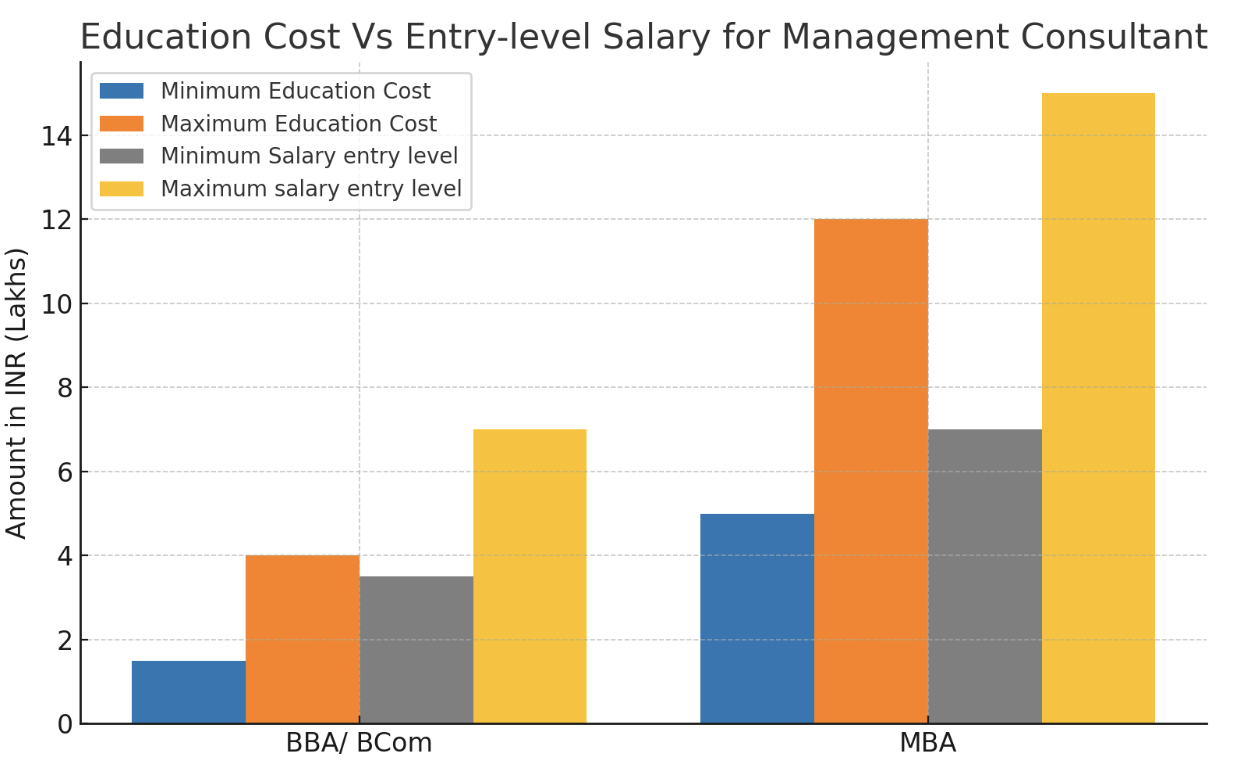
ROT: Time Investment Across Consulting Career Stages
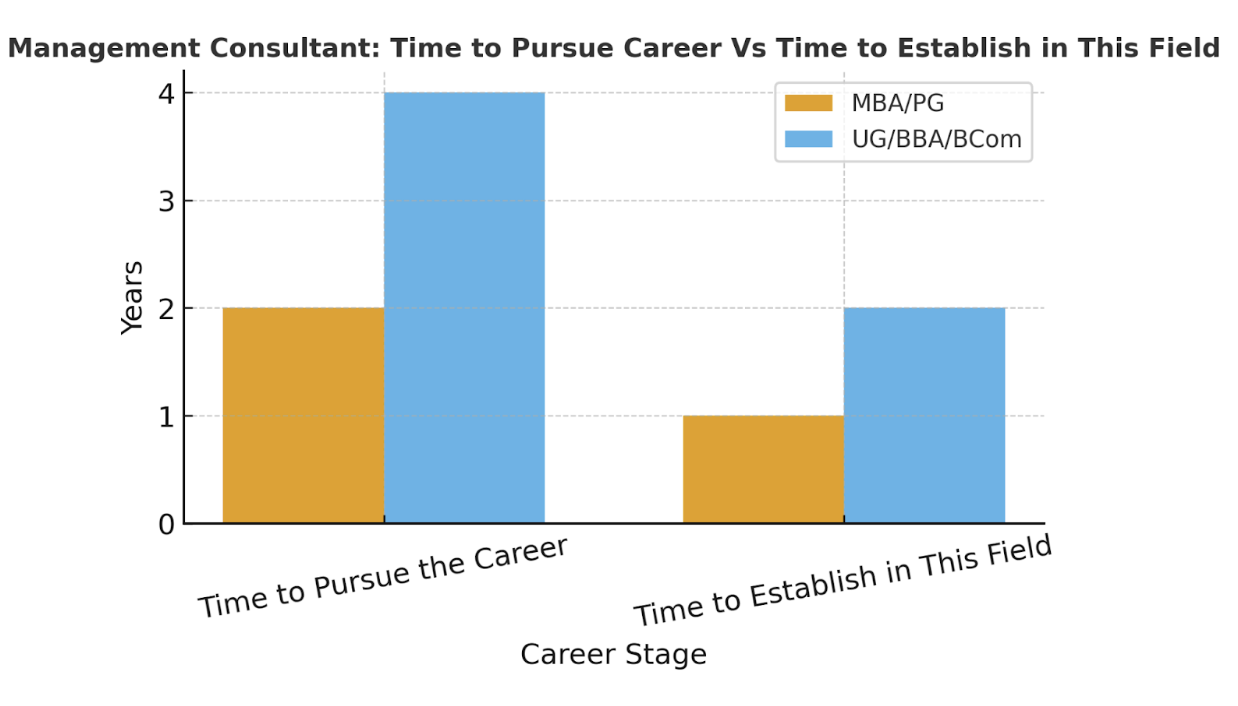
A FICCI Industry Skills Report 2024 notes that consulting offers one of the highest ROI-to-effort ratios in professional services, with rapid career mobility and global placements.
For students and parents: The real ROI of consulting isn’t just the salary—it’s the mindset, adaptability, and influence built along the way. Few careers offer such accelerated personal and professional growth.
Conclusion: Is Consulting the Right Path for You?
At its heart, consulting is not just about solving problems—it’s about helping organizations grow while you grow too. From startups struggling with strategy to multinationals driving billion-dollar transformations, consultants leave a mark wherever they go.
For parents, supporting your child’s interest in consulting means nurturing their curiosity, critical thinking, and resilience—it’s one of the most future-proof careers in today’s business world. For students, it’s about preparing early: mastering case studies, sharpening communication, and investing in the right education.
But here’s the catch—not every student thrives in the high-pressure, fast-paced world of consulting. That’s where NextMovez bridges the gap. Using our Career Clarity Compass™, we help you discover if your motivators align with consulting’s dynamic environment. Do you thrive on achievement, competition, and structured impact? Or do you value stability and creativity more? The Compass maps these motivators, helping both parents and students make data-informed decisions—not emotional guesses.
Through our Best-Fit Career Zone™, we also decode whether your personality type matches consulting’s demands. Typically, analytical and extroverted types perform best—they enjoy problem-solving, collaboration, and influencing others. Yet even introverted thinkers with strong analytical depth can thrive in research-heavy consulting domains.
At NextMovez, we bring it all together through our 3 Dimensions of Planning™—aligning Interests, Abilities, and Personality with market trends. This approach ensures your consulting career choice is both personally fulfilling and professionally rewarding.
✅ Ready to explore your fit for consulting?
Don’t leave your child’s future to chance—book a free guidance session with our experts today and experience how NextMovez transforms ambition into clarity and confidence.