By Preethi Durga, a career strategist and education innovator.
When a student first heard about the growing demand for careers in pharmacy, they were intrigued. It wasn’t just the prospect of a stable job that caught their attention! It was the dopamine-driven curiosity that sparked within them. The world of pharmacy, initially seen as merely about dispensing medications, revealed itself to be much more complex.
As they dug deeper, they discovered the fascinating intersections of scientific research, patient care, and the integration of cutting-edge technology in healthcare. The idea of playing a pivotal role in a patient’s recovery journey, fueled by a deep understanding of medicine, captivated their mind and senses.
At first, it looked like a safe job. But as they explored deeper, they discovered how pharmacy sits at the intersection of science, technology, and patient care — and that changed everything. That moment sparked a curiosity about how pharmacy is shaping the future of healthcare.
A parent shared with me, ‘I always thought pharmacy was just about filling prescriptions. But seeing my child’s interest in how medicines work… made me realize it’s so much more.’ Parents often worry, ‘Is pharmacy stable in an AI-driven world?’ The answer: pharmacists’ human touch ensures their role remains vital, blending technology with care.
When Priya, a 16-year-old student, shadowed a local pharmacist, she had the opportunity to see firsthand how pharmacists are using cutting-edge technology in patient care. Priya watched as the pharmacist utilized AI-powered systems to customize a treatment plan for a cancer patient, adjusting medication based on the patient’s genetic profile and medical history.
This experience sparked a new understanding for both Priya and her parents. Pharmacy wasn’t just about science. It was about blending technology, compassion, and innovation to improve lives.
Priya’s parents were amazed. “She’s always loved science, but this showed her how she could combine her passion for helping people with the latest advancements in healthcare,” her mother said. “We never realized that pharmacy could offer a path where technology and care go hand in hand.”
This experience made it clear that pharmacy offers a career that blends science, technology, and patient care—a career that can truly change lives.
Why Pharmacy Is Becoming an Essential Career in Healthcare
Pharmacy isn’t just a job. It’s a frontline role in a $1.5T healthcare revolution. Pharmacy is no longer just about filling prescriptions or dispensing medications. It’s a career that blends science, technology, and patient care to ensure better health outcomes.
Pharmacists are now involved in managing chronic diseases, advising on complex medication regimens, and playing a key role in public health initiatives.
Why Now?
In fact, the healthcare industry is projected to see tremendous growth in the coming years. Take, for instance, according to a 2025 FIP study on Global Pharmacy Workforce Migration, the global pharmacy workforce capacity is projected to grow by 24% by 2030.
Likewise, according to Statista’s Pharmaceutical industry in India – statistics & facts Report of 2025, India stands as a major force in the global pharmaceutical and vaccine markets.
With more people needing medications and healthcare management, pharmacists are poised to take on more diverse roles, especially in personalized medicine and patient care.
Parents often ask me, “Is a career in pharmacy just about distributing medications? Or is there more to it?”
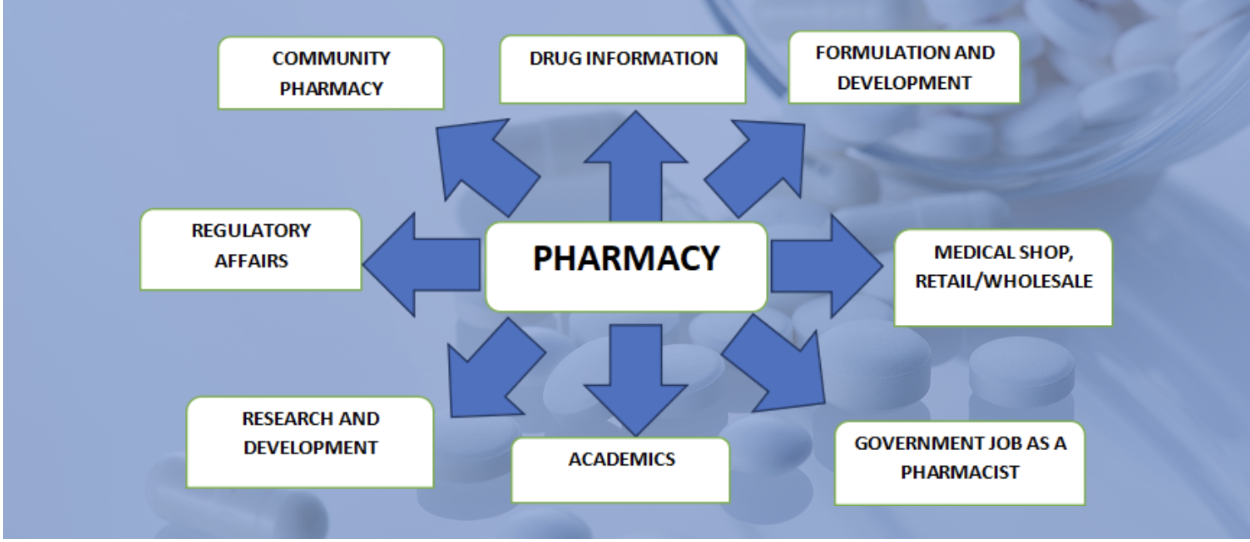
The truth is, pharmacy is much more than that. Pharmacists are integral to the healthcare system, contributing to disease prevention, medication therapy management, and ensuring the safe and effective use of medications. From community pharmacies to hospitals and research labs, the scope for pharmacists continues to expand, and so does the opportunity for students interested in this impactful career.
So let’s break down the evolving role of pharmacists, explore why the demand is increasing, and understand how students can position themselves for success in this field
Global Trends Shaping the Pharmacy Career Path
When I talk to parents about pharmacy careers, I always emphasize that it’s not just about dispensing medication; it’s about being at the forefront of healthcare innovation. And in today’s rapidly evolving healthcare landscape, pharmacy professionals are key players in shaping the future of medicine and patient care.
The global population is aging, and with it, the demand for healthcare services is skyrocketing. According to the World Health Organisation’s 2025 Report on Aging and Health, by 2050, the number of people aged 60 years or older is expected to more than double, reaching 2.1 billion globally. (Source: WHO Report, 2025)
What Does This Mean for Pharmacists?
Pharmacists will need to be adept at using cutting-edge technology to manage and dispense medications. Think of them as the conductors of an orchestra, harmonizing AI, data, and patient care to create the best possible treatment plans.
- Technology Integration: Pharmacists will use tools like telemedicine and data analytics to ensure patients get the right medications at the right time.
- Patient Care: Beyond dispensing medications, pharmacists will be key in advising patients and healthcare providers on medication regimens and disease management.
- Public Health Impact: As healthcare needs grow, pharmacists will also play a bigger role in public health initiatives, helping prevent disease and improve community health.
What it signals: As the number of elderly patients grows, pharmacists will have an increasingly important role in managing chronic conditions, advising on polypharmacy, and ensuring safe medication use.
What This Means for Your Child: A career in pharmacy offers immense potential to contribute to the well-being of an aging population, making it a future-proof career choice with growing demand.
Parent Insight:
Pharmacy is no longer just a traditional career—it’s an evolving field driven by technology, patient care needs, and global health trends. For your child, this means access to exciting and impactful career opportunities, both locally and globally.
According to the International Pharmaceutical Federation (FIP)’s Global Situation Report on Pharmacy 2025, the migration of pharmacists from low- and middle-income countries to wealthier nations is rapidly increasing, with the number of migrants seeing nearly a sixfold rise.

Technological Innovations & Industry Changes in Pharmacy
When parents hear “pharmacy,” many still picture the traditional role of dispensing medications. But today’s pharmacists use cutting-edge technology to enhance patient care, from data analytics to telemedicine. The exciting part? While technology automates routine tasks, human judgment, patient interaction, and expertise remain irreplaceable.
According to a Forbes Report of 2024, AI tools like MedAware slash medication errors by 20%, helping hospitals ensure safer care. These systems analyze patient data to flag potential drug interactions, ensuring safer medication management. Despite this technological advancement, pharmacists continue to play a vital role in reviewing the data and making the final decisions, combining AI insights with their clinical expertise to ensure optimal patient care.
Try This Today: Enroll your teen in Coursera’s “Introduction to Genomic Data Science”, a 10-hour course that explores pharmacogenomics, which could pave the way for biotech roles. This course will equip them with foundational knowledge in a rapidly growing field, preparing them for the future of healthcare.
By starting proactive learning now, your teen can gain in-demand skills, positioning themselves for a career that blends stability with innovation in the evolving pharmaceutical industry. The time invested today could lead to greater career opportunities tomorrow, giving them the tools to shape the future of pharmacy.
This integration of AI helps pharmacists focus on higher-level tasks, such as patient counseling and personalized medication management, while ensuring safer outcomes for patients.
Moreover, according to Grand View Research’s Biotechnology Market (2024 – 2030) Report, the global biotechnology market is expected to reach USD 727.1 billion by 2025 end, which will open new career paths for pharmacists in gene therapy and precision medicine as well.
AI-Powered Medication Management
Then vs. Now: Pharmacists now use AI tools like IBM Watson Health to assist in detecting potential drug interactions, predicting patient needs, and customizing medication regimens.
Why It Matters: AI accelerates the detection of potential medication errors, but human expertise ensures the right decisions are made for patient care.
Telepharmacy & Digital Healthcare
Then vs. Now: What once required patients to visit a pharmacy in person can now be done virtually. Telepharmacy platforms are transforming how consultations and medication management are delivered, especially in rural and underserved areas.
Why It Matters: Your child could become part of a system that provides pharmacy services to people across the globe without geographical limitations.
Big Data for Personalized Medicine
Then vs. Now: Pharmacists are now using data analytics to understand how different patients respond to treatments. With the rise of personalized medicine, pharmacists analyze genetic data to recommend the most effective medication for an individual.
Why It Matters: The ability to interpret big data for personalized healthcare makes pharmacists a crucial part of the evolving healthcare system.
Parent Takeaway:
The pharmacy industry is rapidly evolving, and students who blend technology fluency with interpersonal skills will thrive. Whether through AI, telemedicine, or personalized healthcare, the future of pharmacy is not just about dispensing medicines; it’s about improving lives through technology and expertise.
Job Demands and Hiring Trends in Pharmacy
When I speak with students and parents, one question often arises: “Is a career in pharmacy too competitive—or still worth it?”
The short answer: yes, it’s competitive, but it’s also one of the most stable and impactful careers in healthcare.
In India, B Pharmacy graduates have a wide range of career opportunities and the potential for lucrative salaries.
According to the Pharma Dept. Govt. Report, of 2024, The pharmaceutical industry is expanding rapidly and is projected to reach a value of $120-130 billion by 2030. This growth is expected to generate approximately 58,000 new jobs by 2025, making it a great time to start or further your career in this sector! (Source: Pharma Dept. Govt. Report, 2024).
High Entry Barriers, High Rewards
Pharmacy is a highly regulated profession, and it requires rigorous education and training. According to the AACP report of 2023 by American Association of Colleges of Pharmacy, over 130,000 students are currently enrolled in pharmacy schools in the United States, but admission rates are highly competitive, with many schools admitting only a fraction of applicants. (Source: AACP Statistics, 2023)
Why it matters: The competition ensures that only the most prepared candidates succeed, but those who do enter the field enjoy job security, the potential for career advancement, and the satisfaction of making a real difference in healthcare.
Parent Insight: If your child thrives in academic rigor and has a passion for science and patient care, pharmacy can be an incredibly rewarding career path. Help them build a solid academic foundation early—especially in chemistry, biology, and mathematics.
💭 Reflection Prompt: “What aspects of healthcare excite you the most—helping people directly, working in labs, or advising on treatments?”
Unsure how your teen’s skills fit pharmacy?
How do you know if your teen’s empathy suits patient counseling, or if their analytical mind is a perfect fit for biotech research? Our expert coaches will guide you through a personalized career path in pharmacy, helping your teen discover their strengths and the best-fit career zone for their future in the pharmaceutical field.
Pharmacists Salary Comparison
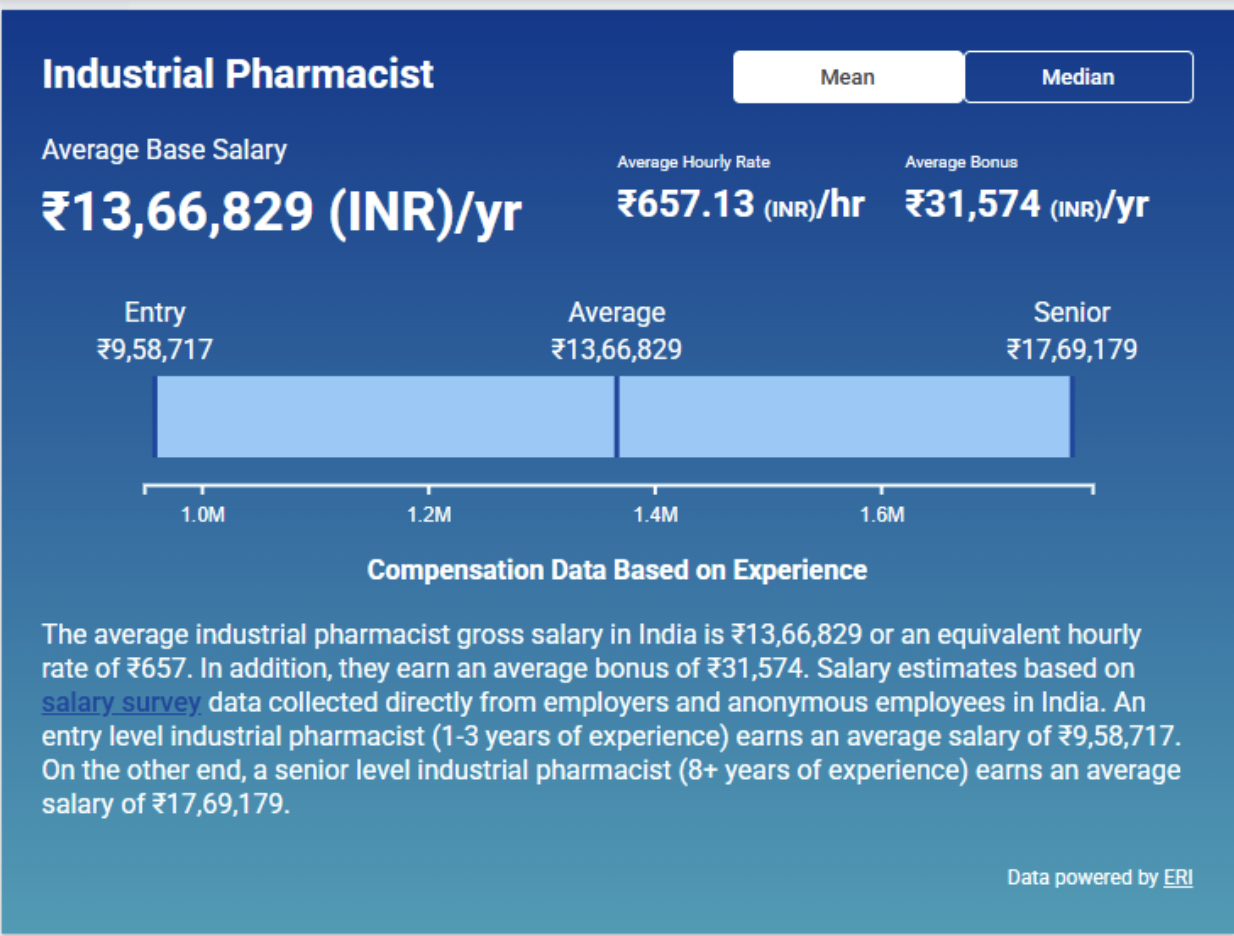
Image source: https://www.salaryexpert.com/salary/job/registered-pharmacist/india
According to the National Association of Colleges and Employers (NACE) Report of 2021, 96% of employers across various sectors agree that communication skills are essential for career success, even in highly technical roles like pharmacy. (Source: NACE Report, 2021)
Why it matters: Pharmacists are trusted healthcare professionals who need to interact effectively with patients, doctors, and healthcare teams. A pharmacist’s ability to explain complex medication instructions clearly and to offer emotional support to patients is just as important as their technical knowledge.
Parent Insight: Encourage your child to take part in activities like volunteering, group projects, and internships. These experiences can be just as impactful as academic achievements.
Furthermore, according to the All India Radio Report of 2025, the government of India recently stated that India now aims to become what Minister Nadda refers to as the “Laboratory” of the World, evolving from being the “Pharmacy” capital of the world.
Global Demand for Pharmacists
pharmacists continues to rise. Take, for instance, FIP’s 2022 Brisbane Review predicts a 24% growth in the global pharmacy workforce by 2030, based on data from 85 countries.
Why it matters: With a growing emphasis on health and wellness, pharmacists are in high demand worldwide. Your child could have the opportunity to work in a variety of healthcare settings, from hospitals to research labs, or even internationally in places like Canada, Australia, or the UK.
Parent Insight: Encourage global readiness—familiarize your child with healthcare systems abroad, learn a second language, or get involved in international internships or conferences.
Necessary Soft Skills and Technical Abilities in Pharmacy
When I meet students aspiring to become pharmacists, they often say, “I love science!” That’s a great start—but succeeding in this field requires more than just a passion for chemistry and biology.
According to the IBEF Report of 2025, as India continues to be the ‘pharmacy of the world,’ the demand for skilled professionals, including pharmacists, will keep rising. This presents ample opportunities for those entering the pharmaceutical field.
Think of a pharmacist as a bridge—connecting science to patient care, and medicine to wellness. To cross that bridge successfully, students need both soft skills (for patient communication and teamwork) and technical skills (for precision and medication management).
A key part of pharmacy success is aligning your teen’s strengths and natural abilities with the right healthcare direction — this is what we call their Best-Fit Career Zone™
Key Skills:
Analytical & Problem-Solving Skills:
Pharmacists need strong analytical skills to assess patients’ medication needs, identify potential drug interactions, and manage complex medication regimens.
Why It Matters: The ability to evaluate prescriptions and recommend adjustments is crucial in ensuring patient safety and effective treatment.
Communication & Patient Counseling:
Pharmacists often explain complex medication instructions and provide counseling on side effects and dosage. They must translate technical information into understandable terms for patients.
Why It Matters: Clear communication builds trust with patients and healthcare teams, ensuring that treatments are followed correctly.
Teamwork:
Pharmacists work alongside doctors, nurses, and other healthcare professionals to provide comprehensive patient care.
Why It Matters: Effective collaboration ensures patients receive the best possible care and helps pharmacists stay updated on the latest healthcare developments.
Adaptability:
With the rise of personalized medicine and new drug therapies, the pharmacy field is constantly evolving. Pharmacists must be able to adapt to new treatments, technologies, and patient needs.
Why It Matters: Staying current with advancements in pharmaceuticals is key to offering the best care.
Technical Proficiency:
Knowledge of pharmaceutical databases, electronic health records (EHR), and medication management systems like Meditech and Epic are increasingly important for modern pharmacists.
Why It Matters: Being proficient with the latest technology ensures accuracy and efficiency in patient care.
Emotional Intelligence (EQ):
Pharmacists often interact with patients during vulnerable times, such as when they’re dealing with chronic illnesses or new diagnoses.
Why It Matters: Having high emotional intelligence helps pharmacists build strong relationships with patients and navigate difficult conversations.
💬 Reflective Prompt: “Which skill do you feel most confident in—and which one could you start developing this month?”
Career Progression and Growth Opportunities in Pharmacy
One of the most exciting aspects of a career in pharmacy is the clear growth trajectory it offers—from entering the profession to becoming a key healthcare leader.
Here’s how the journey typically unfolds:
Pharmacy Intern / Entry-Level Pharmacist
Foundational tasks: Dispensing medications, offering patient counseling, learning medication therapy management, and assisting senior pharmacists.
Pharmacist / Clinical Pharmacist
Ownership: Managing medication regimens, providing advice to healthcare teams, and improving patient care through clinical pharmacy services.
Why it matters: At this stage, pharmacists begin to take on more responsibility for patient outcomes and medication management.
Pharmacy Manager / Lead Pharmacist
Leadership: Supervising pharmacy teams, managing inventories, ensuring compliance with regulations, and contributing to hospital or clinic policy decisions.
Why it matters: This is where pharmacists can influence larger healthcare systems and policies, ensuring patients receive safe, effective care.
Director of Pharmacy / Senior Clinical Pharmacist
Strategic Role: Overseeing pharmacy operations, developing strategic initiatives to improve patient care, and ensuring the integration of the latest pharmaceutical technologies.
Why it matters: Pharmacists in this role influence healthcare delivery and improve healthcare outcomes across institutions.
Pharmacy Executive / Entrepreneur
Leadership or Entrepreneurship: Managing pharmacy chains, advising on pharmaceutical practices, or even starting a private practice or healthcare consultancy.
Why it matters: For those who aim to combine business acumen with healthcare expertise, this stage offers opportunities to lead the industry in new directions.
Parent Insight:
Encourage your child to visualize their pharmacy career as a growth curve—each role is a step toward becoming a leader in healthcare, not just a job title.
🌱 Reflection Prompt: “What kind of impact do you want to create through your work—helping patients directly, improving healthcare systems, or leading teams?”
Future Outlook
As a pharmacist, your responsibilities go far beyond handing out medicines — you serve as the vital link between doctors, patients, and the broader healthcare system. According to the PIB Pharmacy Report (2024), India’s pharmaceutical exports grew by 8.36%, rising from USD 2.13 billion in July 2023 to USD 2.31 billion in July 2024. This steady growth reflects the nation’s ongoing efforts to strengthen its position as a global leader in pharmaceutical exports. (PIB Pharmacy Report, 2024)
Pharmacists will need to be adept at using cutting-edge technology to manage and dispense medications. For parents, this means preparing their children not only academically but also to adapt to technological advancements and the evolving nature of healthcare.
Parent Takeaway: Pharmacy is demanding, but for those who thrive in science and healthcare, it offers both stability and global opportunities.
From Dispensing Medications → To AI-Augmented Healthcare
By 2030, AI-powered tools will assist pharmacists in personalized medicine, making medication management faster and more accurate, while pharmacists focus on patient interaction, clinical decision-making, and wellness guidance.
From Local Pharmacies → To Global Healthcare Integration
As global healthcare systems become more interconnected, pharmacists will play key roles in virtual consultations, medication therapy management, and public health initiatives worldwide.
From Traditional Medicine → To Biotechnology and Personalized Treatment
Advances in biotechnology and pharmacogenomics will drive the need for pharmacists who can tailor treatments to individual genetic profiles.
Parent Insight:
Encourage your child to stay curious not just about science but about technology’s role in healthcare. A child who can blend scientific knowledge with an understanding of digital health tools will be well-positioned for future opportunities.
Conclusion
Pharmacy isn’t just a job—it’s a frontline role in a $1.5 trillion healthcare revolution. As the industry continues to grow and evolve, pharmacists are becoming essential drivers of patient care, digital health, and public health initiatives. By equipping themselves with both technical and soft skills, future pharmacists will be well-positioned to thrive in this rapidly changing field, making a lasting impact on global healthcare.
With the right guidance, your child can transform their passion for science into a career that shapes global healthcare. Pharmacy offers a path to not only thrive in a dynamic, evolving field but also to be a part of something much bigger—helping patients, influencing healthcare systems, and contributing to breakthroughs in medicine.
If you’re wondering whether pharmacy truly fits your teen’s strengths, NextMovez can help you decode their natural abilities and guide them toward a fruitful career in healthcare with confidence.
By Preethi Durga, Career Strategist & Education Innovator, Co-founder of NextMovez.
References & Resources
U.S. Bureau of Labor Statistics. (2024). Occupational Outlook Handbook: Pharmacists. https://www.bls.gov/ooh/healthcare/pharmacists.htm
World Health Organization. (2025). World Report on Aging and Health.
American Association of Colleges of Pharmacy. (2023). Annual Report on Pharmacy School Enrollment and Graduation Rates. https://www.aacp.org/article/pharmacy-enrollment
National Association of Colleges and Employers. (2021). The NACE 2021 Job Outlook Survey. https://www.naceweb.org/talent-acquisition/candidate-selection/job-outlook/
FIP. (2022). Global Pharmacy Workforce and Capacity Report – The Brisbane Review. https://www.fip.org/global-pharmacy-workforce
Grand View Research. (2025). Biotechnology Market Size, Share & Trends Analysis Report. https://www.grandviewresearch.com/industry-analysis/biotechnology-market