Blog written by Indu R Eswarappa, Career Coach & Education Change-Maker
Table of Contents –
How to Become a Graphic Designer in India: Internships, Salary & Work From Home Jobs for Freshers
Key Responsibilities and Work Environment of a Graphic Designer
Educational Pathways and Required Qualifications
Minimum Qualification to Start
Entrance Exams for Graphic Design & Visual Communication Programs
Necessary Soft Skills and Technical Abilities
Essential Soft Skills for a Graphic Designer
Required Technical Abilities for a Graphic Designer
Career Progression & Growth Opportunities
Salary Expectations, ROI & ROT (Explained Simply for Students & Parents)
Introduction: Is Graphic Design More Than Just “Being Good at Canva”?
I’ve met countless students who say,
“I enjoy designing posters, reels, and thumbnails… but is graphic design a real career in India?”
And every time, my answer is a confident yes—when you understand how to become a graphic designer the right way.
Graphic design today is no longer limited to logos or print ads. It sits at the heart of digital marketing, branding, social media, UI/UX, startups, and global freelancing. From Instagram creatives to websites, from mobile apps to AI-powered design tools—the demand for skilled designers has exploded.
If you’re someone who:
- Enjoys visual storytelling, layouts, colours, and typography
- Likes creating designs on Canva, Photoshop, or mobile apps
- Is confused after 12th or graduation and wants a skill-based career
- Wants work from home or freelance income opportunities
- Is curious about internships, salary, and growth before committing
—this guide is for you.
In this complete pathway blog, I’ll help you clearly understand how to become a graphic designer in India, including:
- The right learning path after 12th or graduation
- How graphic design internships actually work (including work-from-home options)
- Realistic graphic designer salary in India, especially for freshers
- Skills companies expect today—not outdated course promises
- Career growth, ROI, and long-term stability in graphic design
This is not a motivational post.
This is a practical, career-aligned roadmap—so you can decide with clarity whether graphic design fits your strengths, lifestyle goals, and income expectations.
Let’s break it down step by step.
Key Responsibilities and Work Environment of a Graphic Designer
When students tell me,
“I like designing… but what does a graphic designer actually do every day?”
—I know they’re trying to figure out whether this career fits their personality, not just their interest.
Graphic design is a skill-driven, deadline-oriented, and highly practical profession. It blends creativity with communication, technology, and business thinking. Let’s break this down clearly.
Key Responsibilities of a Graphic Designer
A graphic designer’s role goes far beyond making things “look good.” Their core responsibilities include:
- Understanding briefs and objectives
Interpreting client or brand requirements—what message needs to be communicated, to whom, and on which platform. - Visual concept creation
Developing ideas for layouts, visuals, typography, colour schemes, and design styles that align with brand identity. - Designing for multiple formats
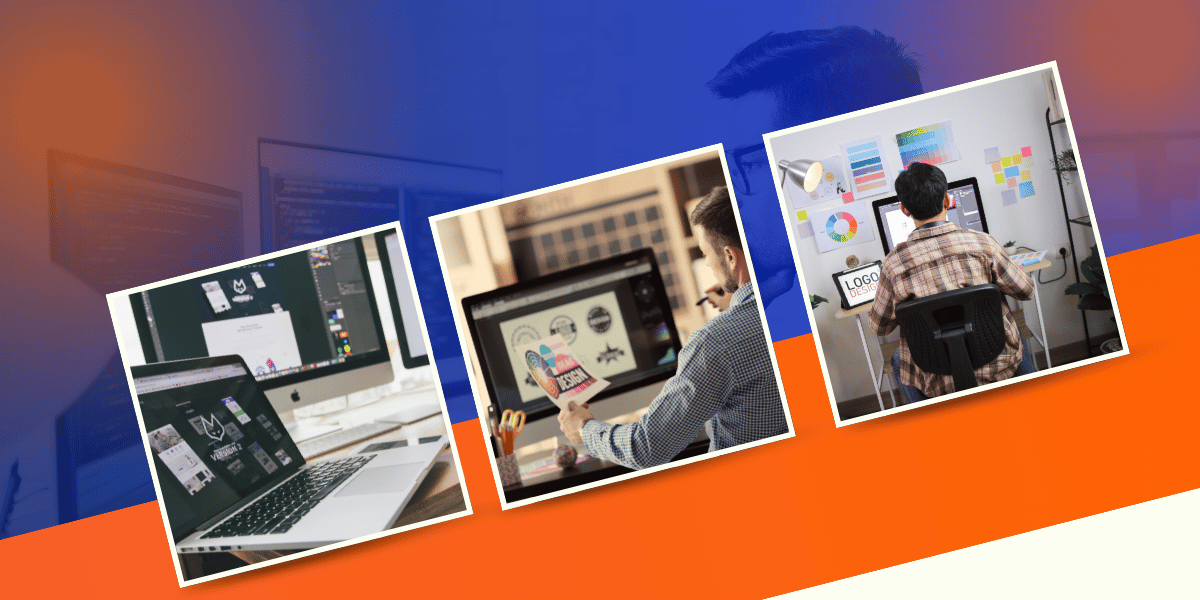
Creating graphics for social media, websites, apps, presentations, ads, packaging, print materials, and videos. - Using design tools professionally
Working with tools like Photoshop, Illustrator, InDesign, Figma, Canva, or motion tools depending on the role. - Revisions and feedback handling
Making design changes based on client, manager, or team feedback—often within tight timelines. - Brand consistency maintenance
Ensuring all designs follow brand guidelines across platforms and campaigns. - Collaboration with teams
Working closely with marketing teams, content writers, developers, social media managers, and clients. - Staying updated with trends
Keeping up with design trends, UI styles, typography, AI tools, and platform-specific requirements.
Understanding these responsibilities early is crucial if you truly want to know how to become a graphic designer who is employable—not just creative.
Work Environment of a Graphic Designer
One of the biggest advantages of this career is flexibility. Graphic designers can work in multiple environments depending on their skills and career stage.
Common work environments include:
- Digital marketing agencies – branding, ads, social media creatives
- Corporate companies – in-house design teams for brands and products
- Startups – fast-paced, multi-skill roles with rapid learning
- IT & product companies – UI graphics, web assets, app visuals
- Media & publishing houses – magazines, digital publications
- Freelancing platforms – global clients, project-based work
- Work-from-home roles – remote jobs and freelance contracts
Many freshers today begin with graphic design internships, including graphic designer internship work from home roles, to build experience while studying or immediately after graduation.
Work hours can vary:
- Fixed hours in corporate roles
- Flexible but deadline-driven schedules in freelancing
- High-pressure periods during campaigns or launches
If you enjoy:
- Visual problem-solving
- Learning new tools regularly
- Working independently and collaboratively
- Remote or flexible work environments
—then graphic design can be a highly sustainable and future-ready career path in India.
Educational Pathways and Required Qualifications
One thing I always tell students very honestly is this:
You don’t need to be “born creative” to succeed in graphic design—but you do need structured learning and consistent practice.
If you truly want to understand how to become a graphic designer in India, your education pathway should focus on skills, tools, and portfolio-building, not just certificates.
Graphic design is one of the few careers where what you can show matters more than what degree you hold—but the right education helps you learn faster, avoid mistakes, and become industry-ready.
Minimum Qualification to Start
You can begin your graphic design journey at multiple stages:
After Class 10
- Foundation-level design courses
- Short-term graphic design certificates
- Skill-based online programs (Canva, Photoshop basics)
After Class 12 (Any Stream – Science / Commerce / Arts)
- Bachelor’s degree in Graphic Design / Visual Communication
- Diploma or Advanced Diploma in Graphic Design
- Online + offline hybrid design programs
After Graduation (Any Field)
- Career-switch graphic design programs
- Professional diplomas
- Portfolio-focused bootcamps
👉 Important insight:
Companies hiring for graphic design internships or fresher roles care most about:
- Your portfolio
- Tool proficiency
- Practical exposure —not just your academic background.
Entrance Exams for Graphic Design & Visual Communication Programs
While many graphic design courses are skill-based and don’t require entrance exams, top design institutes in India do conduct aptitude-based entrance tests to assess creativity, visual thinking, and problem-solving ability.
Here’s a clear, student-friendly table similar to the fashion design pathway:
Necessary Soft Skills and Technical Abilities
One question I always ask students who want to enter design is this:
“If I take away your software access today, what skills do you still bring as a graphic designer?”
Because long-term success in this field depends on how you think and work, not just which tool you use. To truly understand how to become a graphic designer, you must develop both soft skills and technical abilities—they work together.
Let’s break this down clearly.
Essential Soft Skills for a Graphic Designer
Soft skills determine how well you collaborate, handle feedback, and grow in a competitive industry—especially when starting with graphic design internships or fresher roles.
Key soft skills include:
- Visual thinking & creativity
Ability to convert ideas, content, or briefs into visually engaging designs. - Communication skills
Explaining your design choices to clients, managers, or team members clearly and confidently. - Attention to detail
Accuracy in alignment, spacing, colour consistency, and typography. - Adaptability & learning mindset
Design trends, tools, and platforms evolve quickly—successful designers keep upgrading skills. - Time management
Meeting tight deadlines, especially when handling multiple projects or freelance work. - Problem-solving ability
Creating effective visuals within constraints like limited brand guidelines, formats, or timelines. - Resilience & feedback handling
Accepting revisions professionally and improving designs without frustration.
Why this matters:
Many students lose opportunities not due to lack of creativity, but due to poor communication or inability to handle feedback—especially in graphic designer internship work from home roles.
Required Technical Abilities for a Graphic Designer
Technical skills turn ideas into professional, client-ready designs. These are developed through graphic design courses, internships, and consistent practice.
Core technical abilities include:
- Design software proficiency
Adobe Photoshop, Illustrator, InDesign, Figma, Canva (industry usage varies by role). - Typography fundamentals
Understanding fonts, hierarchy, spacing, readability, and visual balance. - Colour theory & layout principles
Using colours, grids, and alignment effectively for digital and print formats. - Branding & visual identity basics
Designing logos, brand kits, and consistent visual systems. - Digital design formats
Social media creatives, web banners, presentations, email graphics, app visuals. - Basic motion & visual storytelling (optional but valuable)
Simple animations, reels, or motion graphics improve employability. - Portfolio development
Presenting work with context—problem, solution, and outcome.
👉 Important insight:
Recruiters offering graphic design internships or fresher jobs don’t ask for marksheets—they ask for:
- A clean portfolio
- Tool confidence
- Real-world design samples
When these technical abilities are combined with strong soft skills, students don’t just get jobs—they build long-term, flexible design careers with options for freelancing, remote work, and growth.
Career Progression & Growth Opportunities
One important thing I want students and parents to understand early is this:
Graphic design is not a one-role career. It’s a skill ladder.
When you start learning how to become a graphic designer, your first role might look basic—but the growth potential in this field is extremely high if you keep upgrading skills and building your portfolio.
Many successful designers in India started with:
- Small graphic design internships
- Social media creatives
- Freelance or work-from-home design projects
Over time, as skills, confidence, and industry exposure increase, designers move into higher-paying and more strategic roles.
Typical Career Progression in Graphic Design
Important insight:
Unlike traditional careers, graphic design allows faster jumps if your portfolio is strong. Many designers skip titles and move directly into:
- Freelancing
- Remote international roles
- Startups with higher pay and flexibility
Salary Expectations, ROI & ROT (Explained Simply for Students & Parents)
- Skills (not just degrees)
- Portfolio quality
- Tools you know
- Freelance + side income
Understanding ROI (Return on Investment)
ROI simply answers:
“How much money do I invest vs how much can I earn?”
For graphic design, ROI is often better than many degree-only careers because costs are lower and skills are monetisable early.
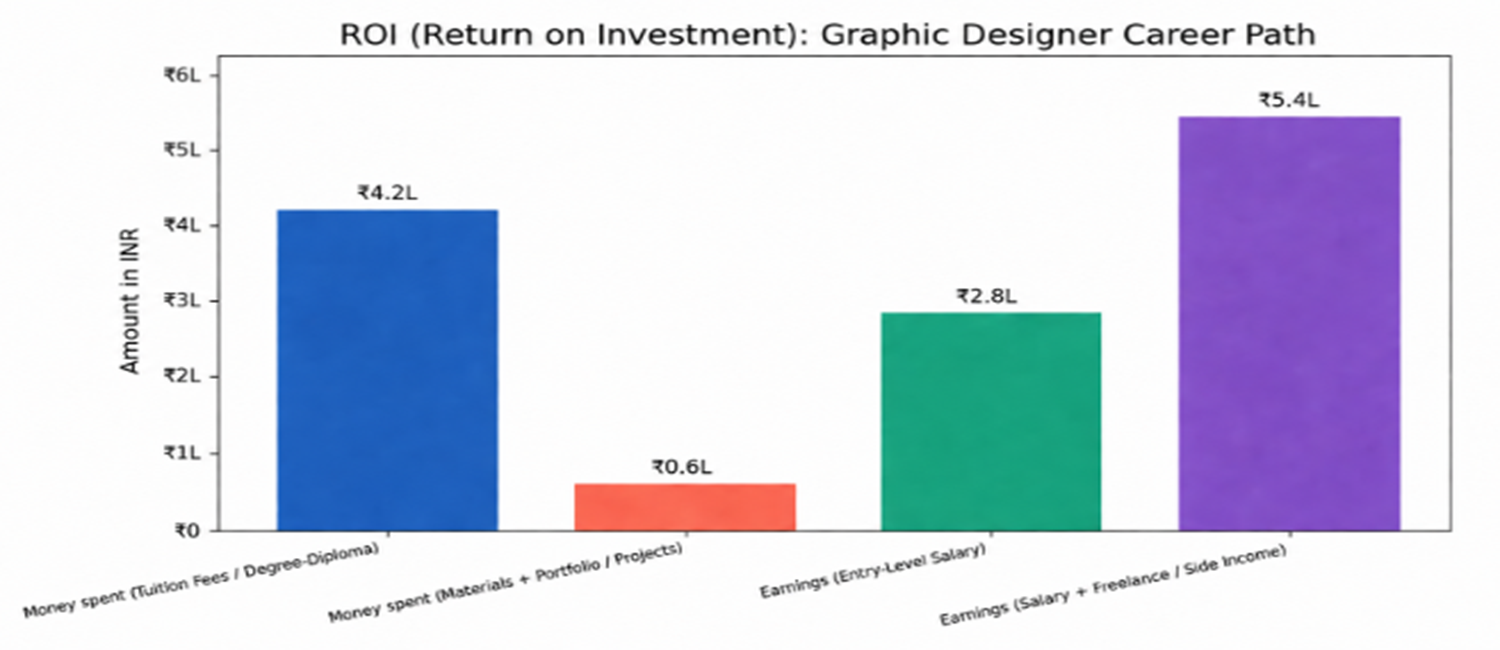
Key Insight:
Students who combine learning + internships + freelancing often recover their investment within 1.5–2 years.
Understanding ROT (Return on Time)
ROT answers a different question:
“If I spend time learning graphic design, how quickly will it turn into real opportunities?”
Graphic design has one of the highest ROT among creative careers.
Why Graphic Design Has High ROT
- Skills can be monetised during learning
- Freelance and graphic designer internship work from home roles are available
- Portfolio matters more than years of experience
- Global remote opportunities reduce location limits
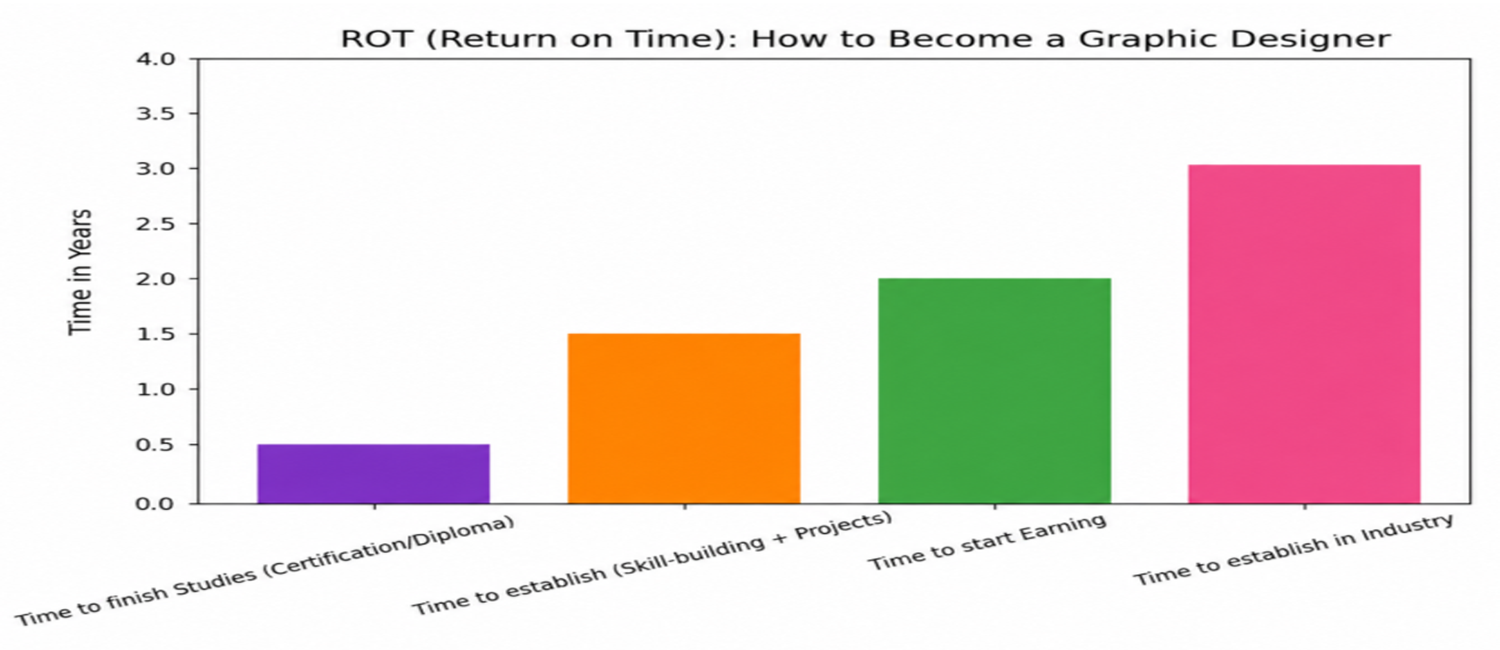
Many students start earning small amounts within the first 6 months of consistent learning and practice.
The Big Takeaway (For Students & Parents)
- Graphic design is not a risky career if approached strategically
- ROI improves when students focus on skills + portfolio
- ROT is high because opportunities start early
- Income grows with specialisation (UI, branding, motion, marketing design)
Final Thoughts: Is Graphic Design the Right Career for You?
Graphic design is not just about creativity or using design tools—it’s a skill-driven, future-ready profession that combines visual thinking, technology, and communication.
If you enjoy:
- Creating visual stories
- Working with digital tools
- Learning continuously
- Exploring freelance or work-from-home options
then learning how to become a graphic designer can lead to a flexible and sustainable career in India.
Success in this field comes from structured learning, practice, internships, and portfolio-building, not talent alone. Students who treat graphic design as a profession—not a hobby—see stronger growth and income over time.
Your Next Action Step (Don’t Skip This)
Before choosing any course, ask yourself:
- Do I understand my strengths and career goals?
- Am I choosing graphic design with a clear plan, not confusion?
- Do I know the realistic graphic designer salary in India and growth path?
This clarity makes all the difference.
How NextMovez Helps
At NextMovez, we help students:
- Choose the right graphic design pathway
- Plan graphic design internships and portfolio projects
- Build a realistic roadmap with ROI and growth clarity
Resources and References
National Institute of Design (NID)
Design education pathways, visual communication programs, and design aptitude expectations
🔗 https://www.nid.edu
UCEED – IIT Bombay
Official information on undergraduate design aptitude exams and design thinking evaluation
🔗 https://www.uceed.iitb.ac.in
Pearl Academy
Graphic design and visual communication courses, industry-aligned curriculum
🔗 https://pearlacademy.com
Careers360 – Graphic Designer Career Guide
Career path, required skills, job roles, and growth opportunities
🔗 https://www.careers360.com/careers/graphic-designer
Shiksha – Graphic Design Courses
Course types, eligibility, colleges, and learning pathways after 12th
🔗 https://www.shiksha.com/design/graphic-design-chp
Indeed India
Real-world job descriptions, responsibilities, and internship roles
🔗 https://in.indeed.com/career/graphic-designer
AmbitionBox
Salary data and trends for graphic designers in India (entry to senior levels)
🔗 https://www.ambitionbox.com/profile/graphic-designer-salary
Glassdoor India
Employer insights, salary ranges, and career progression data
🔗 https://www.glassdoor.co.in
World Economic Forum – Future of Jobs Report
Future skills demand, creative careers, and digital job growth
🔗 https://www.weforum.org/reports/the-future-of-jobs-report-2023
McKinsey & Company – Digital & Creative Economy Insights
Industry trends, digital transformation, and creative workforce evolution
🔗 https://www.mckinsey.com/industries/technology-media-and-telecommunications
Coursera
Online graphic design, UI/UX, branding, and visual communication courses
🔗 https://www.coursera.org
Udemy
Skill-based graphic design, Adobe tools, and portfolio-building courses
🔗 https://www.udemy.com